Living with constant knee pain can make even the simplest daily activities feel exhausting. Whether it’s walking, climbing stairs, or enjoying time with family, ongoing knee problems can limit your mobility and independence. Although treatments like pain medications, physiotherapy, and lifestyle changes can help manage symptoms, severe arthritis or joint damage may eventually require surgical treatment.
If you are wondering about the signs you need knee replacement surgery, understanding the warning symptoms can help you make an informed decision. Knee replacement surgery is often recommended when knee pain and stiffness start affecting daily life and non-surgical treatments no longer provide relief.
Quick Answer: What Are the Signs You Need Knee Replacement Surgery?
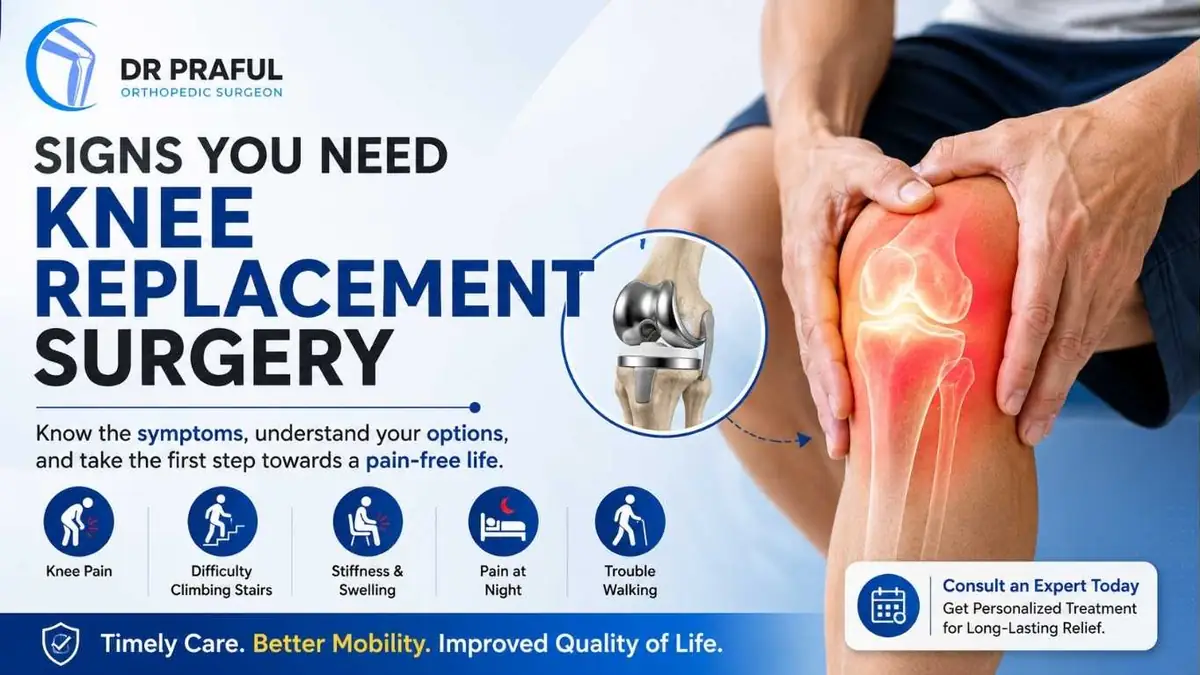
You may need knee replacement surgery if you experience:
* Severe knee pain that does not improve with treatment
* Difficulty walking or climbing stairs
* Knee stiffness that limits movement
* Swelling that keeps returning
* Knee deformity such as bowing
* Pain that disturbs sleep
* Reduced quality of life due to knee problems
X-rays revealing severe arthritis and significant knee joint damage
If these symptoms continue despite medications, physiotherapy, injections, and lifestyle changes, a knee replacement may be the most effective long-term solution.
What Is Knee Replacement Surgery?
Knee replacement surgery, also called knee arthroplasty, is a procedure where damaged parts of the knee joint are replaced with artificial components.
The surgery is commonly recommended for people with:
* Osteoarthritis
* Rheumatoid arthritis
* Post-traumatic arthritis
* Severe cartilage damage
* Advanced knee degeneration
The goal is to reduce pain, improve mobility, and restore normal daily activities.
Why Do People Need Knee Replacement Surgery?
The knee joint contains cartilage that allows smooth movement. Over time, this cartilage can wear away, causing bones to rub against each other.
This can lead to:
* Pain
* Stiffness
* Swelling
* Reduced movement
* Joint deformity
When the damage becomes severe, non-surgical treatments may no longer be effective.
10 Signs You Need Knee Replacement Surgery
1. Persistent Knee Pain That Does Not Go Away
One of the most common signs you need knee replacement surgery is ongoing pain.
The pain may:
- Be present every day
- Increase during activity
- Continue even while resting
- Become worse over time
If pain continues despite treatment for several months, surgery may be considered.
When Should You Be Concerned?
You should consult a specialist if:
- Pain lasts longer than 3–6 months
- Pain affects daily tasks
- Medications no longer help
2. Difficulty Walking Short Distances
Many patients notice they cannot walk as far as they used to.
Simple activities become challenging:
- Walking to the market
- Visiting friends
- Taking a short walk around the neighborhood
You may also begin relying on:
- Walking sticks
- Support rails
- Assistance from family members
Reduced mobility is a strong indication that knee function is deteriorating.
3. Severe Knee Stiffness
Stiffness often develops gradually.
You may find it difficult to:
- Bend the knee fully
- Straighten the knee
- Sit cross-legged
- Get up from a chair
Morning stiffness that lasts for extended periods may indicate advanced arthritis.
4. Pain While Climbing Stairs
Stair climbing places extra pressure on the knee joint.
Warning signs include:
- Sharp pain while going upstairs
- Increased pain while coming downstairs
- Holding railings for support
- Avoiding stairs altogether
This symptom commonly appears when arthritis becomes more severe.
5. Knee Swelling That Keeps Returning
Occasional swelling may occur after injury or overuse.
However, repeated swelling can signal advanced joint damage.
Symptoms include:
- Puffy knee appearance
- Warmth around the joint
- Fluid accumulation
- Limited movement
Chronic inflammation often indicates significant cartilage loss.
6. Knee Deformity or Bowing
As arthritis progresses, the alignment of the knee may change.
Common deformities include:
- Bow-legged appearance
- Knock-knees
- Uneven walking pattern
These changes suggest structural damage that may not improve without surgery.
7. Pain That Disturbs Sleep
Pain severe enough to wake you at night is a major warning sign.
Many patients report:
- Difficulty finding a comfortable sleeping position
- Nighttime throbbing pain
- Frequent waking due to discomfort
Healthy joints should not interfere with sleep.
8. Non-Surgical Treatments No Longer Work
Most orthopedic specialists recommend conservative treatments first.
These may include:
- Physiotherapy
- Pain medications
- Weight management
- Knee braces
- Joint injections
If these treatments stop providing relief, surgery may become the right option.
Read more: Is knee replacement painful?
9. Daily Activities Become Difficult
A damaged knee can affect almost every aspect of daily life.
You may struggle with:
- Standing for long periods
- Cooking
- Shopping
- Housework
- Traveling
When knee pain significantly impacts independence, replacement surgery should be evaluated.
10. X-Rays Show Advanced Knee Arthritis
Symptoms alone are not enough.
Doctors use imaging studies to confirm joint damage.
Common Findings
X-Ray Finding
What It Means
Narrow joint space
Cartilage loss
Bone-on-bone contact
Advanced arthritis
Bone spurs
Joint degeneration
Joint deformity
Severe structural damage
These findings help determine whether surgery is appropriate.
Signs You Need Knee Replacement Surgery vs Signs You May Not
You May Need Surgery
You May Not Need Surgery Yet
Daily severe pain
Occasional discomfort
Difficulty walking
Normal mobility
Night pain
Pain only after activity
Failed treatments
Good response to therapy
Severe arthritis on X-ray
Mild joint damage
Significant stiffness
Full range of motion
Expert Insight
According to orthopedic specialists, the best time for knee replacement surgery is not when pain first appears but when the pain and stiffness begin to significantly reduce quality of life and non-surgical treatments no longer provide adequate relief.
Patients who undergo surgery at the appropriate time often experience:
- Better mobility
- Less pain
- Improved independence
- Higher satisfaction rates
Key Takeaways
- Persistent knee pain is a major warning sign.
- Difficulty walking and climbing stairs should not be ignored.
- Recurring swelling and stiffness often indicate advanced arthritis.
- Night pain can suggest severe joint damage.
- X-rays help confirm the need for surgery.
- Surgery is usually considered after non-surgical treatments fail.
- Early evaluation can prevent worsening disability.
Conclusion
1. What are the earliest signs you need knee replacement surgery?
The earliest signs include persistent knee pain, stiffness, difficulty walking, and reduced ability to perform daily activities despite treatment.
2. Can I avoid knee replacement surgery?
In early stages, lifestyle changes, physiotherapy, medications, and injections may help delay surgery. However, advanced arthritis often requires replacement.
3. Is knee replacement surgery painful?
Modern surgical techniques and pain management methods significantly reduce discomfort. Most patients experience substantial pain relief after recovery.
4. How do doctors decide if I need knee replacement surgery?
Doctors evaluate symptoms, physical examination findings, mobility limitations, treatment history, and imaging results before recommending surgery.
5. What age is best for knee replacement surgery?
There is no perfect age. The decision depends on symptoms, joint damage, overall health, and quality of life.
6. How long does a knee replacement last?
Most modern knee implants can last 15–20 years or longer, depending on activity levels and overall health.
7. Can severe knee arthritis cause sleep problems?
Yes. Advanced arthritis often causes nighttime pain that can interrupt sleep and reduce overall quality of life.
8. What is the most common reason people undergo knee replacement surgery?
The most common reason is severe osteoarthritis causing pain, stiffness, and loss of function that does not improve with non-surgical treatment. For more patient information, see NHS: Knee replacement.
Frequently Asked Questions
When Is Knee Replacement Surgery Recommended?
You may be a suitable candidate if:
- You have severe arthritis
- Pain limits daily activities
- Conservative treatments have failed
- X-rays show advanced joint damage
- Overall health is good for surgery
Age alone is not the deciding factor.
Many patients in their 50s, 60s, and 70s successfully undergo knee replacement.
When Is It Too Early for Knee Replacement?
Not everyone with knee pain needs surgery.
You may not require knee replacement if:
* Symptoms are mild
* Pain occurs only occasionally
* Physical therapy provides relief
* Daily activities remain unaffected
A specialist will assess your condition before recommending surgery.
What Happens If You Delay Knee Replacement Surgery?
Some patients postpone surgery due to fear or uncertainty.
Delaying too long can sometimes lead to:
- Worsening pain
- Reduced mobility
- Muscle weakness
- Increased deformity
- Lower quality of life
Early evaluation allows better planning and outcomes.
How Long Does Knee Replacement Surgery Take?
Many patients are surprised to learn that the procedure itself is relatively straightforward.
The duration depends on factors such as:
- Complexity of the case
- Type of implant
- Patient’s health condition
What Is Recovery Like After Knee Replacement?
Recovery occurs gradually over weeks and months.
Most patients experience:
- Reduced pain
- Improved walking ability
- Better knee movement
- Increased independence
Following rehabilitation instructions is critical for success.
How Much Does Knee Replacement Surgery Cost?
The cost of surgery depends on several factors:
- Hospital facilities
- Implant type
- Surgeon experience
- Length of hospital stay
Patients should discuss costs and insurance coverage during consultation.
This article is for general information and does not replace a medical consultation. For advice about your condition, book an appointment with Dr. Praful Kilaru.