
Recovery Time for Meniscus Tear
When someone hears the words meniscus tear, the first question that usually follows is very simple: How long will it take to recover? This is a completely normal concern. Whether you are a teenager who wants to get back to sports, a working adult who needs to return to your job, or an older person who simply wants to walk without discomfort, understanding recovery time helps reduce fear and confusion. Recovery is not just about waiting for pain to disappear. It is about allowing your knee to heal properly, rebuilding strength, and protecting the joint for the future. In this detailed guide, I will explain recovery time in a very simple and factual way so even a 15-year-old can clearly understand it. The content is written in an original and natural style, focused on real patient concerns and expectations.
Understanding the Meniscus and Why It Matters
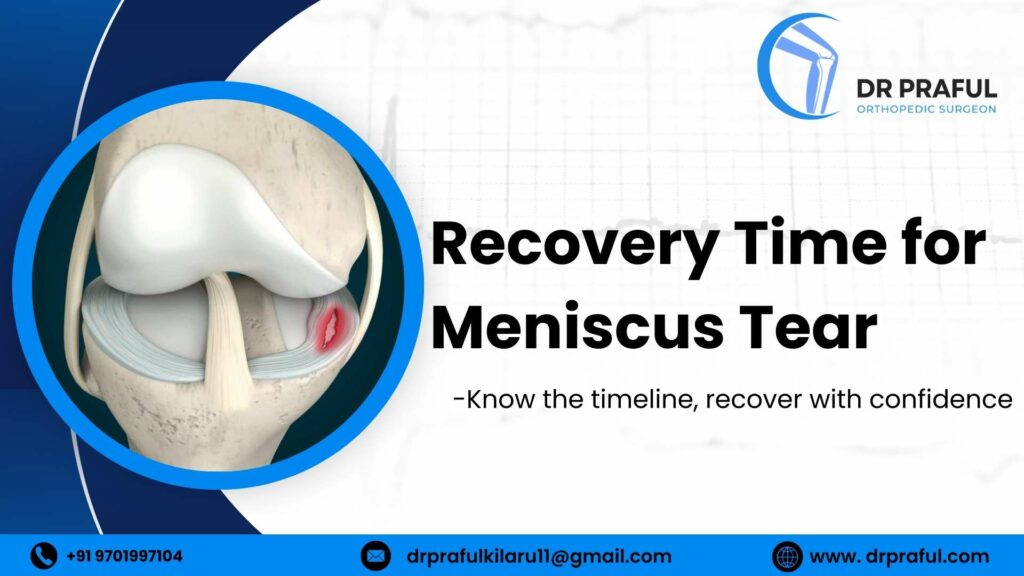
Inside your knee joint, there are two small C-shaped cartilage structures called menisci. These act like shock absorbers between your thigh bone and shin bone. Every time you stand, walk, climb stairs, or run, the meniscus helps distribute weight evenly and protects the bones from direct friction. When the meniscus tears, the cushioning system of the knee becomes disturbed. This can happen during sports that involve twisting, sudden stops, or jumping. It can also occur in older adults due to natural wear and tear over time. Some people feel a sudden sharp pain during injury, while others notice swelling and stiffness developing gradually over a few days.
Common symptoms include:
- Pain while bending or twisting the knee
- Swelling that increases over 24–48 hours
- Stiffness or difficulty in straightening the leg
- A catching or locking sensation
- Feeling like the knee may give way
The severity of these symptoms depends on the size and location of the tear.
About the Dr.Praful

- 17+ Years of Excellence in Orthopedics
- MBBS, MS (Orthopaedics)
- AO Trauma Fellowship – Switzerland
- Arthroscopy & Sports Injury Specialist
- Senior Orthopedic Surgeon – Hyderabad
Recovery Time
There is no single recovery timeline that fits everyone. Healing depends on multiple factors, including the type of tear, whether surgery is needed, and your body’s natural ability to repair tissue. Age, overall fitness, body weight, and commitment to rehabilitation all influence how quickly recovery happens.
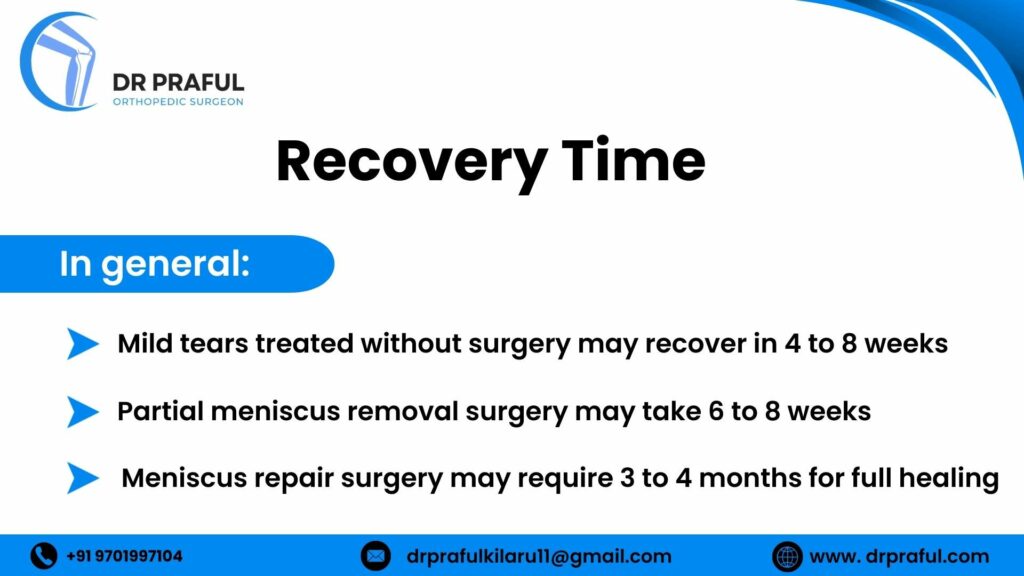
In general:
- Mild tears treated without surgery may recover in 4 to 8 weeks
- Partial meniscus removal surgery may take 6 to 8 weeks
- Meniscus repair surgery may require 3 to 4 months for full healing
The key thing patients must understand is that healing cannot be rushed. Trying to return to heavy activity too early can delay recovery or even cause re-injury.
Recovery Without Surgery
Not every meniscus tear needs surgery. Small tears, especially those located in areas with better blood supply, can heal with conservative treatment. Doctors often recommend starting with non-surgical care if the knee is stable and not locking severely. Conservative treatment focuses on reducing inflammation and gradually strengthening the muscles around the knee. During the early stage, rest is important, but complete inactivity is not helpful. Gentle movement improves blood flow and supports healing.
Treatment may include:
- Short-term rest from sports and heavy activity
- Ice packs to reduce swelling
- Anti-inflammatory medication if prescribed
- Guided physiotherapy exercises
Most patients begin to feel noticeable improvement within a few weeks. Swelling reduces first, followed by better movement and reduced pain. However, returning to intense sports should only happen after proper muscle strength is restored.

Recovery After Meniscus Surgery
When the tear is large, unstable, or causing repeated locking, surgery may be necessary. There are two common surgical approaches: meniscus repair and meniscectomy (partial removal of the torn portion). In a meniscus repair, the surgeon stitches the torn cartilage back together. Since the tissue needs time to heal, recovery is longer. Patients may need to limit weight-bearing in the first few weeks and follow a carefully structured rehabilitation plan. Full recovery may take around 3 to 4 months, especially before returning to sports. In a meniscectomy, the damaged portion is trimmed away. Because no stitching is involved, recovery is faster. Many patients walk normally within 2 to 3 weeks, and complete recovery usually takes about 6 to 8 weeks. However, strengthening exercises remain essential to protect the knee long-term. During surgical recovery, patients usually go through stages such as:
- Reducing swelling and controlling pain
- Regaining full knee movement
- Strengthening thigh and leg muscles
- Improving balance and stability
- Gradual return to daily activities and sports
Each stage builds on the previous one, and skipping steps can slow progress.
Factors That Affect Healing Speed
Recovery time is not only about the injury itself. Personal health plays a big role. Younger individuals generally heal faster because their tissues regenerate more efficiently. Older adults may take longer, especially if arthritis is present.
Other important factors include:
- Body weight, which affects the pressure on the knee
- Muscle strength before injury
- Consistency in physiotherapy
- Following medical advice carefully
Patients who actively participate in their rehabilitation usually recover more smoothly than those who depend only on medication.
Returning to School, Work, and Sports
Many students can return to school within a week or two, especially if they can avoid excessive walking. Adults with desk jobs often resume work within 1 to 2 weeks. However, physically demanding jobs may require more time off. For athletes, patience is extremely important. Light jogging may begin once strength improves and swelling disappears. High-impact sports such as football, basketball, or cricket should only be resumed after full strength and balance are restored. Doctors often perform stability tests before giving permission. Returning too early can increase the risk of another tear. Recovery is not only about feeling better it is about ensuring the knee is strong and stable enough to handle stress.
Common Mistakes That Delay Recovery
Many people unintentionally slow down their healing process. One common mistake is ignoring mild pain and continuing sports. Another mistake is stopping physiotherapy once pain reduces. Pain relief does not mean the meniscus is fully healed. Some patients also avoid moving the knee completely because they fear pain. In reality, controlled exercises are necessary to prevent stiffness and muscle weakness. The balance between rest and guided movement is very important.
Emotional Side of Recovery
A knee injury can affect confidence, especially in young athletes. It is normal to feel frustrated about missing sports or activities. However, understanding that recovery is temporary can help reduce stress. Setting small goals like improving knee bending by a few degrees each week keeps motivation high. Support from family, friends, and healthcare professionals makes the journey easier. Positive thinking and patience are powerful tools in recovery.
Long-Term Outlook After a Meniscus Tear
The good news is that most people recover very well from a meniscus tear. With proper treatment and rehabilitation, they return to normal daily life without major problems. Long-term success depends on maintaining muscle strength, staying active in a safe way, and keeping body weight under control. In some older patients, a meniscus tear may be linked with early arthritis. In such cases, lifestyle adjustments and strengthening exercises become even more important to protect the knee for years to come.
How Doctors Diagnose a Meniscus Tear
Before discussing recovery time, it is important to understand how doctors confirm the injury. Diagnosis usually begins with a physical examination. The doctor gently moves your knee in different directions to check for pain, clicking, or instability. If a tear is suspected, an MRI scan is commonly recommended. An MRI clearly shows soft tissues like cartilage and helps identify the size, type, and location of the tear. This information is very important because recovery time depends heavily on the type of tear. Early and accurate diagnosis prevents worsening of the injury and helps start the right treatment plan quickly.
Different Types of Meniscus Tears and Their Impact on Recovery
Not all meniscus tears are the same. Some are small and stable, while others are large and unstable. The shape and location of the tear influence how long healing takes. For example, a small tear in the outer region of the meniscus may heal faster because that area has better blood supply. On the other hand, tears in the inner region often heal more slowly since blood flow is limited there. Complex tears, flap tears, or bucket-handle tears may require surgery and naturally involve a longer recovery period. Understanding this helps patients set realistic expectations instead of comparing their recovery to someone else’s.
Importance of Physiotherapy in Recovery Time
Physiotherapy is not just an optional step it is a major part of recovery. Even if surgery is not required, structured rehabilitation exercises help the knee regain strength and flexibility. A physiotherapist designs a step-by-step program that focuses on restoring movement first, then building muscle strength, and finally improving balance and stability. Strong thigh muscles reduce pressure on the knee joint and protect it from future injury. Patients who actively participate in physiotherapy often recover faster and more safely than those who skip sessions
Diet and Nutrition for Faster Healing
Many people do not realise that nutrition plays an important role in recovery. The body needs proper nutrients to repair tissues and reduce inflammation. A balanced diet that includes protein, vitamins, and minerals supports healing. Protein helps repair damaged tissues, while vitamins like Vitamin C and D support overall joint health. Staying hydrated is also important for joint lubrication. Maintaining a healthy body weight during recovery reduces stress on the knee and improves long-term outcomes.
Signs That Your Recovery Is Going Well
Patients often feel anxious about whether they are healing properly. Certain positive signs indicate good progress. You may notice swelling decreasing gradually, improved ability to bend and straighten the knee, reduced pain during walking, and better muscle control. Small weekly improvements are normal and encouraging. Recovery is rarely a straight line. Some days feel better than others, but steady overall progress is what matters most.
Warning Signs That Need Medical Attention
While most meniscus tear recoveries go smoothly, patients should know when to contact their doctor. Increasing pain instead of improvement, persistent swelling, redness around surgical wounds, fever, or difficulty bearing weight may require medical review. Early attention to complications prevents bigger problems later. Regular follow-up visits ensure the knee is healing as planned.
Can a Meniscus Tear Heal Completely?
Many mild tears can heal well with conservative treatment. Surgical repairs also have high success rates when rehabilitation is followed correctly. However, in some cases especially in older adults the tear may be part of early degenerative changes in the knee. In such situations, the focus shifts toward long term joint care rather than complete cartilage restoration. The good news is that most patients return to normal daily activities without major limitations when treatment and rehabilitation are done properly.
Conclusion
Recovery time for a meniscus tear varies from person to person, but most cases improve successfully with proper care. The most important message is this: focus on healing correctly, not quickly. Follow medical advice, attend physiotherapy sessions regularly, and give your body the time it needs. Healing is a gradual process. With patience, discipline, and the right treatment plan, you can safely return to your normal activities and protect your knee for the future.
Recovery Time for Meniscus Tear – FAQs
1. How long does it take to recover from a meniscus tear?
Recovery can take anywhere from 4 weeks to 4 months. It depends on how serious the tear is and whether you need surgery. Mild tears heal faster, while repaired tears take longer.
2. Can a meniscus tear heal without surgery?
Yes, small tears can heal with rest, medicine, and physiotherapy. If the knee is stable and not locking, doctors often try non-surgical treatment first. Many people improve within a few weeks.
3. Is walking safe with a meniscus tear?
Light walking is usually safe if it does not cause severe pain. However, you should avoid running, jumping, or twisting movements. Always follow your doctor’s advice.
4. When can I return to sports after a meniscus tear?
For mild injuries, you may return in about 6 to 8 weeks. After surgery, it may take 3 to 4 months before playing sports again. Your knee must be strong and stable first.
5. Does meniscus surgery hurt a lot?
There may be some pain and swelling after surgery, but doctors give medicines to control it. Most patients feel much better within a few weeks.
6. What happens if I ignore a meniscus tear?
Ignoring it can make the tear worse. The knee may become more painful, swollen, or unstable. Early treatment helps prevent bigger problems later.
7. Will my knee be normal again after recovery?
Most people return to normal daily activities without major problems. With proper exercises and care, the knee can feel strong and stable again.
8. Why is physiotherapy so important?
Physiotherapy helps:
- Improve knee movement
- Strengthen thigh muscles
- Reduce stiffness
- Prevent future injuries
Skipping therapy can slow recovery.
9. Can a meniscus tear lead to arthritis?
In some cases, especially in older adults, a meniscus tear can increase the risk of arthritis over time. Keeping your knee strong and maintaining a healthy weight helps reduce this risk.
10. How do I know my knee is healing properly?
Good signs include less swelling, less pain, and better movement week by week. If pain increases or the knee locks up often, you should see your doctor again.