
Long-term recovery is about keeping the knee healthy and protecting the new joint. The knee keeps improving inside for many months. Patients should maintain a healthy weight and avoid high-impact activities like jumping or running too much. With proper care and regular exercise, an artificial knee can last for many years.
Knee Replacement Recovery Timeline
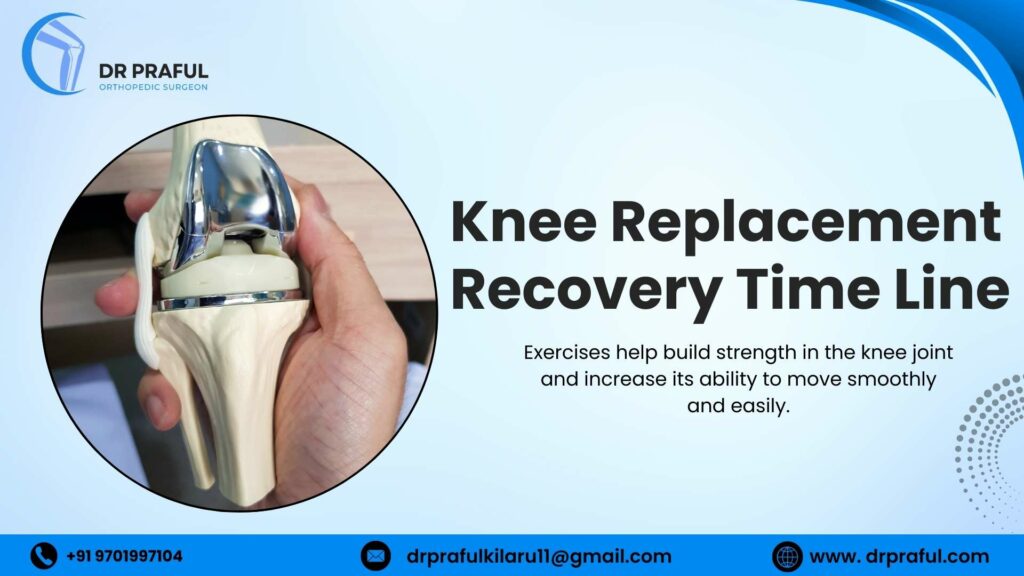
Knee replacement surgery is one of the most commonly performed orthopedic surgeries to reduce severe knee pain and improve movement. It is usually recommended when treatments like medicines, injections, and physiotherapy no longer help in controlling pain caused by arthritis, injury, or joint damage. For many people, knee pain slowly reduces their ability to walk, climb stairs, or even stand for long periods. Knee replacement surgery helps people move more comfortably and perform daily activities with less pain, which improves overall lifestyle and independence. Recovery after knee replacement is a gradual healing journey. The body needs time to adjust to the artificial joint and repair surrounding tissues. Many patients see improvement within weeks, but full recovery can take several months. Some internal healing and muscle strengthening can continue for up to a year. Understanding this recovery timeline helps patients stay mentally prepared and follow proper rehabilitation steps.
Understanding Knee Replacement Recovery Journey
Recovery is not only about healing the surgical wound. It also involves improving knee flexibility, rebuilding muscle strength, reducing swelling, and restoring normal walking movement. After surgery, the muscles and ligaments around the knee need time to adapt to the new artificial joint. Pain and swelling are normal during early recovery stages. Modern pain management methods help reduce discomfort and help patients start physiotherapy early. Recovery speed depends on factors like age, body weight, fitness before surgery, and how well the patient follows physiotherapy exercises. Patients who actively participate in recovery usually achieve better results and regain independence faster.
Early Recovery Phase After Surgery
Right after surgery, doctors focus on controlling pain, preventing blood clots, and helping the knee start moving slowly. Patients are encouraged to move their legs and try standing or walking with support as early as possible. Early movement helps improve blood flow and lowers the risk of problems. Swelling and stiffness are common in the first few days. Using ice, keeping the leg raised, and doing simple exercises can help reduce swelling and make you feel better. Many patients need help from family members for daily tasks like bathing or cooking during this time. The hospital stay depends on how well the patient is recovering. Before going home, doctors teach safe walking methods and simple exercises to continue at home.
Rehabilitation and Functional Recovery (Middle Phase)
During the next few weeks, recovery becomes more active. Physiotherapy focuses on improving knee bending, strengthening muscles, and improving walking ability. Patients slowly regain independence in daily activities and become more confident in movement. During this stage, patients usually notice a clear improvement in mobility and a reduction in pain levels.
Main Focus Areas During This Phase
• Improving knee bending and straightening
• Increasing walking distance slowly
• Strengthening thigh and leg muscles
• Improving balance and coordination
• Reducing swelling and stiffness
• Returning to daily routine activities
This phase plays a major role in long-term recovery success. Skipping exercises or physiotherapy sessions may slow recovery progress.
Advanced Recovery and Strength Building Phase
During this stage, the main focus is to make the muscles stronger and improve stamina. Walking becomes more normal, and daily activities feel easier. Doctors often suggest simple exercises like cycling, swimming, and walking. Some mild swelling can still happen after doing more activity, which is normal because the knee is still healing inside. At this stage, most people feel more confident and independent.
Long-Term Recovery and Lifestyle Adjustment
Role of Nutrition in Knee Replacement Recovery
Good nutrition is very important after knee replacement surgery. The body needs protein, vitamins, and minerals to heal properly. Foods like eggs, milk, lentils, fish, and nuts help repair muscles and tissues. Fruits rich in vitamin C help wounds heal, while calcium and vitamin D keep bones strong. Drinking enough water also supports recovery. Eating healthy helps the body heal faster and regain strength.
Sleep and Rest During Recovery
Good sleep is very important after knee replacement surgery. The body repairs itself during sleep. Many patients experience sleep disturbance after surgery due to pain or discomfort. Following proper sleep position and pain management helps improve sleep quality. Taking short rest breaks during the day also helps prevent muscle fatigue. However, complete bed rest is not recommended because movement is important for recovery.
Sleep and Rest During Recovery
Good sleep is very important after knee replacement surgery. The body repairs itself during sleep. Many patients experience sleep disturbance after surgery due to pain or discomfort. Following proper sleep position and pain management helps improve sleep quality. Taking short rest breaks during the day also helps prevent muscle fatigue. However, complete bed rest is not recommended because movement is important for recovery.
Home Care and Safety After Surgery
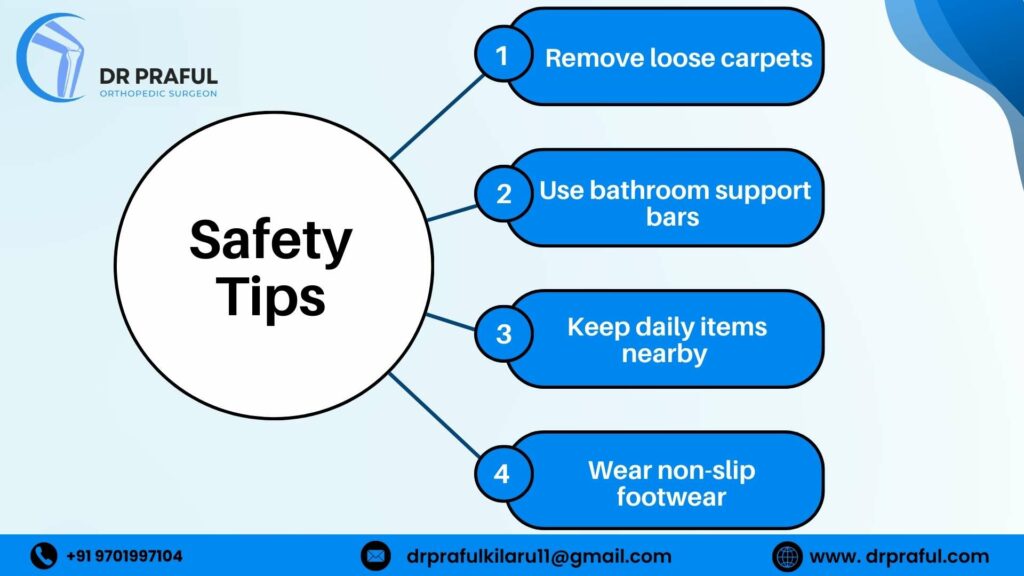
Keeping the home environment safe is very important after knee replacement surgery to avoid falls and injuries. During early recovery, patients may feel weak or slightly unstable while walking. Making small home changes can help improve safety and support faster recovery. Family support is also important because it helps patients feel more confident and secure during daily activities.
Safety Tips
• Remove loose carpets
• Use bathroom support bars
• Keep daily items nearby
• Wear non-slip footwear
Importance of Muscle Strength After Knee Replacement
Muscle strength plays a very important role in knee replacement recovery because strong muscles support the artificial joint and improve movement stability. Before surgery, many patients already have weak thigh and leg muscles due to long-term pain and reduced movement. After surgery, rebuilding these muscles becomes very important. Physiotherapy exercises focus mainly on strengthening thigh muscles, calf muscles, and hip muscles. These muscles help support the knee joint during walking, standing, and climbing stairs. Patients who build strong muscles usually experience better balance and lower risk of falling. Muscle strengthening is not only important during early recovery but should continue even after recovery to maintain long-term knee health.
Returning to Work After Knee Replacement
Returning to work depends on the type of job and recovery progress. People who have desk jobs may return earlier because their work does not involve heavy physical activity. However, jobs that require standing for long hours, lifting heavy weights, or climbing stairs may need longer recovery time. Doctors usually evaluate recovery progress, muscle strength, and walking ability before allowing patients to return to work. Gradual return to work is usually recommended. Patients should avoid overexertion in the beginning because pushing too hard can increase swelling and delay recovery. Proper planning helps patients return to work safely without risking joint health.
Exercise and Physical Activity After Full Recovery
After full recovery, physical activity becomes very important for maintaining knee health. Regular exercise keeps muscles strong and helps maintain joint flexibility. Doctors usually recommend low-impact activities because they are safe for artificial joints. Walking, cycling, swimming, and yoga are commonly recommended exercises. These activities help maintain overall fitness without putting extra stress on the knee joint. High-impact sports like running or jumping are usually not recommended because they can reduce implant lifespan. Staying physically active also helps maintain a healthy body weight, which reduces pressure on the knee joint.
Risk of Complications and How to Prevent Them
Although knee replacement surgery is generally safe, like any surgery, it has some risks. Some possible complications include infection, blood clots, stiffness, or implant loosening over time. However, these complications are not common when surgery and recovery are properly managed. Following the doctor’s instructions strictly helps reduce the risk. Taking prescribed medicines, attending follow-up visits, and doing physiotherapy regularly are very important. Patients should also maintain proper wound care and hygiene. Early detection of complications helps prevent serious problems and improves treatment success.
Final Thoughts
Knee replacement recovery is a gradual journey that requires patience, consistency, and proper medical guidance. Most patients experience major pain relief and improved mobility after recovery. Full recovery may take several months, but improvement continues gradually. Knee replacement surgery helps many patients return to an active and comfortable life. With proper care and regular exercise, patients can enjoy long-term benefits and improved quality of life.
Knee Replacement Recovery – FAQs
1. How long does knee replacement recovery usually take?
Recovery is a gradual process and can take several months. Many people see major improvement in the first few months, but full healing and strength improvement can continue for longer.
2. When can I start walking after knee replacement surgery?
Most patients start walking with support within a few days after surgery. Walking without support may happen in a few weeks, depending on the physiotherapy progress and body healing.
3. Is physiotherapy really important after knee replacement?
Yes, physiotherapy helps improve strength, flexibility, and balance. Without proper rehabilitation, patients may develop stiffness and mobility problems.
4. When does physiotherapy usually start after surgery?
Physiotherapy often starts very early, sometimes within a day after surgery. Early movement helps improve blood circulation and reduce stiffness.
5. Will I have pain during recovery?
Some pain and swelling are normal in the early recovery stages. Pain usually reduces gradually with medicines, rest, and physiotherapy exercises.
6. When can I return to normal daily activities?
Light daily activities can start early, but heavy work takes longer. Recovery speed depends on health, age, and how well you follow rehab instructions.
7. Can I climb stairs after a knee replacement?
Yes, most patients learn stair climbing during physiotherapy. It may take time and practice, but improvement happens with consistent exercises.
8. What happens if I skip physiotherapy sessions?
Skipping physiotherapy can lead to muscle weakness, stiffness, and slower recovery. Regular exercise is important for protecting the new joint.
9. Is knee replacement surgery safe?
Knee replacement is considered a common and successful surgery. It is usually recommended when pain cannot be controlled by medicines or therapy.
10. Can recovery speed be different for each person?
Yes, recovery is different for every person. Factors like age, weight, muscle strength, and overall health affect healing speed.
11. Why does recovery sometimes feel slow?
Recovery is not always smooth and steady. Some days feel better, and some days feel difficult due to swelling, stiffness, or muscle weakness.
12. When can I drive after knee replacement?
Driving usually depends on knee strength, reaction time, and doctor approval. You should only drive when you can safely control the vehicle.
13. Can I sit on the floor after a knee replacement?
Some patients may regain good bending ability after recovery. However, this depends on the implant type, the surgical method, and the progress of physiotherapy.
14. What exercises are usually included in recovery?
Exercises usually include strength training, balance training, and walking practice. These help improve joint movement and muscle control.
15. How important is home exercise after surgery?
Home exercises are very important along with physiotherapy sessions. Daily practice helps maintain strength and improve flexibility.
16. What are the signs of complications after knee replacement?
Signs like severe swelling, fever, wound discharge, or extreme pain should be checked by a doctor. Early treatment prevents serious problems.
17. Will my artificial knee feel natural after recovery?
Many patients feel comfortable and pain-free after recovery. However, the joint may not feel exactly like a natural knee.
18. Can I do sports after a knee replacement?
Low-impact activities like walking or cycling are usually allowed. High-impact sports may be restricted to protect the artificial joint.
19. Does diet affect knee replacement recovery?
Yes, good nutrition helps healing and muscle strength. Protein, vitamins, and hydration support faster recovery.
20. What is the most important thing for faster recovery?
Following the doctor’s advice, doing exercises regularly, and staying positive are very important. Recovery needs patience and consistency.