
Knee Replacement Operation Time
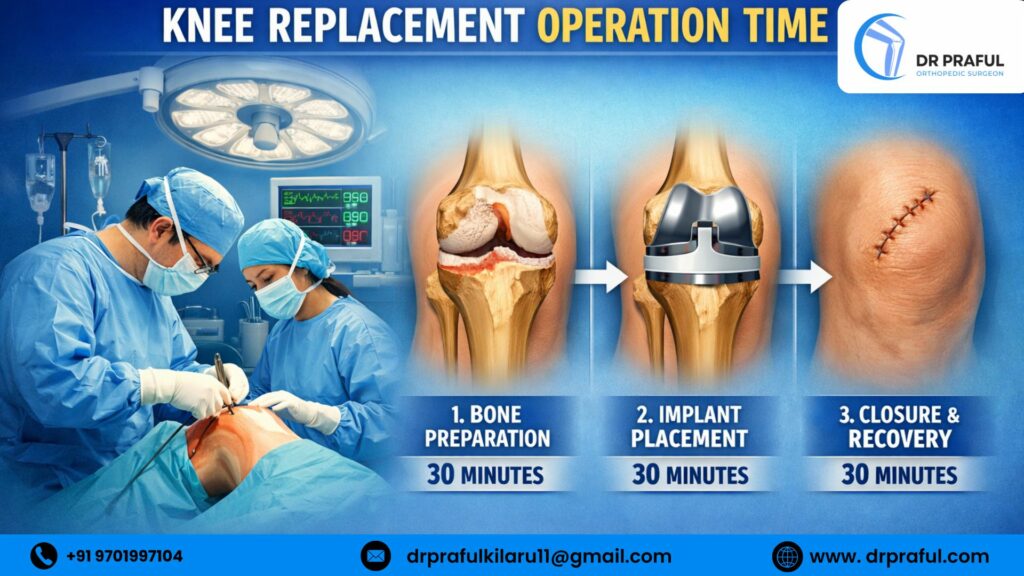
Knee pain can make everyday life very difficult. Simple activities like walking, climbing stairs, standing for long periods, or even getting up from a chair can become painful. For people who suffer from severe knee damage, doctors sometimes recommend a knee replacement surgery. One of the most common questions patients ask before the procedure is about the knee replacement operation time. Many patients worry about how long the surgery will take, how long they will stay in the hospital, and how much time recovery will require. Understanding the timeline of the operation helps patients feel more prepared and less anxious. When people know what to expect before, during, and after surgery, they can mentally prepare themselves and follow the recovery process more confidently.
What Is Knee Replacement Surgery?
- Knee replacement surgery, also called knee arthroplasty, is a medical procedure where a damaged knee joint is replaced with an artificial joint. The artificial joint is usually made from metal and plastic materials that are designed to move smoothly and support body weight.
- This surgery is commonly recommended for people who have severe knee damage caused by conditions such as osteoarthritis, rheumatoid arthritis, injuries, or long-term wear and tear of the joint. When the cartilage in the knee wears away, bones begin to rub against each other, causing pain, swelling, and stiffness. Over time, this can make it difficult to move the knee properly.
- During knee replacement surgery, the surgeon removes the damaged parts of the knee joint and replaces them with artificial components. These parts act like the natural joint, allowing the knee to bend and move more comfortably.
- Although the idea of replacing a joint may sound complicated, knee replacement surgery is actually one of the most common and successful orthopedic procedures performed around the world.
Average Knee Replacement Operation Time
- The average knee replacement operation time usually ranges between 1 and 2 hours. In many cases, the surgery itself takes around 60 to 90 minutes to complete. However, the total time spent in the operating room can be slightly longer.
- This is because the surgical process includes several steps, such as preparation, anesthesia administration, positioning the patient, and monitoring after the procedure. These steps ensure that the surgery is performed safely and smoothly.
- Although the operation time may sound short, the planning and precision involved in the procedure are very important. Surgeons carefully measure and position the artificial joint so that it works properly for many years.
- It is also important to understand that every patient is different. The exact operation time may vary depending on the patient’s condition, the complexity of the knee damage, and the surgeon’s experience.
About the Dr.Praful

- 17+ Years of Excellence in Orthopedics
- MBBS, MS (Orthopaedics)
- AO Trauma Fellowship – Switzerland
- Arthroscopy & Sports Injury Specialist
- Senior Orthopedic Surgeon – Hyderabad
Signs You May Need Knee Replacement Surgery
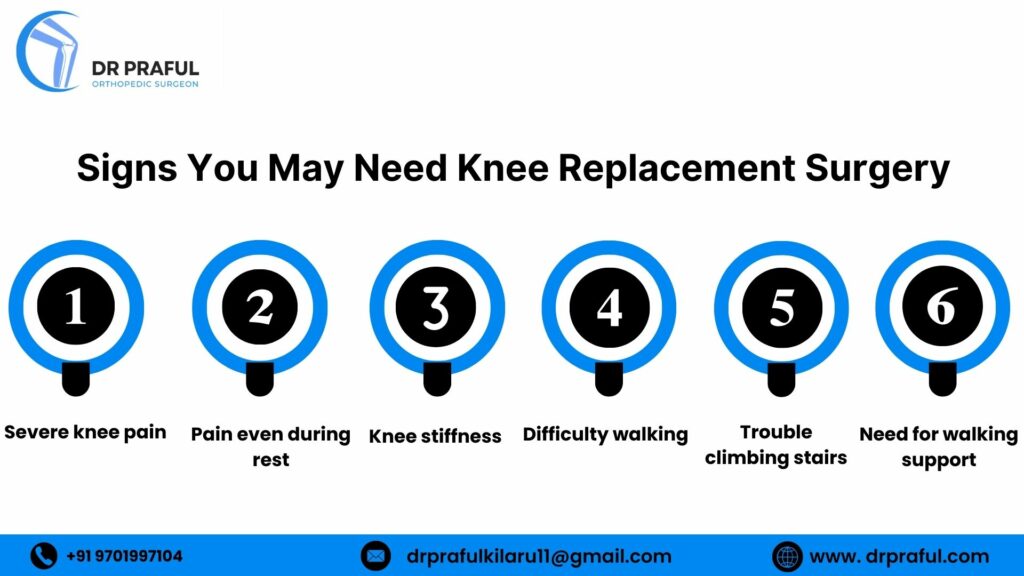
- Severe knee pain
- Pain even during rest
- Knee stiffness
- Difficulty walking
- Trouble climbing stairs
- Need for walking support
- Severe knee pain
What Happens Before the Surgery?
- Before the knee replacement operation begins, several important preparations take place. These steps are necessary to ensure the safety and success of the surgery.
- First, the patient is taken to the operating room, where medical staff monitors important body functions such as heart rate, blood pressure, and oxygen levels. The patient then receives anesthesia. Anesthesia is a medication that prevents pain during the procedure.
- There are two common types of anesthesia used in knee replacement surgery. The first is general anesthesia, where the patient is completely asleep during the operation. The second is spinal anesthesia, where the lower part of the body becomes numb, but the patient may remain awake.
- After anesthesia takes effect, the surgical team cleans and prepares the knee area to reduce the risk of infection. The patient is then positioned carefully so the surgeon can easily access the knee joint.
- These preparation steps may take around 30 to 45 minutes before the actual surgery begins.
What Happens During the Knee Replacement Operation?
- Once the preparation is complete, the surgeon begins the knee replacement procedure. The process usually involves several steps that must be performed carefully.
- First, the surgeon makes an incision in the front of the knee. This opening allows the doctor to access the damaged joint. The damaged cartilage and small portions of bone are then removed.
- Next, the surgeon shapes the remaining bone surfaces so that the artificial joint components can fit properly. These artificial parts are then attached to the thigh bone, shin bone, and sometimes the back of the kneecap.
- The new joint components are designed to move smoothly and reduce friction between bones. Special medical cement or advanced fixation techniques may be used to keep the artificial joint firmly in place.
- Finally, the surgeon checks the knee movement to ensure that the joint bends and straightens correctly. After confirming proper alignment, the incision is closed with stitches or surgical staples.
- The entire surgical process is usually completed within one to two hours.
How Long Does the Patient Stay in the Hospital?
Although the knee replacement operation itself may only take a couple of hours, patients usually stay in the hospital for a few days after the surgery. In many hospitals, patients stay for 2 to 4 days, depending on their recovery progress. During this time, doctors and nurses monitor the patient’s health, manage pain, and ensure there are no complications. Physical therapy often begins within 24 hours after surgery. Early movement helps prevent stiffness and improves blood circulation in the leg. Patients are usually encouraged to start standing or walking with support shortly after the procedure. Some modern hospitals also offer same-day knee replacement surgery, where patients may return home within 24 hours. However, this depends on the patient’s health condition and the surgeon’s recommendation.

Recovery Time After Knee Replacement Surgery
The recovery process takes longer than the operation itself. While the surgery may take about two hours, full recovery may require several weeks or months. In the first few weeks after surgery, patients focus on reducing swelling, managing pain, and gradually increasing movement in the knee. Physical therapy exercises play a very important role during this stage. Most patients can walk with assistance within a few days after surgery. By 4 to 6 weeks, many people can perform daily activities more comfortably. However, complete healing and full strength in the knee may take 3 to 6 months. Patients who follow their doctor’s instructions, perform regular exercises, and maintain a healthy lifestyle often recover more successfully.
Factors That Can Affect Knee Replacement Operation Time
- Not every knee replacement surgery takes the same amount of time. Several factors can influence the duration of the procedure.
- One important factor is the severity of the knee damage. If the joint has severe deformity or complex damage, the surgeon may need more time to properly reconstruct the joint.
- Another factor is whether the patient requires a partial knee replacement or a total knee replacement. A partial knee replacement usually takes less time because only a portion of the joint is replaced.
- The patient’s overall health condition can also affect the procedure. Patients with certain medical conditions may require additional monitoring or surgical care.
- The surgeon’s experience and the hospital’s technology can also influence how efficiently the operation is performed.
Benefits of Knee Replacement Surgery
- Many people decide to have knee replacement surgery because it can greatly improve their daily lives. After the healing process, patients often find it easier to move and perform normal activities with less discomfort. One of the main advantages of this surgery is significant pain relief, as the damaged parts of the knee joint are replaced with artificial components that allow smoother movement.
- Another advantage is improved movement. Patients who previously struggled to walk or climb stairs may regain much better mobility after rehabilitation.
- In addition, knee replacement surgery can help patients return to normal activities such as walking, light exercise, and daily tasks without constant discomfort.
- For many people, the procedure provides long-term relief that can last 15 to 20 years or even longer.
Risks and Possible Complications
- Although knee replacement surgery is generally safe, every surgical procedure carries some risks. Patients should be aware of these possibilities before making a decision.
- Possible complications include infection, blood clots, stiffness in the joint, or problems with the artificial implant. However, these complications are relatively uncommon when the surgery is performed by experienced surgeons.
- Doctors take many precautions to reduce these risks. Patients may receive antibiotics to prevent infection and medications to reduce the chance of blood clots.
- Following post-surgery instructions carefully is one of the most effective ways to prevent complications and ensure a smooth recovery.
Tips for Patients Preparing for Knee Replacement Surgery
- Patients who prepare properly for surgery often recover more quickly and comfortably. Doctors usually recommend strengthening exercises before surgery to improve muscle support around the knee.
- Maintaining a healthy weight can also reduce pressure on the new joint after surgery. Patients may also be advised to arrange support at home during the first few weeks of recovery.
- It is helpful to prepare the home environment by removing obstacles, installing handrails if needed, and arranging comfortable seating.
- Mental preparation is also important. Understanding the timeline of surgery and recovery helps patients stay calm and focused during the treatment process.
Conclusion
Understanding the knee replacement operation time can help patients feel more confident about the procedure. In most cases, the surgery itself takes about 1 to 2 hours, but the full process includes preparation before surgery and recovery afterward. Although the operation time may seem short, the benefits can last for many years. Knee replacement surgery can reduce pain, improve mobility, and allow patients to return to daily activities with greater comfort. Recovery requires patience, proper care, and regular physical therapy. Patients who follow medical advice and stay committed to rehabilitation often experience excellent long-term results. If knee pain is severely affecting daily life and other treatments are no longer effective, knee replacement surgery may be an important step toward restoring movement and improving overall quality of life.
Right-Hand Pain Reasons – FAQs
1. How long does a knee replacement operation usually take?
A knee replacement surgery usually takes about 1 to 2 hours. However, the total time in the operating room may be longer because doctors also need time for preparation, anesthesia, and monitoring after the surgery.
2. Will I be awake during the knee replacement surgery?
Most patients receive anesthesia, which prevents pain during the surgery. Some people are completely asleep with general anesthesia, while others receive spinal anesthesia that numbs the lower part of the body.
3. How many days do I need to stay in the hospital after knee replacement?
Most patients remain hospitalized for 2 to 4 days after surgery. During this period, physicians monitor your recovery, manage pain, and help you begin walking safely with support.
4. When can I start walking after knee replacement surgery?
Many patients can begin standing or walking with support within 24 hours after the operation. Physical therapists usually help patients start gentle movements very early to improve recovery.
5. Does knee replacement surgery hurt?
You may feel some pain after surgery, but doctors give pain relief medicines to keep you comfortable. The pain usually decreases gradually as the knee heals.
6. How much time is needed for complete recovery after knee replacement surgery?
Initial recovery usually takes about 4 to 6 weeks, during which patients gradually return to normal daily activities. However, complete healing and full strength in the knee may take 3 to 6 months. Doing regular exercises and following a physical therapy program can help improve mobility and speed up the recovery process.
7. Can young people have knee replacement surgery?
Knee replacement surgery is more common in older adults, but younger people may need it if they have severe knee damage due to injury, arthritis, or other joint problems.
8. How long does an artificial knee joint last?
A modern artificial knee joint can last 15 to 20 years or even longer. The lifespan depends on factors such as activity level, body weight, and overall joint care.
9. Is knee replacement surgery safe?
Yes, knee replacement surgery is considered a safe and common procedure when performed by experienced surgeons. Doctors take many precautions to reduce risks and complications.
10. What should I avoid after knee replacement surgery?
After surgery, patients should avoid high-impact activities like running or jumping. Following the doctor’s advice, doing physical therapy, and protecting the knee will help the new joint last longer.