Hip replacement surgery has come a long way. What was once considered a last-resort procedure reserved for elderly patients with severe arthritis is now a precision-driven intervention offered to patients as young as their 40s. In 2026, advances in robotic assistance, AI-powered planning, 3D-printed implants, and outpatient protocols have completely changed what patients experience before, during, and after the operating room.
If you or someone you love is considering this procedure, this guide covers everything that matters from surgical approaches and recovery timelines to costs, risks, and the questions every patient should ask before saying yes to surgery.
WHAT IS HIP REPLACEMENT SURGERY?
Hip replacement surgery — medically known as total hip arthroplasty (THA) is a procedure in which a damaged hip joint is surgically removed and replaced with artificial components. The worn femoral head (the ball at the top of the thigh bone) and the deteriorated cartilage lining of the hip socket (acetabulum) are both replaced with prosthetic implants made from combinations of metal alloys, high-grade ceramic, and durable polyethylene
When it works and it works the vast majority of the time patients describe the relief as life-changing.
There are three primary types of the procedure
- Total Hip Replacement the most common type. Both the ball and socket are replaced entirely.
- Partial Hip Replacement (Hemiarthroplasty) typically performed after fractures in older adults. Only the femoral head is replaced.
- Hip Resurfacing the ball is reshaped and capped rather than removed. Preferred for younger, more active patients who want to preserve more bone for a potential future revision.
Your surgeon will recommend the most appropriate type based on your age, activity level, bone quality, and specific diagnosis.
WHY DEMAND IS SURGING IN 2026
Hip replacement is one of the fastest-growing surgical markets in the world, and the numbers confirm it. In the United States alone, an estimated 652,000 total hip replacements will be performed in 2025, with projections pointing toward 4 million annual procedures by 2030.
Three converging forces explain this surge
1An aging global population — By 2030, one in every six people worldwide will be over the age of 60, creating a massive and growing pool of patients with age-related joint deterioration.
2.Rising obesity rates — Excess body weight places disproportionate mechanical stress on hip joints, accelerating cartilage breakdown and compressing the timeline to surgical candidacy.
3.The procedure itself has become safer and more accessible — Minimally invasive techniques, robotic assistance, and outpatient options have removed many of the barriers that once made patients hesitant to pursue surgery.
SURGICAL APPROACHES: POSTERIOR, LATERAL AND DIRECT ANTERIOR
How a surgeon accesses the hip joint has a direct impact on your recovery speed, pain levels, dislocation risk, and time in the hospital. In 2026, three approaches dominate clinical practice.
Avoiding unhealthy food choices during recovery can support faster healing, better bone strength, and improved overall recovery. Here are some foods you should limit or avoid during bone fracture healing.
Posterior Approach
The surgeon accesses the hip from the back. It offers excellent visibility of the joint but has historically carried a slightly higher dislocation risk — a risk that robotic guidance has significantly reduced in recent years.
Examples include chocolates, pastries, cakes, candies, soft drinks, packaged juices, ice creams, and sweet desserts. Reducing sugar intake during recovery can help your body focus on healing.
Direct Anterior Approach (DAA)
Accessed from the front of the thigh, this technique works between muscles rather than cutting through them. The result is less post-operative pain, faster early recovery, and in many cases the ability for patients to walk within just a few hours of surgery. In January 2026, orthopedic teams highlighted DAA as one of the most accurate and advanced surgical techniques available globally. The main trade-off is a steeper learning curve for surgeons.
Excess Salt and High-Sodium Foods
Accessed from the side of the hip. Carries a low dislocation risk but poses a potential risk of abductor muscle damage. Less commonly selected in 2026 as DAA adoption grows.
Lateral Approach
Alcohol can slow down bone healing by interfering with the formation of new bone tissue. It may also affect balance, increasing the risk of falls or re-injury during the recovery period.
Examples include beer, wine, whiskey, vodka, cocktails, and other alcoholic beverages. Avoiding alcohol during fracture recovery can improve healing outcomes.
ROBOTIC-ASSISTED HIP REPLACEMENT: THE NEW STANDARD
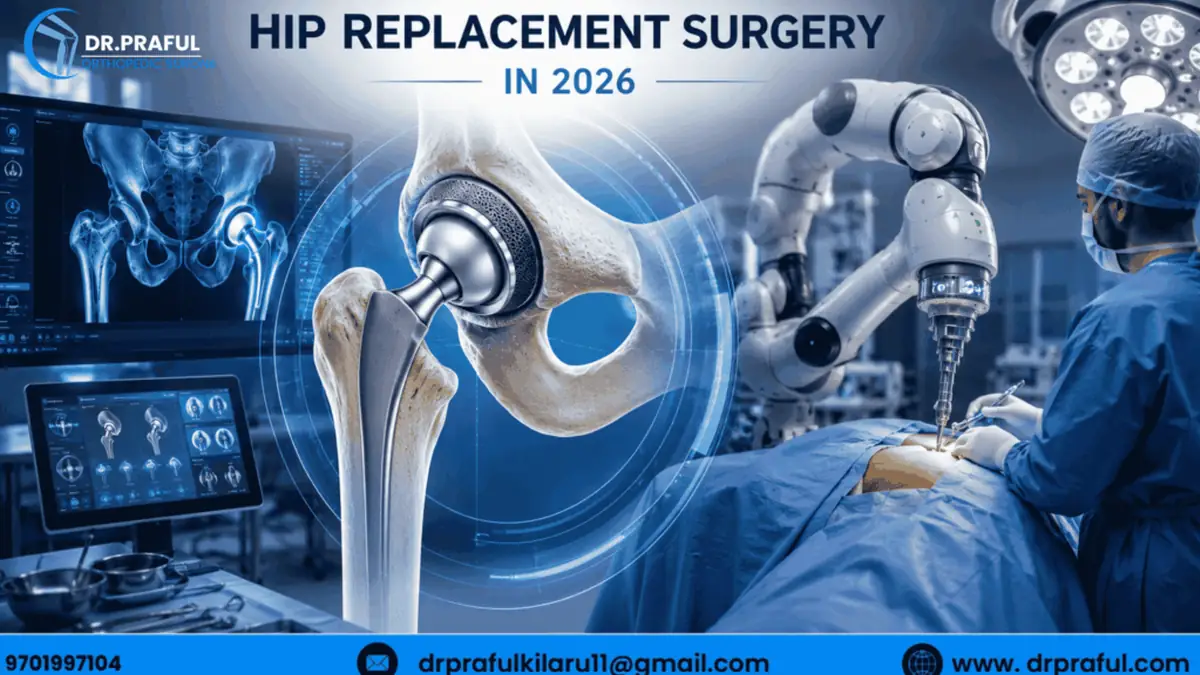
The most significant advancement in hip replacement surgery over the past five years is the mainstream adoption of robotic-assisted surgical platforms. Systems like Stryker’s MAKO and Zimmer Biomet’s ROSA Hip use pre-operative CT and MRI imaging, processed by AI algorithms, to build a precise, patient-specific surgical plan before the first incision is made.
During surgery, the robotic arm provides real-time guidance alerting the surgeon when the planned boundaries are approached and enabling corrections with sub-millimeter accuracy. The clinical evidence is compelling. Research from Massachusetts General Hospital at Harvard Medical School found that patients who underwent robotic total hip replacement achieved meaningful clinical recovery in just 3.10 months, compared to 3.50 months for manual techniques. That may sound like a small difference, but for a patient eager to return to work, travel, or an active lifestyle, it matters significantly.
RISKS, COMPLICATIONS AND SUCCESS RATES
Mitigated by blood thinners and early mobilisation. Minimized by sterile technique and pre-operative optimization of health conditions like diabetes and obesity. Reduced significantly with robotic guidance and proper hip precautions post-surgery. The leading cause of eventual revision surgery, particularly in younger and more physically active patients.
CONCLUSION
Hip replacement surgery in 2026 is a profoundly different procedure from what it was even a decade ago. Robotic guidance, AI-powered pre-operative planning, muscle-sparing approaches, and same-day discharge options have converged to create a procedure that is safer, more precise, and faster to recover from than at any point in medical history. But success is not automatic. It depends on selecting the right surgeon, matching the right approach and implant to your individual anatomy, preparing your body before surgery through prehabilitation, and committing fully to rehabilitation afterward. If you are living with hip pain that limits your daily activities, 2026 may represent the best moment in history to have this conversation with your orthopedic surgeon. The technology is there. The outcomes are proven. The only question is whether you are ready.
Also Read Our Few More Blogs
Frequently Asked Questions
What is hip replacement surgery?
Hip replacement surgery is a procedure where a damaged hip joint is replaced with an artificial implant to reduce pain, improve mobility, and restore daily movement.
Who needs hip replacement surgery?
Patients with severe arthritis, hip joint damage, fractures, cartilage loss, or chronic hip pain that doesn’t improve with medication or physiotherapy may need surgery.
What is the average cost of hip replacement surgery in 2026?
The cost depends on the hospital, surgeon experience, implant type, technology used, and location. It may include consultation, surgery, implant, hospital stay, and rehabilitation expenses.
How long does hip replacement surgery take?
Most hip replacement surgeries take around 1 to 2 hours, depending on the complexity of the case and the surgical technique used.
How long is the recovery period after hip replacement?
Most patients start walking within a few days, but complete recovery usually takes 6 weeks to 3 months, depending on age, health, and rehabilitation progress.
What new technologies are used in hip replacement surgery in 2026?
Modern techniques include robotic-assisted surgery, 3D surgical planning, minimally invasive procedures, smart implants, and AI-based precision tools.
Is hip replacement surgery painful?
Pain during surgery is controlled with anesthesia. After surgery, temporary discomfort is normal, but pain management and rehabilitation help improve recovery.
How long do hip implants last?
Modern hip implants can last 15 to 25 years or longer, depending on the implant material, lifestyle, weight, and activity levels.
Can I walk normally after hip replacement surgery?
Yes, most patients regain mobility and can return to walking, climbing stairs, and daily activities after proper rehabilitation and recovery.
Are there risks involved in hip replacement surgery
Like any surgery, risks may include infection, blood clots, implant wear, joint stiffness, or dislocation, but advanced surgical techniques help reduce complications.
This article is for general information and does not replace a medical consultation. For advice about your condition, book an appointment with Dr. Praful Kilaru.