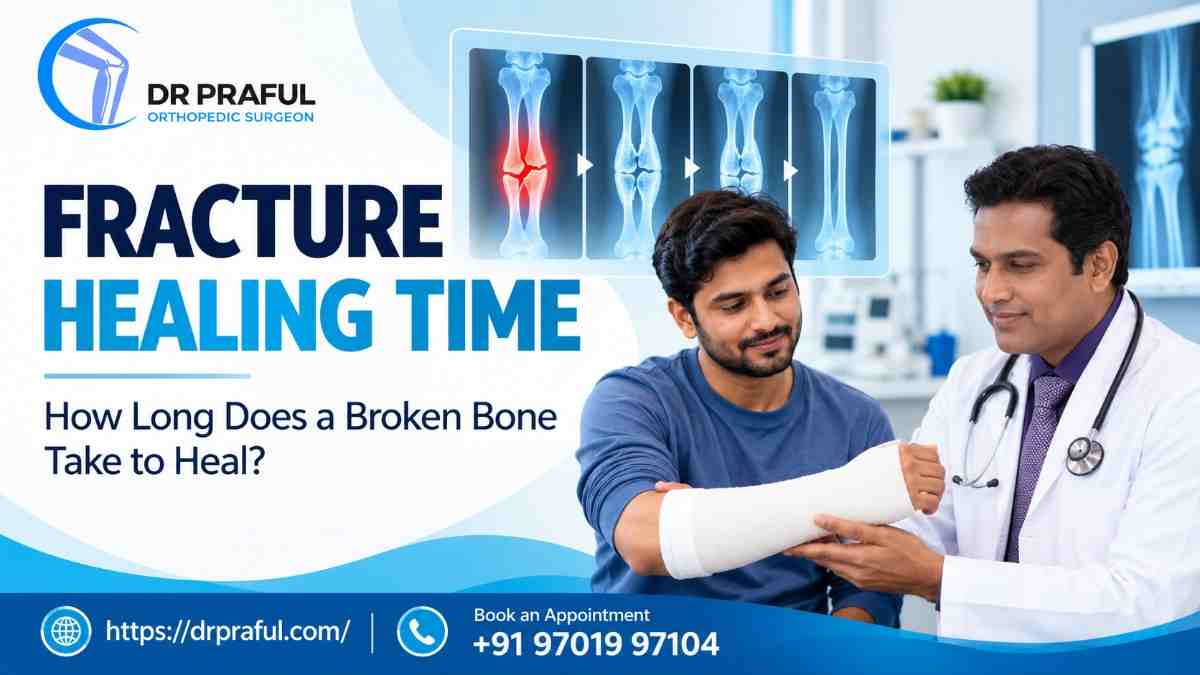
A broken bone usually takes 6–12 weeks to heal, but the exact fracture healing time depends on which bone is broken, the type of fracture, your age and your general health. Small finger fractures may heal in about 3–4 weeks, while fractures of the thighbone or hip can take several months. Children usually heal faster than adults.
Older adults, smokers and people with diabetes may need more time. Following your surgeon's advice, eating well, avoiding smoking and going for follow-up visits all help your recovery.
How Long Does It Take to Heal a Fractured Bone?
Most uncomplicated fractures heal in about 6–12 weeks. Some heal sooner, while complex fractures can take several months or longer.
A fracture is another word for a broken bone. It can be a small crack, a complete break, or a break where the bone splits into several pieces. How long yours takes depends on:
- Where the fracture is: small bones such as fingers heal faster than large weight-bearing bones.
- How severe it is: a simple crack heals faster than a break with several pieces.
- Bone alignment: the broken ends must stay lined up to heal properly.
- Age: growing children heal faster than adults.
- Blood supply: good circulation brings the oxygen and nutrients the bone needs.
- General health: diabetes, poor nutrition and smoking slow healing.
- Treatment and activity: wearing your cast or brace and following weight-bearing limits protect the healing bone.
The time for the bone to join is not the same as the time to get back full strength and movement. Pain often settles before the bone is strong enough for lifting, running or putting full weight on the leg.
What Are the Four Stages of Bone Healing?
Bone heals in four overlapping stages: inflammation, soft callus, hard callus and remodelling. Together they repair the break and slowly restore the bone's strength.
Stage
Approximate timeline
What happens
1. Inflammation
First few days to about 1 week
A blood clot forms around the break and the body starts its repair. Pain and swelling are common.
2. Soft callus
About week 1 to week 3
Soft repair tissue (callus) forms and starts to bridge the broken ends.
3. Hard callus
About week 3 to week 12
New bone gradually replaces the soft callus and the fracture becomes stable.
4. Remodelling
From about 3 months, for months to years
The body reshapes the new bone to restore its normal structure and strength.
These stages overlap and vary from person to person. They are not fixed deadlines for removing a cast or returning to activity.
Stage 1: Inflammation
Right after a fracture, small blood vessels around the bone are damaged and a blood clot forms. The body sends repair cells to the area. This stage causes pain, tenderness and swelling.
Stage 2: Soft callus
Soft repair tissue forms around the break and joins the broken ends. It is not strong yet, which is why the bone must be protected even when pain starts to improve.
Stage 3: Hard callus
The soft callus slowly turns into hard bone and the fracture becomes stable. Your surgeon checks this stage with an examination and follow-up X-rays.
Stage 4: Remodelling
The new bone is reshaped and extra callus is gradually removed. This stage continues for months or even years after the fracture has joined.
What Is the Fracture Healing Time for Different Bones?
Healing time depends on the bone, the fracture pattern and the treatment. These are typical estimates for common fractures in adults:
Bone or fracture
Approximate healing time
Finger
3–4 weeks for many simple fractures
Wrist
About 6–8 weeks
Collarbone
About 6–12 weeks
Arm or forearm
About 6–12 weeks; complex injuries take longer
Ankle
About 6–12 weeks
Shinbone (tibia)
About 3–6 months, sometimes longer
Thighbone (femur)
About 3–6 months or longer
Hip
Several months, depending on the fracture and treatment
These are general estimates, not predictions for your injury. Recovery of strength and movement can continue after the bone has joined.
Why do some bones take longer to heal?
- Size and load: the thighbone and shinbone carry most of your body weight.
- Blood supply: some parts of certain bones, such as the scaphoid in the wrist, have a poor blood supply.
- Fracture pattern: several fragments or a displaced break take longer.
- Other injuries: damage to skin, muscles, blood vessels or nearby joints slows recovery.
- Treatment: some fractures need surgery and a longer rehabilitation.
How Long Does a Hairline (Stress) Fracture Take to Heal?
A hairline or stress fracture is a small crack in the bone, often from repeated strain such as running or long walks. Most heal in about 6–8 weeks with rest from the activity that caused it, and sometimes a boot or brace. Returning to sport too early is the main reason they come back.
How Long Does a Broken Bone Take to Heal in Children, Adults and Older People?
Children heal fastest because their bones are still growing. Adults and older people need more time, especially with severe fractures or other health problems.
- Children: many simple fractures heal in about 3–6 weeks. Fractures near the growth plate need careful checking because they can affect future growth.
- Adults: most uncomplicated fractures join in 6–12 weeks. Large bones, complex injuries and fractures needing surgery take several months.
- Older adults: healing can be slower because of weaker bones (osteoporosis), poorer circulation or diabetes. Regaining balance and walking confidence also takes time.
Age alone does not decide healing speed. A healthy older adult with a simple fracture may recover sooner than a younger person with a severe injury.
What Can Slow Down Fracture Healing?
Smoking, uncontrolled diabetes, poor nutrition, infection, poor blood supply and moving the fracture too early are the main reasons a bone heals slowly.
1. Smoking and tobacco
Smoking reduces blood flow to the bone and is linked to slower healing and a higher risk of the fracture not joining. Stopping smoking is one of the most useful things you can do.
2. Diabetes
High blood sugar affects circulation and tissue repair. Keep your sugar under control and do not miss follow-up visits.
3. Poor nutrition
Bones need enough protein, calories, calcium and vitamin D to repair. Extra supplements beyond what you need do not make a fracture heal faster.
4. Moving the fracture too early
Putting weight on a broken leg or using a broken arm before it is ready can shift the fracture or stop it healing. Pain going away does not mean the bone is ready.
5. Infection
Infection in an open fracture, a surgical wound or the bone itself can stop healing and needs prompt treatment.
6. Severe or unstable fractures
Breaks with many fragments, large displacement or damaged surrounding tissue take longer to join.
7. Some medicines and medical conditions
Certain medicines and health conditions can affect bone healing. Do not stop any prescribed medicine yourself; ask your doctor if any of yours could slow recovery.
A common mistake
Many patients start putting weight on the leg or lifting with the arm as soon as the pain settles. Pain improving does not mean the bone has healed. Always wait for your surgeon to confirm, usually after an X-ray, before increasing activity.
How to Make a Fracture Heal Faster
You cannot force a bone to heal overnight, but you can give it the best conditions to repair:
- Follow your treatment plan. Keep your cast, splint or brace on as advised.
- Eat enough protein. Dal, eggs, milk, curd, paneer, beans, fish or lean meat.
- Get calcium and vitamin D. Milk and curd, ragi, sesame (til), green leafy vegetables, and some morning sunlight. Ask your doctor whether you need a vitamin D test or supplements.
- Stop smoking and tobacco.
- Go for follow-up visits. Your doctor checks healing with an examination and X-rays.
- Follow weight-bearing limits. Do not walk on a broken leg or lift with a broken arm until you are cleared.
- Start physiotherapy at the right time. It restores movement and strength without stressing the fracture.
- Control diabetes and other conditions.
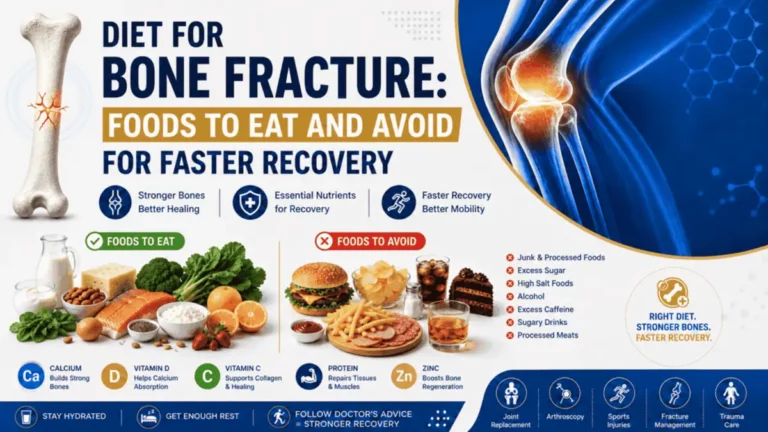
For a full food guide, read our article on the diet for bone fracture recovery. No single food, supplement, massage or home remedy can guarantee faster healing.
What Are the Signs a Fracture Is Not Healing Properly?
Pain that does not improve or gets worse, ongoing tenderness, or little improvement in using the limb can mean slow healing. Only an examination and X-ray can confirm it.
Doctors describe healing problems as:
- Delayed union: the bone is taking longer than expected to heal.
- Non-union: the fracture has not healed and is unlikely to heal without further treatment.
- Malunion: the bone has healed in the wrong position.
Warning signs include pain that increases instead of settling, tenderness at the fracture site, difficulty putting weight on the limb when you expected progress, ongoing swelling, or a feeling of movement at the fracture.
If healing is slow, treatment depends on the cause. It may involve making the fracture more stable, treating infection or a nutritional deficiency, changing activity, or surgery in some cases.
When Should You See a Doctor for a Broken Bone?
See an orthopaedic surgeon if you think a bone is broken, recovery is not going as expected, or pain is getting worse. Do not wait at home to see whether a suspected fracture heals on its own.
Seek emergency care if you have:
- A bone sticking out through the skin or a deep wound over the injury
- Severe deformity or heavy bleeding
- Fingers or toes that turn blue, pale, cold or numb
- Severe, quickly increasing pain and swelling, especially under a tight cast
- New weakness or inability to move the fingers or toes
A hot, swollen limb with fever, or discharge from a wound, also needs urgent attention because it may be an infection. For injuries after accidents and falls, see our trauma care page.
What Happens After the Cast Is Removed or After Fracture Surgery?
Removing the cast or finishing surgery does not mean you can return to all activities straight away. Muscles are often weak and joints stiff after weeks of rest.
Physiotherapy and exercises
Your physiotherapist will help you improve joint movement, muscle strength, balance and walking. Exercise should match your stage of healing, so avoid forceful exercise until you are cleared. Learn about our physiotherapy and rehabilitation support.
When is a cast removed?
Many simple fractures are out of a cast after about 4–8 weeks, once the examination and X-ray show enough healing. Larger bones and complex fractures need longer.
When can you return to work?
- Desk work: often within a few weeks, once pain is controlled and travel is manageable.
- Standing or walking jobs: may need longer, especially after a foot, ankle, shin or hip fracture.
- Heavy manual work: wait until your surgeon confirms the bone can take the load.
Cast or surgery: which recovers faster?
Treatment
What it involves
Recovery
Cast, splint or brace
Holds the bone in place while it heals
Needs cast care, protection and follow-up; joints can be stiff afterwards
Fracture surgery
Plates, screws or rods hold the bone when needed
Needs wound care, follow-up and rehabilitation; timing depends on the injury
Surgery is not automatically faster and a cast is not automatically better. The right choice depends on the fracture pattern, alignment, stability, surrounding tissue damage and your general health. For difficult breaks, see complex fracture treatment.
Fracture Treatment with Dr. Praful Kilaru in Hyderabad
Dr. Praful Kilaru is a Senior Consultant Joint Replacement and Complex Trauma Surgeon at Yashoda Hospitals, Malakpet, with 18 years of orthopaedic experience and AO Trauma Fellowship training in Davos. He was earlier Head of Trauma at Sunshine Hospital, Hyderabad.
He assesses the fracture, explains whether a cast or surgery is right for you, and follows your healing with examinations and X-rays until you are back to normal activity. Learn more about trauma care and complex fracture treatment with Dr. Praful, or visit the Dr. Praful Kilaru homepage.
Frequently Asked Questions About Fracture Healing Time
Can a fracture heal in 2 weeks?
Most adult fractures do not heal in two weeks. Early repair starts within days, but the bone needs several more weeks to become strong. Follow your doctor's advice even if the pain improves quickly.
Does a broken bone hurt while healing?
Yes, some pain and tenderness are normal, especially early on or when moving the area. Pain should slowly improve. Worsening pain, severe swelling or numbness needs a check-up.
How do I know if my fracture is healing?
Less pain and swelling and better movement are good signs, but they do not prove the bone has joined. Your doctor confirms healing with an examination and X-rays.
When is a cast removed after a fracture?
Many simple fractures come out of the cast after about 4–8 weeks, once the X-ray and examination show enough healing. Some fractures need longer.
When can I walk on a broken ankle?
It depends on how severe and stable the fracture is and how it was treated. Some people can put partial weight early; others must avoid weight for several weeks. Walk on it only when your surgeon allows.
When can I drive after a fracture?
Usually once you are out of the cast or brace, can move the limb freely and safely, and are no longer taking strong pain medicines. Ask your surgeon before you start driving.
Do broken bones heal faster in children?
Yes. Children's bones usually heal faster because they are still growing, but fractures near the growth plate need careful follow-up.
Is a healed bone stronger than before?
Not necessarily. The healed area is reshaped over months, and its final strength depends on the fracture, its alignment and your overall bone health.
What foods help a broken bone heal?
A balanced diet with enough protein, calcium, vitamin D and calories, such as dal, milk, curd, paneer, eggs, ragi and green leafy vegetables. Supplements help mainly when you have a deficiency. See our diet for bone fracture guide.
Can a broken bone heal without surgery?
Yes. Many fractures heal in a cast, splint or brace. Surgery is needed when the fracture is displaced, unstable, involves a joint, or cannot be held in place otherwise.
Medical disclaimer: This article is for general information and does not replace a medical consultation. Fracture healing times are approximate and vary from person to person. Do not remove a cast, change weight-bearing limits or start exercises without medical advice. Seek urgent care for a serious injury or signs of poor circulation or infection.
References: AAOS OrthoInfo: Fractures (Broken Bones); NHS: Broken arm or wrist.