
Early Signs of Arthritis in the Knees

Early Signs of Arthritis in the Knees

Knee pain is something many people ignore at first because it often feels mild, temporary, or related to tiredness. However, persistent knee discomfort can sometimes be the early sign of arthritis. Understanding the early signs of knee arthritis is extremely important, as this condition develops slowly over time. It does not usually start with severe pain. Instead, the body gives small warning signals that are easy to overlook. If these early signs are recognized and treated properly, the progression of arthritis can be slowed significantly, helping patients maintain mobility and avoid major complications in the future.

What Is Knee Arthritis?

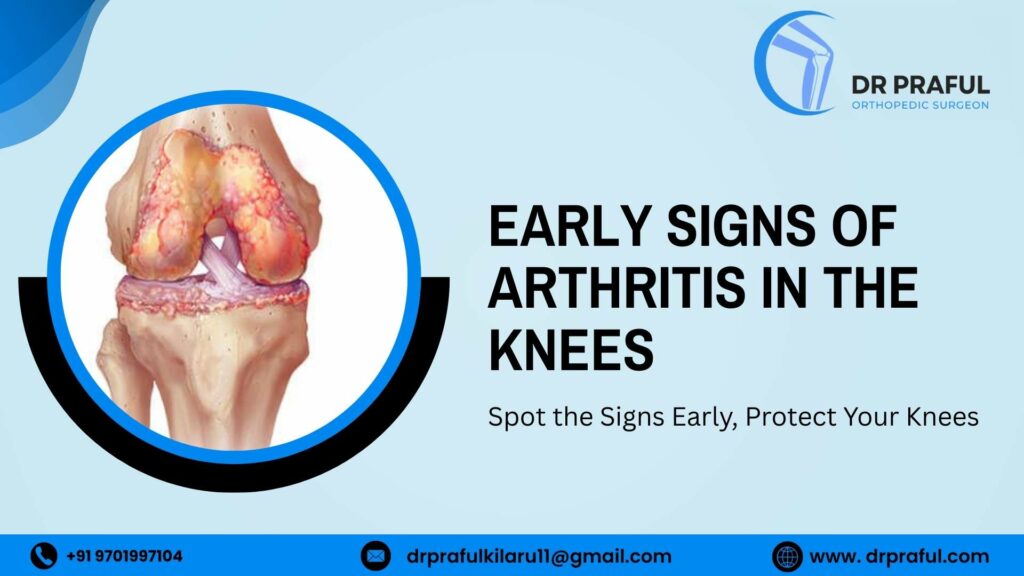
Knee arthritis is a condition where the protective cartilage inside the knee joint gradually wears down. Cartilage acts like a smooth cushion between the bones, allowing them to move easily without friction. When this cushion becomes thin or damaged, the bones begin to rub against each other. This friction causes pain, swelling, stiffness, and difficulty in bending or straightening the knee.

                                     Over time, the joint may lose its flexibility, and movements that were once easy may start feeling uncomfortable. In advanced cases, the shape of the knee may slightly change due to bone changes. The most common type of knee arthritis is osteoarthritis, which usually develops due to aging. However, younger people can also develop it due to previous injuries, obesity, or repeated stress on the knees.

Early Signs of Arthritis in the Knees

In the early stage, arthritis symptoms are usually mild and irregular. This is why many people delay medical consultation. The discomfort may not be constant, but the signs should still be taken seriously. Common early symptoms include:

  • Morning stiffness that improves after walking for a few minutes
  • Mild pain while climbing stairs or getting up from a chair
  • Swelling after long walks or physical activity
  • Grinding or cracking sounds while bending the knee
  • A feeling that the knee is weak or unstable

These symptoms may appear occasionally at first. However, if they continue for several weeks or slowly become more frequent, it is important to consult an orthopedic specialist for proper evaluation.

About the Dr.Praful

Early Signs of Arthritis in the Knees

How Arthritis Pain Feels Different from Normal Knee Pain

It is important to understand the difference between temporary knee strain and arthritis-related pain. Normal knee pain usually happens after heavy physical activity and improves with rest. Arthritis pain, however, tends to return repeatedly and may gradually increase over time. Arthritis-related discomfort often includes stiffness after sitting for long periods. The knee may feel tight in the morning or after resting. Swelling may also appear without a major injury. Recognizing these differences helps patients avoid ignoring early arthritis symptoms.

Why Early Detection Is So Important

Arthritis is a progressive condition, meaning it worsens slowly over time if not managed properly. Once cartilage damage begins, it cannot fully regenerate naturally. However, early treatment can slow further damage and reduce pain significantly. Patients should keep the following intentions in mind:

  • Do not ignore repeated knee stiffness or swelling
  • Avoid long-term self-medication without a diagnosis
  • Seek professional medical advice if symptoms last more than three weeks
  • Start strengthening exercises under guidance
  • Maintain a healthy body weight

Early intervention can delay serious joint damage and reduce the chances of needing knee replacement surgery later in life.

Early Signs of Arthritis in the Knees

Risk Factors That Increase the Chances of Knee Arthritis

Certain factors make some people more likely to develop knee arthritis. While aging is a common cause, lifestyle habits also play a major role. Excess body weight increases pressure on the knee joints, accelerating cartilage wear. Previous injuries, such as ligament tears or fractures, can also increase the risk. Other risk factors include:

  • Family history of arthritis
  • Repetitive stress from sports or heavy labor
  • Weak thigh muscles
  • Poor posture and joint alignment

Being aware of these risk factors helps individuals monitor early symptoms more carefully and take preventive measures.

How Knee Arthritis Affects Daily Life

In the beginning, arthritis may only cause mild discomfort during certain movements. However, as the condition progresses, daily tasks may become more challenging. Climbing stairs, sitting cross-legged, squatting, or standing for long periods may cause pain. Some people may avoid physical activities due to fear of discomfort, which can weaken the muscles further and worsen joint stability. If left untreated, arthritis can reduce mobility and independence. Early care helps maintain normal daily activities and prevents long-term disability.

Diagnosis and Medical Evaluation

If early symptoms are noticed, an orthopedic doctor will conduct a physical examination to assess swelling, tenderness, and joint movement. X-rays are commonly used to check joint space narrowing and cartilage wear. In some cases, additional imaging tests may be recommended for a clearer understanding of the joint condition. Early-stage arthritis is easier to manage compared to advanced stages. Proper diagnosis allows doctors to create a treatment plan focused on joint protection and pain control.

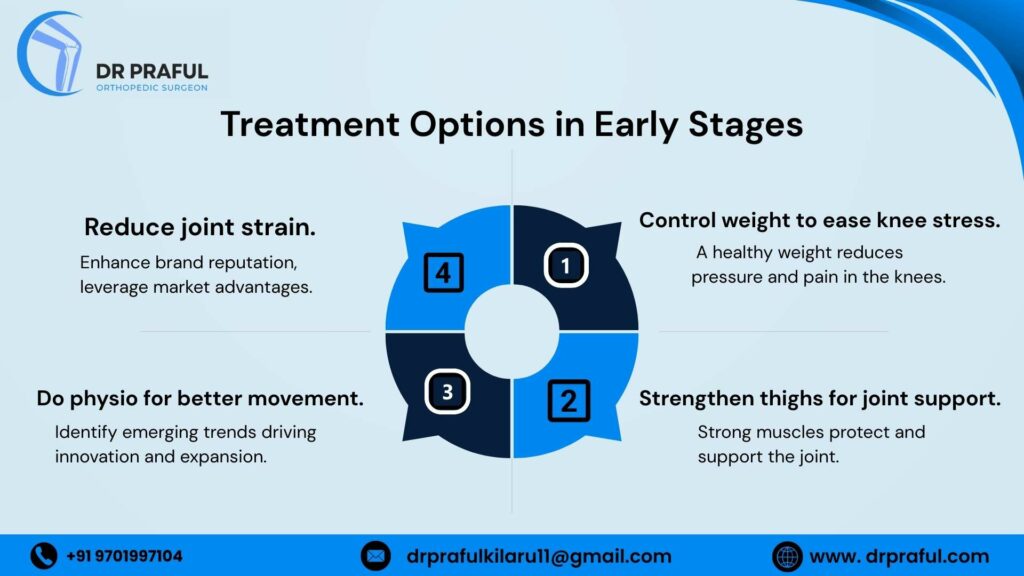
Treatment Options in Early Stages

Early Signs of Arthritis in the Knees

Early treatment focuses on easing pain, improving joint movement, and preventing further cartilage wear. In most early cases, surgery is not necessary, and symptoms can be managed with proper care. Common treatment approaches include:

  • Control weight to ease knee stress.
  • Strengthen thighs for joint support.
  • Do physio for better movement.
  • Take meds if advised.
  • Reduce joint strain.

When patients follow medical advice consistently, symptoms can be controlled effectively for many years.

Lifestyle Changes That Protect Your Knees

Simple daily habits can make a significant difference in managing early arthritis. Maintaining a balanced diet and a healthy weight reduces stress on the knee joint. Regular low-impact exercises such as swimming, cycling, or walking strengthen muscles without causing extra pressure. Additional preventive steps include:

  • Avoiding sudden heavy lifting
  • Wearing supportive footwear
  • Practicing correct posture while sitting and standing
  • Warming up before exercise

Consistency in these habits helps slow disease progression.

Early Signs of Arthritis in the Knees

When Should You See a Doctor?

Medical consultation is necessary if knee stiffness or pain continues for more than a few weeks. If swelling increases, movement becomes restricted, or pain affects sleep, professional evaluation should not be delayed. Early consultation provides better treatment options and prevents complications.

Final Thoughts

The early signs of arthritis in the knees may appear mild, but they are important signals from your body. Morning stiffness, mild pain during movement, swelling after activity, and joint sounds should never be ignored. Acting early allows better management and long-term joint protection. Arthritis may be common, but suffering silently is not necessary. With early diagnosis, lifestyle changes, and proper treatment, most patients can maintain an active and comfortable life for many years.

Early Signs of Arthritis in the Knees – FAQs

1. What are the early signs of arthritis in the knees?

The first signs often involve gentle pain, tightness in the joint, and minor swelling around the knee. Stiffness is usually more noticeable after waking up or sitting for a long period. In the early stage, these symptoms may appear occasionally rather than constantly.

Knee arthritis starts when the cartilage that cushions the bones begins to wear down. This damage happens slowly over time due to aging or joint stress. As the cushion becomes thinner, movement becomes uncomfortable.

Yes, morning stiffness is one of the earliest signs of arthritis. The knee may feel tight and difficult to move after waking up. It usually improves after a few minutes of walking.

Yes, arthritis is not limited to older adults. Young people with previous knee injuries or obesity can develop it. Repeated stress from sports may also increase the risk.

The pain is usually mild and occurs during movement like climbing stairs. It may reduce with rest in the early stages. Over time, the pain can become more frequent.

Slight swelling can develop in the knee during the early phase of arthritis. It may become more noticeable after walking or physical activity. This swelling occurs because of irritation and inflammation within the joint.

A cracking or grating sound can occur when the cartilage surface becomes uneven. This sound, known as crepitus, is often seen in early arthritis. It may happen without causing noticeable pain at the beginning.

Doctors usually examine the knee’s movement and swelling first. X-rays are commonly used to check cartilage loss. Early diagnosis helps prevent further joint damage.

Arthritis cannot be completely cured once cartilage is damaged. However, early treatment can slow its progression. Proper care helps manage symptoms effectively.

No, normal knee pain usually improves with rest. Arthritis pain tends to return and gradually increase. It is often associated with stiffness and swelling.

Early Signs of Arthritis in the Knees
Scroll to Top

Book An Appointment