
Morning stiffness is an important early sign of arthritis. It is normal to feel a little stiff after waking up, but it should go away in a few minutes. If the stiffness lasts more than 30 minutes, it could be a sign of arthritis. In some types, like rheumatoid arthritis, it can last for an hour or more. In osteoarthritis, it usually gets better once you start moving. This stiffness happens because joints stay still during sleep, and swelling builds up. That is why joints feel tight and hard to move in the morning. Some people feel their fingers are stuck, while others feel their knees are heavy. If this happens often, it should not be ignored.
Arthritis Early Signs and Symptoms
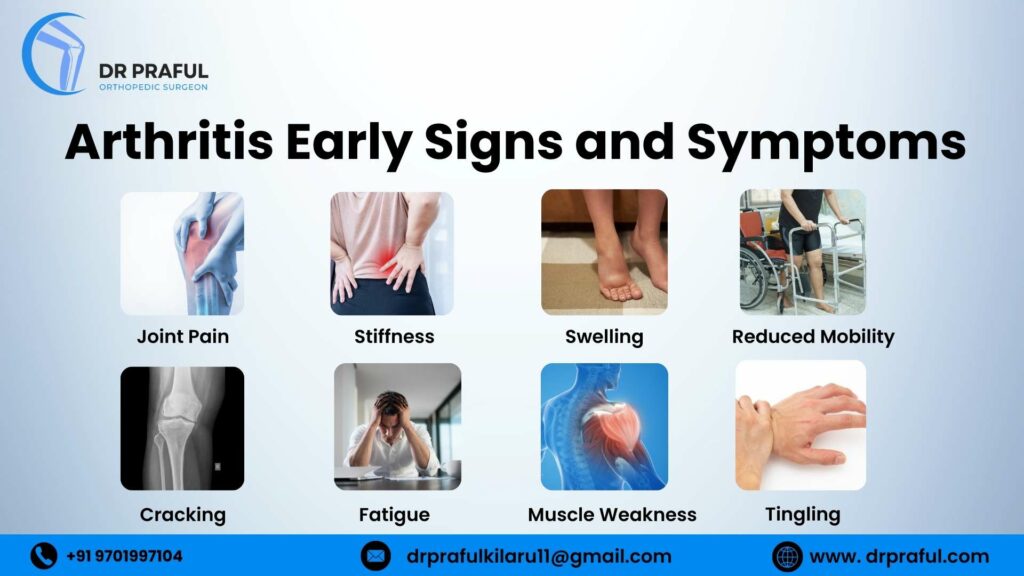
Arthritis is a common joint problem, and it can affect people of any age, not just older adults. Many people ignore the early signs because they feel like normal pain or tiredness. But if not treated early, arthritis can damage joints permanently. It is a group of conditions that cause joint pain, stiffness, swelling, and trouble moving. Common types include osteoarthritis, rheumatoid arthritis, and psoriatic arthritis. Early signs are usually mild, like joint pain, morning stiffness, swelling, or feeling tired. These are warning signs from the body, and noticing them early can help protect your joints and slow down the problem.
Main Early Signs and Symptoms of Arthritis
- Joint Pain
- Morning Stiffness
- Joint Swelling
- Redness and Warmth Around Joints
- Reduced Joint Movement
- Fatigue and Weakness
- Symmetrical Joint Pain (both sides of the body)
- Mild Fever or Weight Loss (in inflammatory arthritis)
Understanding Arthritis in Simple Words
Imagine your joints are like hinges in a door. They help your body move smoothly. In arthritis, these hinges become damaged or inflamed. When this happens, movement becomes painful and stiff. In the early stages, the hinge still works, but not smoothly. That is why early arthritis symptoms are often mild and come and go. In osteoarthritis, cartilage (a soft cushion between bones) slowly wears down. In rheumatoid arthritis, the immune system attacks the joint lining by mistake. This causes inflammation, swelling, and pain. Both conditions can start with small symptoms before becoming serious. In early osteoarthritis, pain usually increases after movement or at the end of the day. In early rheumatoid arthritis, pain and stiffness are often worse in the morning or after rest.
Joint Pain – The First Warning Sign
Joint pain is usually the first sign people notice in arthritis. In the early stage, the pain may come and go. It can feel like a deep ache or discomfort, especially when moving the joint. Sometimes, pain can be felt even at rest if there is swelling inside the joint. Common areas include fingers, knees, wrists, and ankles. At first, it may feel like normal muscle pain, so many people ignore it. But if the pain keeps coming back without any injury, it could be an early sign of arthritis. This pain happens because swelling inside the joint irritates the nerves, causing aching and tenderness.
Morning Stiffness – A Classic Early Symptom
Joint Swelling – Visible Early Sign
Swelling is another common early arthritis symptom. Swelling happens because extra fluid builds up inside joints due to inflammation. Joints may look puffy and feel tight. Swelling often happens in:
- Fingers
- Knees
- Ankles
- Wrists
Swollen joints may feel warm and tender. Sometimes skin becomes slightly red. Swelling may come and go in the early stages, but it becomes constant if arthritis progresses. Medical sources explain that swelling occurs when the joint lining becomes inflamed and produces excess fluid.
Redness and Warmth Around Joints
Inflammation increases blood flow to joints. This makes skin look red and feel warm. Many people notice this when arthritis becomes active. Warm joints are usually a sign of inflammation. This is more common in inflammatory arthritis types like rheumatoid arthritis and psoriatic arthritis. Doctors say swelling, redness, and warmth together strongly suggest joint inflammation.
Reduced Range of Motion
Many people notice they cannot move joints fully. For example, they cannot close their fist fully or bend their knee completely. This happens because inflammation and swelling reduce joint flexibility. Over time, joint damage may also reduce movement. Reduced movement may affect daily activities like walking, holding objects, or climbing stairs.
Fatigue and Body Weakness
Fatigue is very common in inflammatory arthritis. Many people feel tired even after rest. This is not normal tiredness. It is caused by inflammatory chemicals in the body. Some people also experience mild fever, poor appetite, or weight loss. These symptoms are more common in rheumatoid arthritis.
Symmetrical Joint Pain – Important Clue
In rheumatoid arthritis, joints on both sides of the body are often affected. For example:
- Both wrists
- Both knees
- Both finger joints
This pattern helps doctors differentiate rheumatoid arthritis from other types.

Early Symptoms in Different Types of Arthritis
Osteoarthritis Early Symptoms
Osteoarthritis usually starts slowly. Pain increases with movement and improves with rest. Stiffness usually lasts short time after rest. You may feel a grinding sensation while moving joints. Osteoarthritis often affects the knees, hips, and spine first.
Rheumatoid Arthritis Early Symptoms
Rheumatoid arthritis usually causes:
- Long morning stiffness
- Symmetrical joint swelling
- Fatigue
- Mild fever
It often affects the small joints of the hands and feet first.
Psoriatic Arthritis Early Symptoms
This type may cause:
- Joint pain and swelling
- Nail changes
- Swollen fingers or toes
- Fatigue
It often occurs in people with psoriasis.
Early Arthritis Symptoms in Children
Many people don’t know that children can also get arthritis. In children, symptoms may include joint swelling, limping, or reduced activity. Doctors warn parents not to ignore joint pain or swelling in children because early treatment prevents permanent joint damage.
Why Early Diagnosis is Important
Early diagnosis can:
- Prevent joint damage
- Reduce pain
- Improve movement
- Improve quality of life
Without treatment, arthritis can cause permanent joint damage.
When Should You See a Doctor?
You should see doctor if you have joint pain or stiffness lasting more than a few weeks. Especially if symptoms happen daily or get worse over time.Night pain, long morning stiffness, or visible swelling should never be ignored.
How Early Arthritis is Diagnosed
Doctors usually check:
- Symptoms history
- Physical examination
- Blood tests
- X-ray or scan
Early diagnosis helps start treatment early and slow disease progression.
Why Early Detection of Arthritis is Very Important
Many people ignore early arthritis signs because they think it is just normal pain or tiredness. But arthritis is a medical condition that slowly damages the joints if not treated. Early symptoms may come and go, so people often delay seeing a doctor. However, damage can still happen inside the joint without clear signs. Early treatment can reduce swelling, slow the disease, and help protect joints. Common warning signs include joint pain, morning stiffness, swelling, and feeling tired. If stiffness lasts more than 30 minutes, it may be a sign of arthritis and should not be ignored.
Common Early Signs and Symptoms of Arthritis
• Joint Pain
Joint pain is usually the first symptom people notice. In early arthritis, pain may start slowly. At first, it may come only after physical activity. Later, pain may happen even during rest. Many people feel pain in their knees, fingers, wrists, ankles, or hips.
Early arthritis pain may:
- Come and go in the early stages
- Become constant slowly
- Increase during weather changes
- Increase after long sitting
If pain continues for weeks without injury, it should be checked by a doctor. Persistent joint pain, even without activity, can be an early warning sign of arthritis.
• Morning Stiffness
Morning stiffness is one of the most important early arthritis symptoms. Many patients say they feel like their joints are “locked” when they wake up. It may take time before they can move normally. Morning stiffness lasting more than 30 minutes is often seen in inflammatory arthritis conditions. This happens because inflammation builds up overnight when joints are not moving.
• Joint Swelling
Swelling happens due to inflammation inside the joint. It may appear as puffiness around joints. Sometimes joints may feel warm or tender when touched.
Joint swelling may:
- Come suddenly
- Stay for many days
- Increase after activity
Swelling is a major warning sign that should not be ignored.
• Fatigue and Tiredness
Many people think fatigue is not related to arthritis. But inflammation affects the whole body, not just joints. In autoimmune arthritis, like rheumatoid arthritis, fatigue may appear even before joint symptoms.
Patients may feel:
- Low energy
- Body weakness
- Feeling tired without reason
Fatigue can be an early symptom of rheumatoid arthritis before visible joint damage starts.
• Reduced Joint Movement
In early arthritis, joints may lose flexibility. People may feel difficulty bending fingers, knees, or wrists. This happens because inflammation damages the joint lining slowly.
Arthritis Symptoms in Children (Juvenile Arthritis)
Many people think arthritis affects only older adults. But arthritis can also affect children. This condition is called Juvenile Arthritis. Parents often ignore symptoms because they think children are just tired or injured while playing. In children, early symptoms may include joint pain, swelling, and stiffness. If ignored, it can lead to permanent joint damage and growth problems. Doctors warn that early diagnosis in children is very important to prevent disability.
Types of Arthritis and Their Early Symptoms
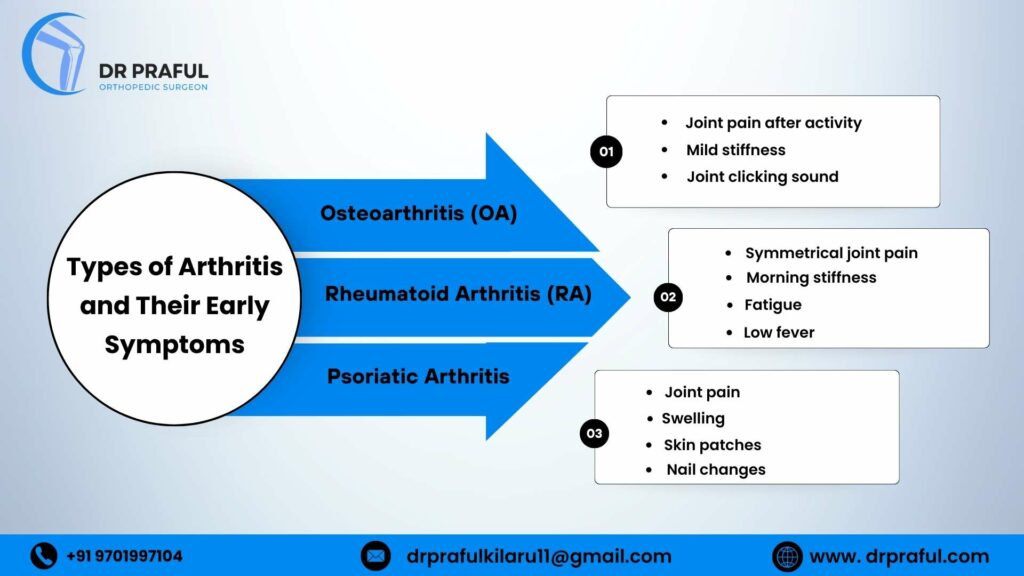
• Osteoarthritis (OA)
Osteoarthritis happens due to joint wear and tear. It is common in older adults but can happen earlier due to obesity or injury.
Early symptoms:
- Joint pain after activity
- Mild stiffness
- Joint clicking sound
• Rheumatoid Arthritis (RA)
Rheumatoid arthritis is an autoimmune condition in which the body’s immune system mistakenly targets and damages the joints.
Early symptoms:
- Symmetrical joint pain
- Morning stiffness
- Fatigue
- Low fever
RA can also affect organs like the skin, eyes, lungs, and heart in severe cases.
• Psoriatic Arthritis
This type occurs in people with psoriasis skin disease.
Early symptoms:
- Joint pain
- Swelling
- Nail changes
- Skin patches
Psoriatic arthritis symptoms may start slowly or suddenly.
Risk Factors That Increase Arthritis Chances
Arthritis does not happen suddenly. Several risk factors can raise the likelihood of developing arthritis.
• Lifestyle Risk Factors
- Obesity
- Smoking
- Poor diet
- Lack of exercise
- Stress
A healthy lifestyle can help reduce the risk of arthritis and slow its progression.
• Medical and Genetic Risk Factors
- Family history
- Autoimmune diseases
- Previous joint injury
- Aging
When Should You Visit a Doctor?
Many people delay visiting doctors for joint pain. But an early medical checkup is very important.
Visit a doctor if:
- Joint pain lasts more than a few weeks
- Morning stiffness lasts more than 30 minutes
- Joint swelling is visible
- Fatigue with joint pain
- Difficulty moving joints
Early treatment can prevent permanent joint damage and improve quality of life.
How Arthritis is Diagnosed Early
Doctors use multiple methods to diagnose arthritis. Diagnosis may include:
- Physical examination
- Blood tests
- X-ray or MRI
- Joint fluid tests
There is no single test for some types of arthritis, so doctors combine symptoms, tests, and history to confirm a diagnosis.
How to Slow Down Arthritis in the Early Stage
• Lifestyle Changes
- Maintain a healthy weight
- Regular exercise
- Healthy diet
- Stress management
- Good sleep
A healthy lifestyle supports joint health and reduces inflammation.
Final Thoughts
Arthritis’s early signs are often small and easy to ignore. But early symptoms are the body’s warning signals. Understanding early symptoms helps people take treatment early and protect their joints for a long time. Arthritis cannot always be cured, but early treatment can help people live normal, active, and pain free lives. If you notice joint pain, stiffness, swelling, or fatigue, it is better to consult a doctor early. Early care can save joints and improve quality of life.
FAQ'S for Arthritis Early Signs and Symptoms
1. What are the earliest signs of arthritis?
Early arthritis usually starts with mild joint pain, stiffness in the morning, swelling, or difficulty moving joints. These symptoms may come and go in the beginning. If these symptoms last for several weeks, it is important to get a medical evaluation
2. Can arthritis start at a young age?
Yes, arthritis can affect young adults and even children. Some types, like rheumatoid arthritis and juvenile arthritis, can start early. Age is not the only factor for arthritis development.
3. How is arthritis pain different from normal body pain?
Normal body pain usually improves with rest and goes away in a few days. Arthritis pain often stays longer, comes back regularly, and may be associated with swelling or stiffness in joints.
4. Is morning stiffness always a sign of arthritis?
Short stiffness for a few minutes is normal. But if stiffness lasts more than 30 minutes daily, especially with joint pain or swelling, it may be an early arthritis sign.
5. Which joints are usually affected first in arthritis?
Arthritis commonly affects knees, fingers, wrists, hips, and ankles. Rheumatoid arthritis usually starts in small joints like fingers and toes, while osteoarthritis often affects knees and hips.
6. Can arthritis symptoms come and go?
Yes, early arthritis symptoms may appear and disappear. Many people feel normal on some days and painful on others. This is why early arthritis is often ignored.
7. What causes early arthritis symptoms?
Early arthritis can be caused by cartilage damage, immune system problems, genetics, injuries, obesity, or lifestyle factors. Sometimes the exact cause is not known.
8. Does the weather affect arthritis symptoms?
Yes, some people notice increased joint pain during cold or rainy weather. Weather changes may affect joint pressure and increase stiffness in some patients.
9. Can children get arthritis?
Yes, children can get arthritis, called juvenile arthritis. Early symptoms include joint swelling, limping, and stiffness. Early treatment helps prevent long-term joint damage.
10. Is swelling always present in early arthritis?
Not always. Some people may have pain and stiffness without visible swelling. But repeated swelling is an important warning sign that should be checked.
11. Can arthritis cause tiredness?
Yes, inflammatory arthritis like rheumatoid arthritis can cause fatigue. This happens because inflammation affects the whole body, not just joints.
12. When should I see a doctor for joint pain?
If joint pain lasts more than 2–3 weeks, or if you have swelling, stiffness, or movement difficulty, you should consult a doctor. Early diagnosis helps with better treatment.
13. Can arthritis be cured if found early?
Most arthritis types cannot be completely cured. But early treatment can control symptoms, slow disease progression, and help maintain normal joint function.
14. Does exercise help early arthritis?
Yes, correct exercise helps keep joints flexible and strong. Low-impact exercises like walking, swimming, and stretching are usually helpful for arthritis patients.
15. Can weight affect arthritis symptoms?
Yes, carrying extra body weight puts more strain on joints, particularly the knees and hips. Maintaining a healthy weight can help lower joint pressure and reduce arthritis pain.
16. Is arthritis genetic?
Some types of arthritis have genetic risk factors. If family members have arthritis, your risk may be slightly higher. But lifestyle also plays an important role.
17. Can arthritis symptoms worsen without treatment?
Yes, untreated arthritis can cause joint damage, reduced movement, and chronic pain. Early treatment helps prevent long-term complications.
18. What tests help diagnose early arthritis?
Doctors may suggest blood tests, X-rays, MRI scans, or joint fluid tests. Diagnosis usually depends on symptoms, physical exam, and test results together.
19. Can stress make arthritis symptoms worse?
Yes, stress can increase inflammation in the body. High stress levels may increase pain perception and make symptoms feel worse.
20. Can diet help control early arthritis symptoms?
A healthy diet rich in vegetables, fruits, and omega-3 foods can help reduce inflammation. Proper nutrition supports overall joint health and body immunity.