
ACL knee surgery recovery usually takes about 6 to 9 months for most people. For athletes who want to return to sports, it may take 9 to 12 months to fully recover. Healing does not happen all at once. It happens step by step, in different stages. Each stage has its own goal. So, instead of thinking of it as one long wait, it is better to understand recovery as a journey with clear phases.
ACL Knee Surgery Recovery Time
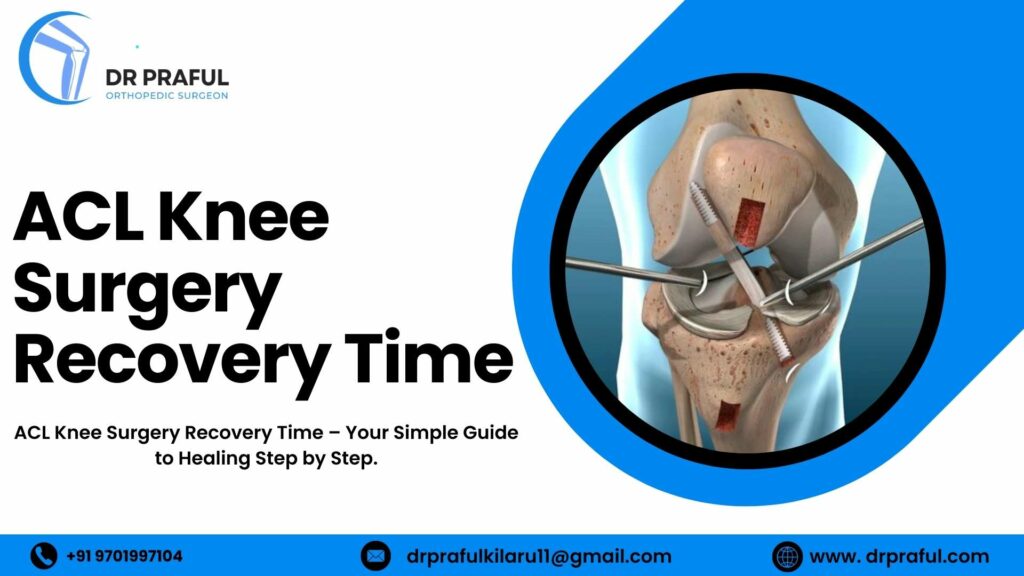
If you or someone close to you has been told they need ACL surgery, one of the first questions that comes to mind is this: How long does ACL knee surgery recovery time really take? It is a very normal concern. Whether you are an athlete, a student, or someone who simply wants to walk and move without pain, knowing what to expect helps reduce fear and confusion. In this detailed guide, I will explain ACL knee surgery recovery time in simple and clear language. Even a 15-year-old can understand it easily. We will talk about what the ACL is, why surgery is needed, how long recovery takes at each stage, what affects healing, and what patients should truly focus on during this journey. The goal is not just to give timelines but to help you understand the process in a practical and honest way.
What Is the ACL and Why Is It Important for Your Knee?
The ACL, which stands for Anterior Cruciate Ligament, is one of the key ligaments located in the center of your knee. Ligaments are strong tissues that connect one bone to another. The ACL links the thigh bone (femur) to the shin bone (tibia) and helps keep the knee steady when you walk, run, or change direction. The ACL helps control movements like sudden stops, jumping, turning, and changing direction. That is why ACL injuries are common in sports such as football, basketball, cricket, and badminton. A sudden twist, awkward landing, or direct impact can tear the ligament. When the ACL is torn completely, the knee may feel unstable. You might feel like your knee “gives way” while walking or running. In such cases, doctors may recommend ACL reconstruction surgery to rebuild the ligament and restore stability.
About the Dr.Praful
- 17+ Years of Excellence in Orthopedics
- MBBS, MS (Orthopaedics)
- AO Trauma Fellowship – Switzerland
- Arthroscopy & Sports Injury Specialist
- Senior Orthopedic Surgeon – Hyderabad
What Happens During ACL Surgery?
ACL surgery is usually done using a simple method called arthroscopy. In this, the surgeon makes small cuts around the knee and uses a tiny camera to see inside. The damaged ligament is removed and replaced with a new tissue called a graft to make the knee stable again. This graft can come from your own body (like a hamstring tendon) or from a donor. Over time, the new graft becomes strong and works like a normal ligament, but this takes time to heal. The surgery usually takes about 1 to 2 hours, and most patients go home the same day or the next day. However, going home does not mean full recovery. Complete healing takes a few months.
ACL Knee Surgery Recovery Time: The Overall Timeline
The First Two Weeks After Surgery
The first two weeks focus mainly on reducing pain and swelling. During this time, your knee will feel sore, tight, and slightly swollen. This is completely normal. The body is reacting to surgery and beginning the healing process. Doctors usually advise rest, ice packs, elevation of the leg, and prescribed medications to manage discomfort. You may need crutches to walk safely. Some patients wear a knee brace for support.
The main goals in this early stage are:
- Control swelling
- Reduce pain
- Begin gentle movement
- Prevent stiffness
Physiotherapy often starts within a few days after surgery. Simple exercises help improve blood circulation and prevent muscle weakness.
Weeks 3 to 6: Regaining Movement
During this stage, the focus shifts from basic healing to regaining knee movement and strength. Swelling usually decreases gradually. You may start walking without crutches if the doctor allows it. Physiotherapy becomes more structured. Exercises are designed to improve knee bending and straightening. Strengthening the thigh muscles, especially the quadriceps, becomes very important. These muscles support the knee joint. You may feel tired easily during this period. That is normal because your body is still healing. Patience is very important. Trying to rush recovery at this stage can cause setbacks.

Weeks 6 to 12: Building Strength and Stability
Between six weeks and three months, many patients feel noticeable improvement. Pain is much less, and walking feels more natural. However, this does not mean the ligament is fully healed. The graft inside the knee is still integrating with the body. During this time, physiotherapy focuses on:
- Improving balance
- Increasing muscle strength
- Restoring coordination
- Practicing controlled movements
Light cycling and swimming may be allowed in some cases. High-impact activities like running or jumping are usually still restricted. This stage requires discipline. Even if you feel better, you must continue exercising regularly.
3 to 6 Months: Returning to Normal Activities
By the third month, most people can do their daily activities more comfortably. Things like office work, light walking, and simple household tasks become easier. Around four to five months, some people may start light jogging if their doctor allows it. However, fast movements or sudden twisting should still be avoided. Muscle strength keeps improving, and the knee feels more stable. But it is important to remember that healing inside the knee is still going on.
6 to 9 Months: Returning to Sports
For people who play sports, this stage is very important. Doctors check your muscle strength, balance, and how stable your knee is before allowing you to play again. Most people can return to full sports activities after 9 to 12 months. This waiting time helps the new ligament become strong enough to handle fast movements and pressure. If you return too early, there is a higher risk of getting injured again. That is why doctors advise being patient to avoid future problems.
What Affects ACL Knee Surgery Recovery Time?
Recovery time is different for everyone. Many things affect how fast a person heals. Age can make a difference, as younger people may heal faster, but following instructions is even more important. Overall health also matters. People who are active before surgery often recover better. Eating healthy food helps the body heal. Avoiding smoking and keeping a healthy weight also support recovery. One of the most important parts is physiotherapy. Patients who do their exercises regularly and follow their doctor’s advice usually recover faster and become stronger.
Common Challenges During Recovery
Recovery is not always perfectly smooth. Some patients experience stiffness, mild swelling after exercise, or temporary muscle weakness. These are common and usually manageable with proper guidance. Fear can also be a challenge. Some patients feel nervous about putting weight on the knee again. Mental confidence is just as important as physical strength. Gradual exposure to movement builds trust in the new ligament. If unusual pain, severe swelling, or instability occurs, it is important to consult the doctor immediately.
Patients Should Have
When thinking about ACL knee surgery recovery time, patients should focus on long-term stability rather than short-term speed. The intention should not be to “recover as fast as possible.” Instead, it should be to “recover properly and safely.” Rushing recovery can lead to re-injury, which may require another surgery. Recovery takes time and cannot be rushed.
Patients should aim for:
- Consistent physiotherapy
- Healthy eating
- Positive mindset
- Clear communication with the doctor
Understanding that recovery takes months helps set realistic expectations.
School, Work, and Daily Life
Many patients worry about returning to school or work. Light desk work is often possible within 2 to 4 weeks, depending on comfort level. Jobs that require standing for long hours may require more time. Students can usually return to school within a few weeks, but should avoid sports until cleared by the doctor. Planning helps reduce stress. Informing teachers or employers about recovery needs ensures smoother adjustment.
Long-Term Outlook
The good news is that ACL reconstruction surgery has a high success rate. Most patients regain knee stability and return to active lifestyles. With proper rehabilitation, many athletes return to their previous performance levels. The key is patience and commitment. The body needs time to rebuild strength and confidence.
Final Thoughts
ACL knee surgery recovery time usually ranges from 6 to 9 months, and sometimes up to a year for athletes. While this may seem long, each phase has a clear purpose. Early weeks focus on healing, middle months build strength, and later months restore full performance. Instead of fearing the timeline, patients should see it as a structured journey toward stability and strength. With proper care, regular physiotherapy, and realistic expectations, recovery can be smooth and successful. If the intention is long term knee health and safe return to activity, then patience becomes your strongest tool.
ACL Knee Surgery Recovery Time – FAQs
1. How long does it take to recover from ACL knee surgery?
Most people need about 6 to 9 months to fully recover. Some athletes may take 9 to 12 months before returning to competitive sports. Recovery speed depends on your age, fitness level, and how well you follow physical therapy.
2. When can I start walking after ACL surgery?
You can usually start walking with the help of crutches within a few days after surgery. Most people walk without crutches after 2 to 4 weeks, depending on their strength and balance.
3. Is ACL surgery recovery very painful?
You will have some pain and swelling during the first few weeks, but doctors give medicines to control it. Ice, rest, and exercise also help reduce pain. The pain slowly gets better as your knee heals.
4. When can I return to school or office work?
Many people return to school or desk work within 1 to 2 weeks, as long as they can keep their leg elevated and avoid too much walking. Jobs that require standing or lifting may take longer.
5. When can I play sports again after ACL surgery?
Light jogging may begin around 3 to 4 months, but full sports like football, basketball, or cricket usually require 6 to 9 months of recovery and training. Your doctor will check your knee strength before clearing you.
6. Why is physical therapy important after ACL surgery?
Physical therapy helps your knee:
- Regain strength
- Improve movement
- Reduce stiffness
- Prevent future injury
Without proper therapy, the knee may feel weak or unstable even after surgery.
7. What happens if I don’t follow the recovery instructions?
If you skip exercises or return to sports too early, your new ACL graft could tear again. Recovery instructions are given to protect your knee and make sure it heals properly.
8. Will my knee ever feel normal again?
Most people feel strong and stable after full recovery. It may not feel exactly like before the injury, but with proper rehab, many patients return to normal activities and sports confidently.
9. How long does swelling last after ACL surgery?
Swelling is common for the first few weeks. Mild swelling may continue for 2 to 3 months, especially after exercise. Ice packs and elevation help control it.
10. Can ACL surgery fail?
ACL surgery has a high success rate. However, it can fail if:
- The graft tears again
- The knee gets injured before full healing
- Rehabilitation is not followed properly
Choosing an experienced surgeon and completing physical therapy reduces the risk.