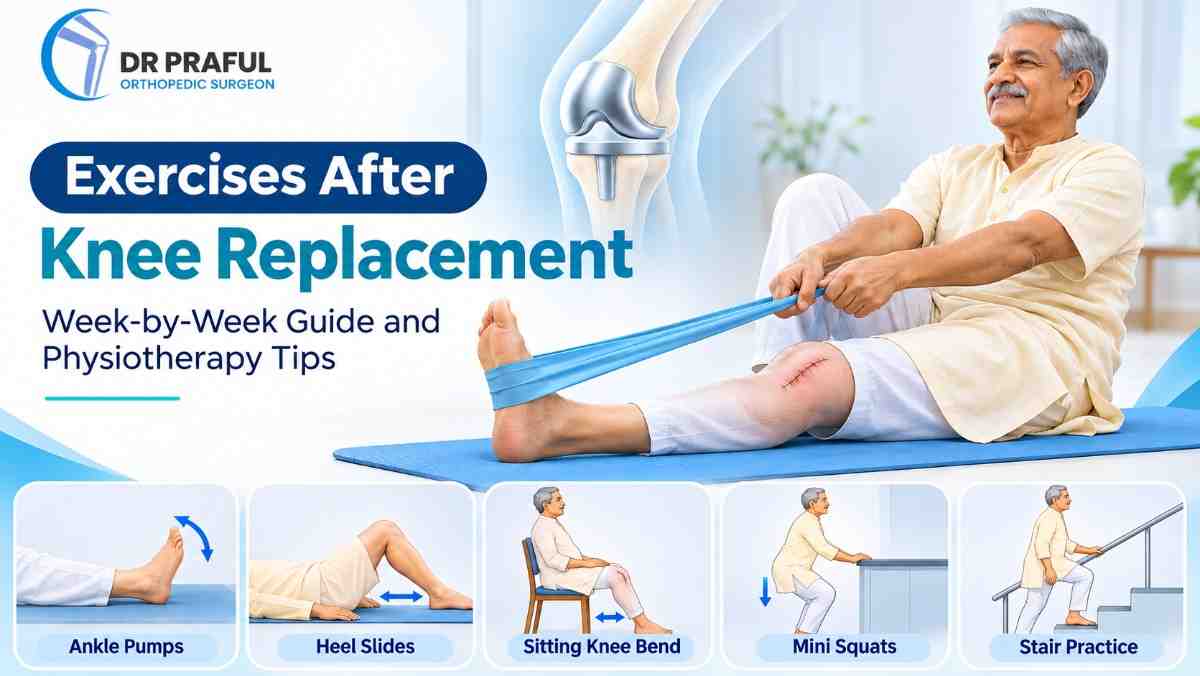
The most important exercises after knee replacement are ankle pumps, quadriceps tightening, straight leg raises, heel slides and knee straightening in the first weeks, followed by sitting knee bends, walking, step-ups, mini squats and a stationary bike as you get stronger. Physiotherapy after knee replacement usually starts within a day of surgery and continues for about 6–12 weeks, with home exercises for several months. Doing your exercises every day, as your surgeon and physiotherapist advise, is the single biggest factor in how well your new knee bends, straightens and works.
Reviewed by Dr. Praful Kilaru, Senior Consultant Joint Replacement & Complex Trauma Surgeon, Yashoda Hospitals, Malakpet, Hyderabad.
Follow your own plan
Every patient and every surgeon's plan is slightly different. Use this guide to understand the exercises, but always follow the programme your surgeon and physiotherapist give you, and stop any exercise that causes sharp pain.
Exercises After Knee Replacement at a Glance
Stage
Main goals
Typical exercises
Days 1–14
Reduce swelling, get the knee straight, start bending, walk with support
Ankle pumps, quad sets, straight leg raises, heel slides, knee straightening, walking with a walker
Weeks 2–6
Bend the knee to about 90 degrees or more, build thigh strength, walk with less support
Sitting knee bends, short arc quads, standing knee bends, stair practice, longer walks
Weeks 6–12
Improve bending, balance and endurance, return to daily activities
Step-ups, mini squats, stationary bike, standing hip exercises, balance work
3 months onwards
Build full strength and confidence for an active life
Longer walks, cycling, swimming, gym-based strengthening as advised
These timings are typical. Some people move faster and others need more time, depending on age, fitness, the knee before surgery and how regularly exercises are done.
Why Exercise Matters After Knee Replacement
A new knee joint needs strong muscles and good movement to work well. After surgery, the knee is swollen and stiff, and the thigh muscles become weak quickly. Regular exercise helps to:
- Get the knee fully straight, which is needed for a normal walking pattern
- Improve bending, so you can sit, climb stairs and get in and out of a car
- Rebuild the thigh (quadriceps) and hip muscles that support the knee
- Reduce swelling and improve blood flow, which lowers the risk of blood clots
- Help you return to normal activities sooner
Scar tissue starts forming in the first few weeks, so this is the most important time to work on movement. For an overview of the full recovery, see our knee replacement recovery timeline.
Week 1–2: Early Exercises After Knee Replacement
These gentle exercises are usually started in hospital, often on the day of surgery or the next day, and continued at home. Aim to do them two to three times a day, or as your physiotherapist advises.
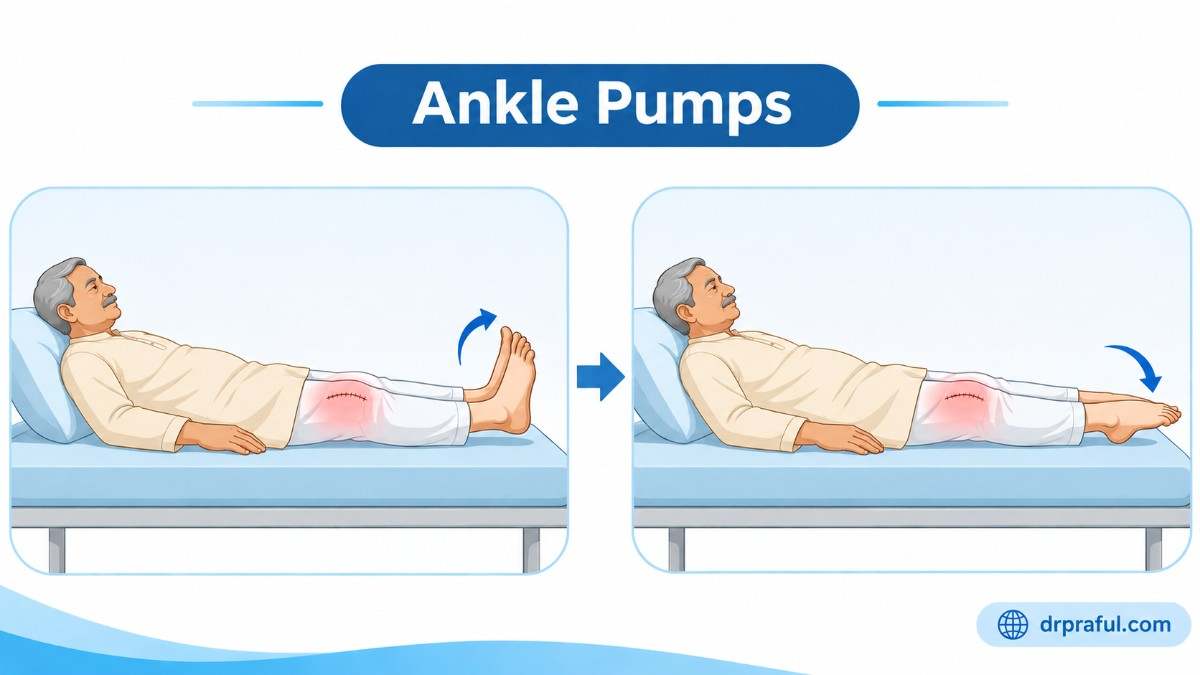
1. Ankle Pumps
Lie on your back with your legs straight. Slowly move your foot up and down at the ankle, as if pressing and releasing a pedal. Repeat 10–20 times every hour while awake. This keeps blood moving in the leg and helps prevent clots.
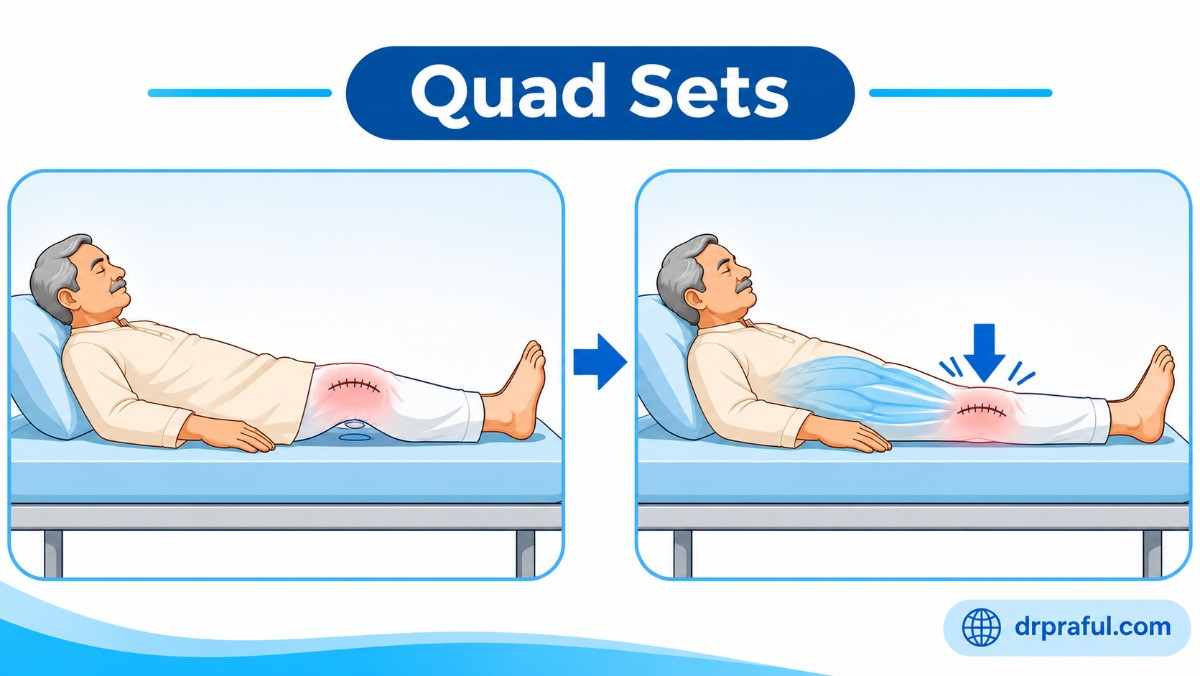
2. Quadriceps Sets (Thigh Tightening)
- Lie on your back with your leg straight
- Tighten the muscle on the front of your thigh by pressing the back of your knee down into the bed
- Hold for 5–10 seconds, then relax
- Repeat 10 times
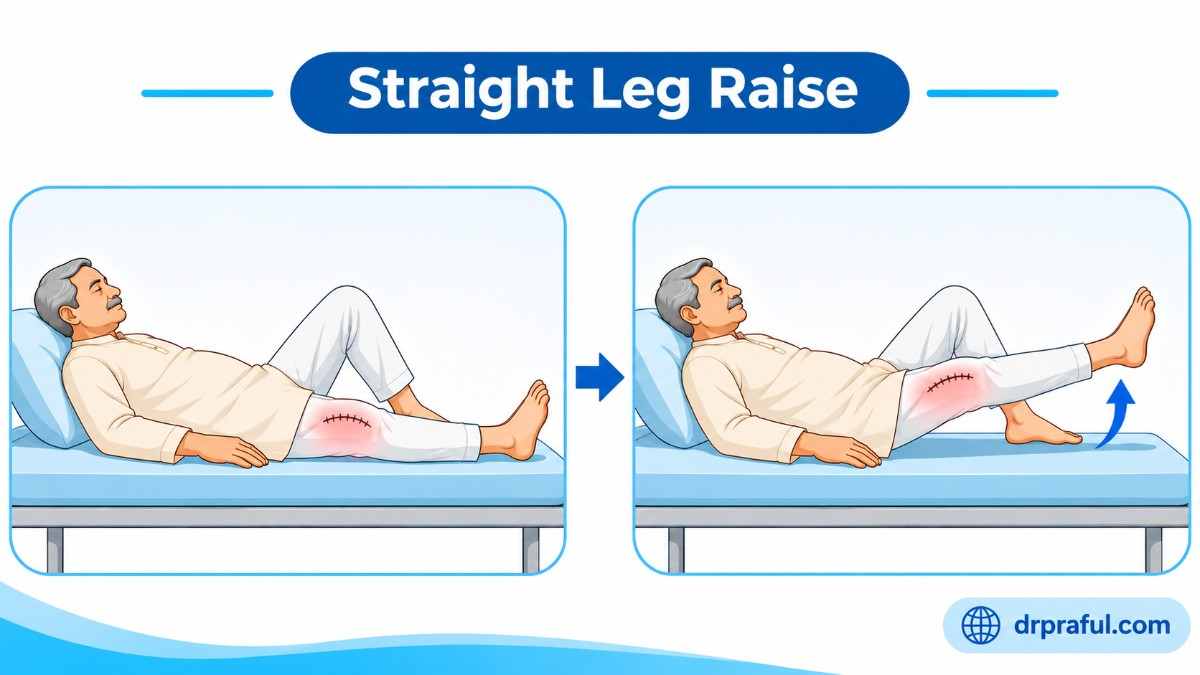
3. Straight Leg Raises
- Lie on your back, bend your other knee and keep the operated leg straight
- Tighten your thigh muscle
- Lift the straight leg about 30 cm off the bed, hold for 5 seconds and lower slowly
- Repeat 10 times; if your knee bends as you lift, keep doing quad sets until you are stronger
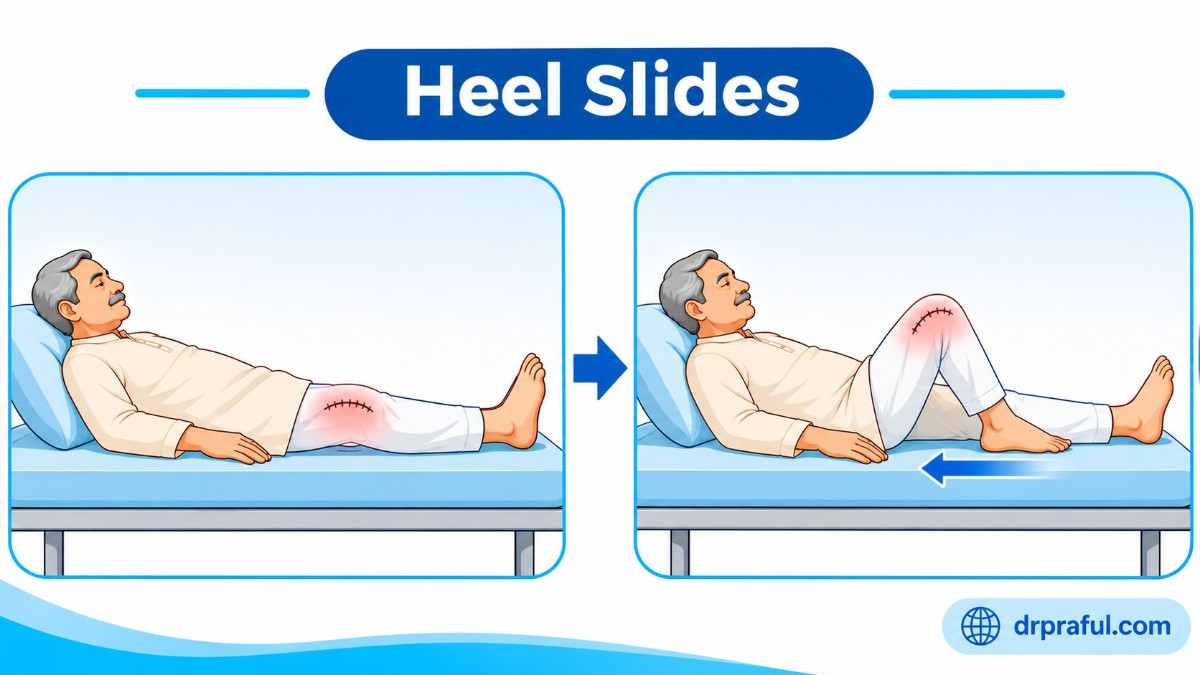
4. Heel Slides (Bed-Supported Knee Bends)
- Lie on your back with your legs straight
- Slowly slide the heel of the operated leg towards your buttock, bending the knee as far as is comfortable
- Hold for 5 seconds, then slide the leg back down
- Repeat 10 times
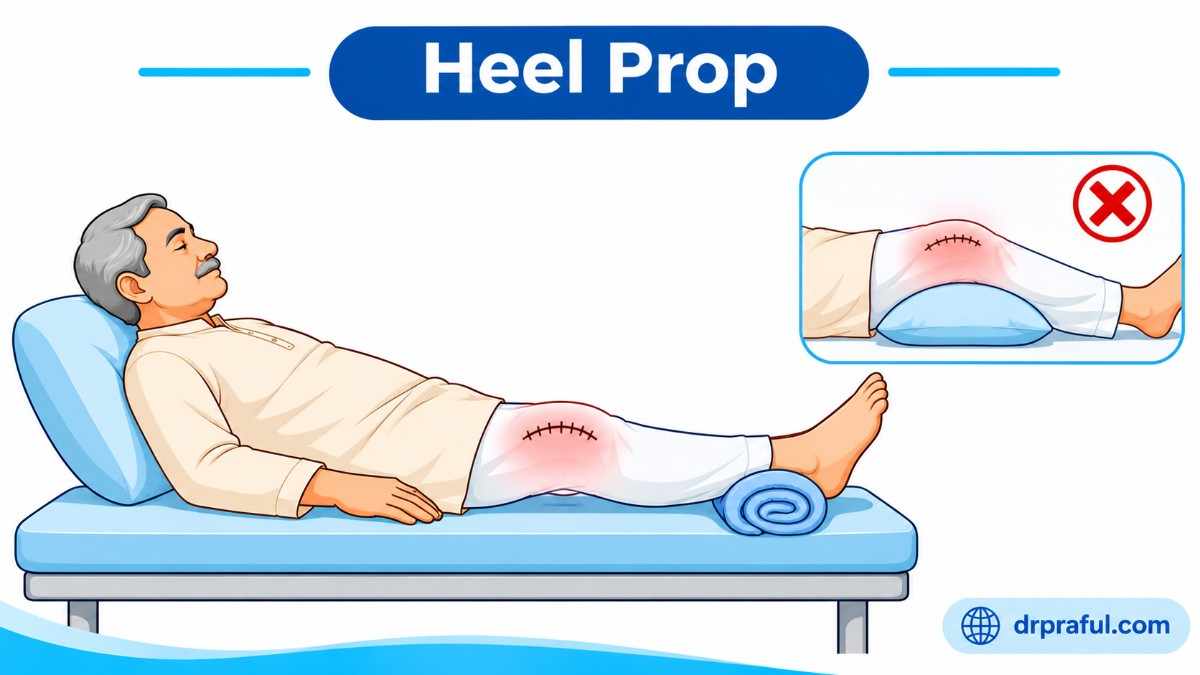
5. Knee Straightening (Heel Prop)
Place a rolled towel under your ankle, not under your knee, so that the knee hangs free. Let the knee relax and straighten for 5–10 minutes. Gentle stretching is normal. Getting the knee fully straight early is very important for walking normally later.
6. Walking with Support
You will usually start walking with a walker or crutches within a day of surgery. Take short, frequent walks, putting weight on the leg as allowed. Gradually walk a little further each day.
Do not keep a pillow under your knee
A pillow under the knee feels comfortable, but it can cause the knee to stiffen in a bent position. Keep the knee straight when resting, and put any support under the ankle instead.
Week 2–6: Building Bend and Strength
As pain and swelling settle, the focus moves to bending the knee further and building strength. Most patients aim to bend the knee to about 90 degrees by around 6 weeks, although this varies.
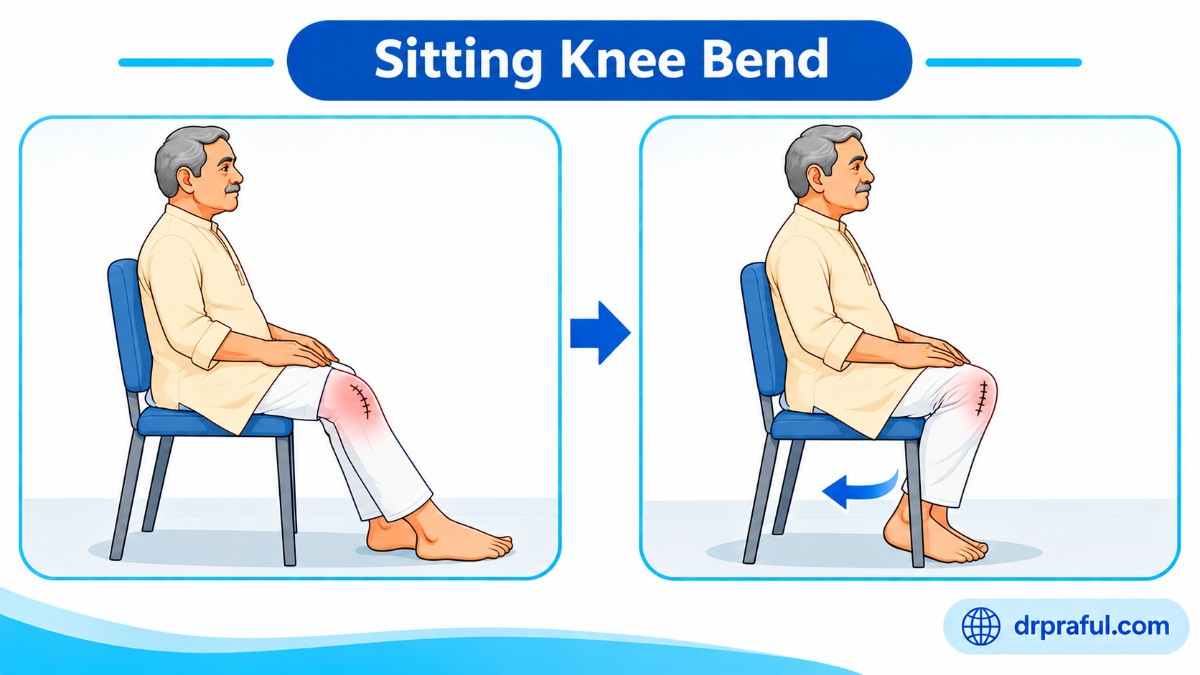
7. Sitting Knee Bends
- Sit on a firm chair with your foot on the floor
- Slide your foot back under the chair, bending the knee as far as you can
- Hold for 5–10 seconds, then straighten
- For a deeper stretch, gently move your body forward in the chair while keeping the foot still
8. Short Arc Quads
Lie on your back with a rolled towel or pillow under the operated knee. Straighten the knee by lifting your heel off the bed, keeping the back of the knee on the towel. Hold for 5 seconds and lower slowly. Repeat 10 times.
9. Sitting Knee Straightening (Long Arc Quads)
Sit in a chair and slowly straighten the operated knee until the leg is out in front of you. Hold for 5 seconds and lower slowly. Repeat 10 times. Ankle weights may be added later if your physiotherapist advises.
10. Standing Knee Bends
Hold on to a counter or the back of a chair. Bend the operated knee by lifting your heel towards your buttock. Hold for 5 seconds and lower slowly. Repeat 10 times.
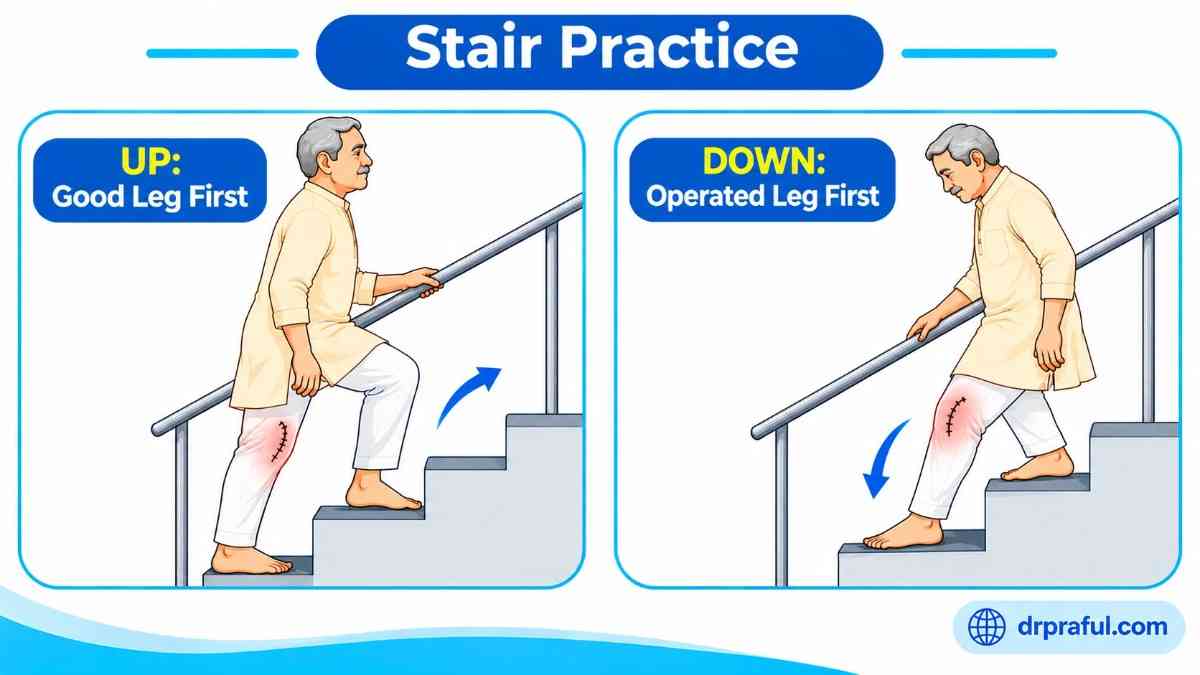
11. Stair Practice
Use a handrail. When going up, step first with the good leg; when coming down, step first with the operated leg. A simple way to remember: "up with the good, down with the bad". Your physiotherapist will check that you are safe on stairs before you go home.
Week 6–12: Advanced Exercises
By this stage, most people are walking with little or no support and returning to many daily activities. Exercises now build strength, balance and endurance.
12. Step-Ups
Stand facing a low step, holding a rail. Step up with the operated leg, then bring the other leg up. Step down slowly. Start with a low step and repeat 10 times.
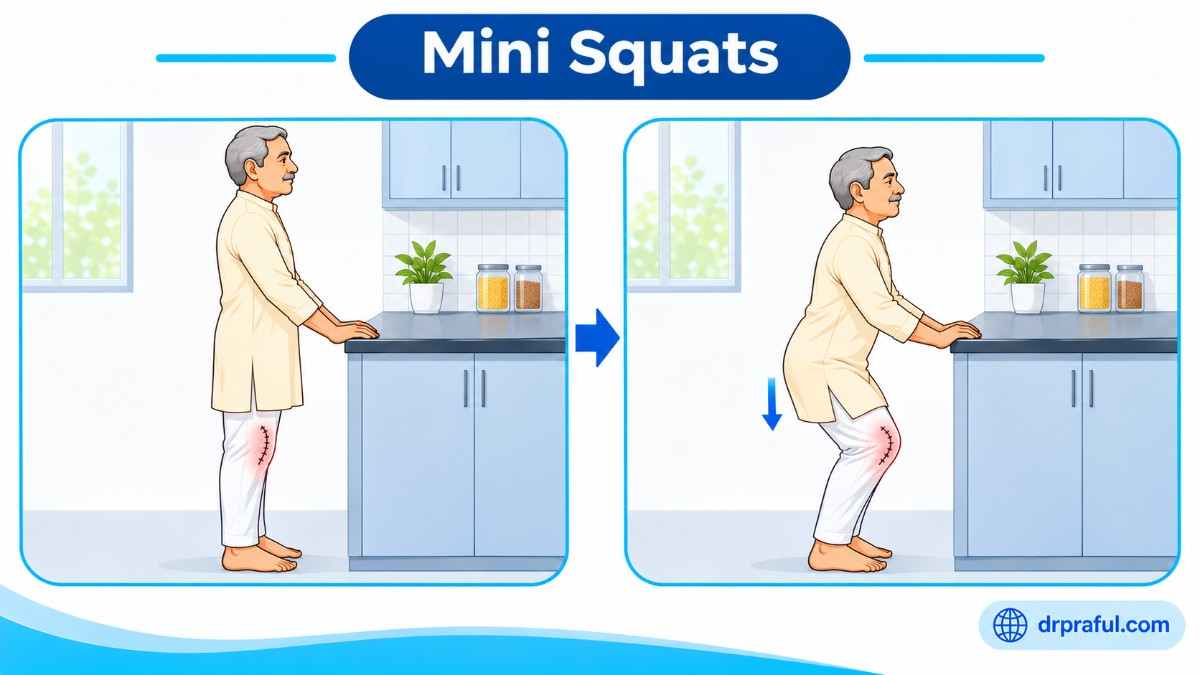
13. Mini Squats
Hold on to a counter with your feet shoulder-width apart. Bend both knees slightly, as if starting to sit, keeping your back straight. Go only a short distance down, then stand up slowly. Repeat 10 times. Avoid deep squats unless your surgeon says they are safe.
14. Stationary Bike
A stationary bike is one of the best ways to improve bending and strength. Start with the seat high and no resistance, and pedal backwards if a full turn is difficult. Gradually lower the seat and add light resistance.
15. Standing Hip Exercises and Balance
Holding on to support, lift the operated leg out to the side, and then backwards, keeping the knee straight. Practise standing on the operated leg for a few seconds at a time to improve balance.
Physiotherapy After Knee Replacement
Physiotherapy is a key part of recovery, not an optional extra. A physiotherapist guides you through each stage, checks how far your knee bends and straightens, corrects your walking pattern and adjusts the exercises as you improve.
Question
Typical answer
When does physiotherapy start?
Usually on the day of surgery or the next day, in hospital
How long does it continue?
Usually about 6–12 weeks of regular sessions, with home exercises for several months
How often should I exercise at home?
Usually two to three times a day in the early weeks, as advised
Is some pain normal?
Mild pain and stretching are normal; sharp or worsening pain is not
What if I miss sessions?
The knee can become stiff and weak, which slows recovery
Taking pain medicines as prescribed about 30–45 minutes before exercise can make sessions more comfortable. Applying an ice pack wrapped in a cloth for 15–20 minutes afterwards can help control swelling. Learn more about our physiotherapy and rehabilitation in Hyderabad.
Exercises and Activities to Avoid
In the early months, avoid activities that put sudden or heavy stress on the new knee:
- Running, jumping and high-impact sports
- Deep squatting, kneeling and sitting cross-legged until your surgeon advises otherwise
- Twisting or pivoting on the operated leg
- Heavy weights or leg-press machines early in recovery
- Pushing through sharp pain
Many people ask about sitting on the floor or using Indian-style toilets. Some patients can do this later, but it depends on the implant, how far the knee bends and your surgeon's advice. A raised toilet seat or commode chair is safer in the first weeks.
Warning Signs to Watch For
Contact your surgeon or hospital promptly if you notice:
- Pain, swelling or tenderness in the calf, which can be a sign of a blood clot
- Sudden shortness of breath or chest pain, which needs emergency care
- Fever, or redness, warmth or discharge from the wound
- A sudden increase in knee pain or swelling
- Your knee becoming much stiffer instead of improving
Exercises Before Knee Replacement (Prehab)
Strengthening the muscles before surgery can make recovery easier. Simple exercises such as quad sets, straight leg raises, sitting knee straightening and gentle walking are a good start. If you are still deciding about surgery, read the signs you need knee replacement surgery and our guide to exercises for knee pain.
Knee Replacement Care with Dr. Praful Kilaru in Hyderabad
Dr. Praful Kilaru is a Senior Consultant Joint Replacement and Complex Trauma Surgeon at Yashoda Hospitals, Malakpet, Hyderabad, with 18 years of orthopaedic experience. Learn more about knee replacement surgery in Hyderabad and total knee replacement, read about total vs partial knee replacement, or visit his orthopaedic practice in Hyderabad and book a consultation.
Frequently Asked Questions: Exercises After Knee Replacement
What are the best exercises after knee replacement?
In the first weeks, ankle pumps, quad sets, straight leg raises, heel slides and knee straightening are the most important. Later, sitting knee bends, step-ups, mini squats, walking and a stationary bike help build strength and movement.
When should I start exercises after knee replacement?
Gentle exercises such as ankle pumps, quad sets and walking with a walker usually start on the day of surgery or the next day, under the guidance of a physiotherapist.
How long is physiotherapy after knee replacement?
Most people have regular physiotherapy for about 6–12 weeks, then continue home exercises for several months. Full strength can take up to a year.
How many times a day should I exercise after knee replacement?
In the early weeks, most programmes recommend doing your exercises two to three times a day. Follow the plan your physiotherapist gives you.
How much should my knee bend after knee replacement?
Many patients aim for about 90 degrees of bend by around 6 weeks, and more over the following months. Getting the knee fully straight is just as important as bending it.
Is it normal to have pain during exercises after knee replacement?
Mild pain, tightness and stretching are normal. Sharp, severe or steadily worsening pain is not, and you should tell your physiotherapist or surgeon.
Can I walk too much after knee replacement?
Walking is good, but doing too much too soon can increase swelling and pain. Increase your walking distance gradually and rest with your leg raised if the knee swells.
When can I use a stationary bike after knee replacement?
Many people can start once the knee bends enough to turn the pedals, often around 4–6 weeks, but some start earlier with a high seat. Ask your physiotherapist when it is right for you.
What happens if I don't do exercises after knee replacement?
The knee may become stiff and the muscles weak, which can lead to a limp, difficulty with stairs and a less satisfying result. In some cases, a stiff knee needs further treatment.
Can I do exercises at home after knee replacement?
Yes. Most exercises can be done at home once your physiotherapist has taught you how. Regular follow-up sessions help check your progress and adjust your programme.
Medical disclaimer: This article is for general information and does not replace advice from your surgeon or physiotherapist. Exercise programmes differ between patients. Stop any exercise that causes sharp pain and seek medical advice.
References: AAOS OrthoInfo: Total Knee Replacement Exercise Guide · NHS: Knee replacement recovery · AAOS OrthoInfo: Total Knee Replacement