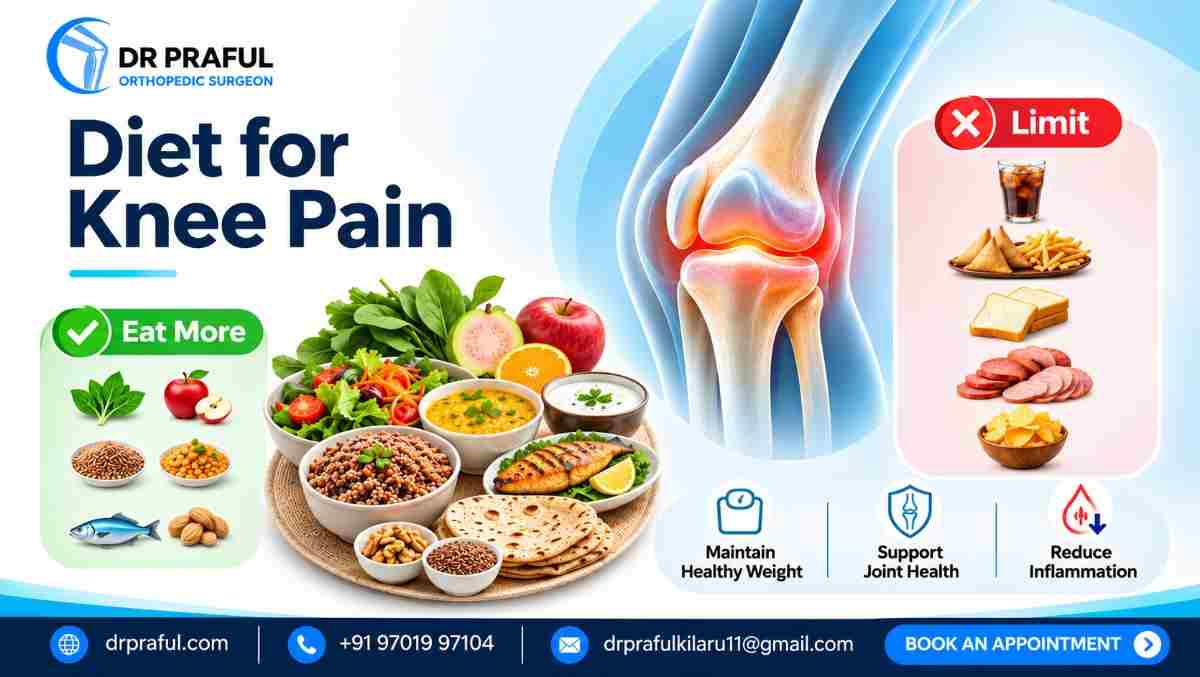
The best diet for knee pain caused by arthritis is a balanced, mostly plant-based diet that helps you reach and keep a healthy weight. Good food for knee joint pain includes vegetables, fruits, whole grains, dals and pulses, nuts and seeds, curd, and fish or other lean protein, cooked with small amounts of healthy oil. Foods to avoid with knee pain include sugary drinks, sweets, fried snacks, processed foods and excess salt. No food can cure knee arthritis or regrow cartilage, but losing extra weight and eating well can noticeably reduce knee pain and help you stay active.
Reviewed by Dr. Praful Kilaru, Senior Consultant Joint Replacement & Complex Trauma Surgeon, Yashoda Hospitals, Malakpet, Hyderabad.
Diet for Knee Pain at a Glance
The table below sums up what to eat more of and what to limit.
Eat more of
Why it helps
Limit or avoid
Why
Vegetables and leafy greens
Fibre, vitamins and antioxidants; fill you up with fewer calories
Sugary drinks and sweets
Add calories and weight with little nutrition
Fruits, especially seasonal fruits
Vitamin C and antioxidants
Fried snacks such as samosas, pakoras and chips
High in calories and unhealthy fats
Whole grains and millets such as ragi, jowar and brown rice
Fibre keeps you full and helps weight control
Refined flour (maida) foods such as biscuits and bakery items
Low fibre, easy to overeat
Dals, pulses, sprouts and beans
Plant protein for strong muscles
Processed and red meats in large amounts
Linked with higher inflammation and weight gain
Fish, eggs, chicken, paneer or tofu
Protein to support the muscles around the knee
Excess salt, pickles and packaged foods
Can raise blood pressure and cause fluid retention
Nuts and seeds such as walnuts, almonds and flaxseed
Healthy fats, including omega-3
Alcohol
Adds calories and can affect sleep and medicines
Curd, milk or other calcium sources
Calcium and protein for bone health
Large portions, even of healthy food
Extra weight puts more load on the knee
Why Diet Matters in Knee Arthritis
Knee osteoarthritis is caused by gradual wear of the cartilage that cushions the knee joint. Diet cannot reverse this wear, but it affects knee pain in two important ways.
First, body weight. Your knees carry your body weight with every step. Research shows that each kilogram of weight lost removes several kilograms of load from the knee during walking. This is why even modest weight loss often eases pain and makes walking and stairs easier.
Second, inflammation. Extra body fat produces substances that can increase inflammation in the joints. A healthy, balanced diet and a healthy weight help keep this in check.
To understand how far your arthritis has progressed, read our guide to knee arthritis grades.
Best Food for Knee Pain and Arthritis
There is no single "superfood" for arthritis. What helps most is the overall pattern of your diet. These foods are good everyday choices:
Vegetables and Fruits
Aim to fill half your plate with vegetables. Leafy greens such as spinach, methi and amaranth (thotakura), and vegetables such as broccoli, cabbage, carrots, beans and gourds, are rich in vitamins, minerals and antioxidants. Seasonal fruits such as guava, oranges, amla, papaya and berries provide vitamin C, which the body needs to make healthy connective tissue.
Whole Grains and Millets
Choose whole grains over refined ones. Ragi, jowar, bajra, brown rice, whole wheat roti and oats give more fibre, keep you full for longer and help control weight. Ragi is also a good source of calcium.
Dals, Pulses and Other Protein
Strong thigh muscles protect the knee joint, and muscles need protein. Good sources include dals, chana, rajma, sprouts, soya, eggs, fish, chicken, paneer and curd. Include some protein in every meal, especially if you are doing exercises for knee pain.
Fish and Omega-3 Fats
Oily fish such as sardines (mathi), mackerel (bangda) and salmon contain omega-3 fats, which have anti-inflammatory effects. Vegetarians can get some omega-3 from walnuts, flaxseed (alsi) and chia seeds. Aim for fish once or twice a week if you eat it.
Nuts, Seeds and Healthy Oils
A small handful of nuts or seeds a day provides healthy fats and protein. Use cooking oils such as groundnut, mustard, rice bran or olive oil in small amounts, and avoid reusing oil for deep frying.
Calcium and Vitamin D
Calcium and vitamin D do not treat arthritis itself, but they keep your bones strong, which matters as you age. Milk, curd, paneer, ragi, sesame seeds and leafy greens provide calcium. Vitamin D comes mainly from sunlight; your doctor may check your level and suggest a supplement if it is low. Read more in our guide on calcium for bones.
Spices: Turmeric, Ginger and Garlic
Turmeric, ginger and garlic are part of everyday Indian cooking and are safe to enjoy in food. Some studies suggest curcumin, the active part of turmeric, may slightly ease arthritis pain, but the effect is modest and it is not a replacement for treatment. Speak to your doctor before taking high-dose turmeric or other herbal supplements, especially if you take blood thinners or other regular medicines.
Foods to Avoid with Knee Pain
No food directly damages the knee, but some foods make weight gain and inflammation more likely. Try to limit:
- Sugary drinks and sweets: soft drinks, packaged juices, sweetened tea and coffee, and mithai
- Fried foods: samosas, pakoras, puris, chips and other deep-fried snacks
- Refined flour (maida): biscuits, white bread, cakes and bakery items
- Processed and red meat: sausages, salami and frequent large portions of mutton
- Too much salt: pickles, papads, namkeen and packaged foods
- Alcohol: adds empty calories and can interact with pain medicines
You do not need to give up these foods completely. Having them occasionally and in small portions is fine for most people.
Gout is different
If your knee is suddenly hot, red and very painful, you may have gout or another type of arthritis, not osteoarthritis. Gout has its own diet advice, such as limiting red meat, organ meats, seafood and alcohol. See a doctor for the right diagnosis.
Common Diet Myths About Knee Arthritis
Many people avoid healthy foods because of myths. Here are some common ones:
Myth
The facts
Curd, buttermilk and "cold" foods worsen knee pain
There is no good evidence for this. Curd is a healthy source of protein and calcium.
Sour foods such as tomatoes, lemon and tamarind damage the joints
There is no evidence that sour or citrus foods harm the knee. Lemon and tomatoes are good sources of vitamin C.
Vegetables such as brinjal, potato and tomato cause arthritis
There is no reliable evidence that these vegetables cause or worsen osteoarthritis.
Eating more calcium will rebuild cartilage
Calcium strengthens bone but does not rebuild cartilage.
Supplements can cure arthritis
No supplement can cure arthritis or regrow cartilage.
If you notice that a particular food clearly makes your symptoms worse, it is reasonable to cut down on it, but avoid cutting out whole food groups without advice.
Do Supplements Help Knee Arthritis?
Many supplements are marketed for joint health, but the evidence for most of them is weak.
- Glucosamine and chondroitin: large studies show little or no benefit for most people, and many guidelines do not recommend them.
- Fish oil (omega-3): may have a small effect on pain and is good for heart health, but it is not a treatment for arthritis.
- Turmeric (curcumin): may give modest pain relief for some people; quality varies between brands.
- Vitamin D: useful if your level is low, but it has not been shown to slow knee arthritis.
Always tell your doctor about any supplements you take, because some can interact with your medicines.
Weight Loss and Knee Pain
For people who are overweight, weight loss is one of the most effective treatments for knee arthritis. Losing even 5–10% of your body weight can noticeably reduce pain and improve how well your knee works.
Simple steps that help:
- Use a smaller plate and fill half of it with vegetables
- Choose roti or millets over large portions of white rice
- Drink water, buttermilk or unsweetened tea instead of sugary drinks
- Keep healthy snacks such as fruit, roasted chana or a few nuts
- Stay active with knee-friendly exercise such as walking on level ground, cycling or swimming
- Aim for slow, steady weight loss of about half to one kilogram a week
Diet and exercise work best together. Exercise builds the muscles that support your knee, while diet helps control weight. Our guide to non-surgical treatments for knee pain explains other options that can help.
A Sample Day of Knee-Friendly Meals
This is an example of a balanced day of meals. Adjust the portions to your needs, and follow any advice from your doctor or dietitian, especially if you have diabetes, kidney disease or another condition.
Meal
Example
Early morning
Water, and a few soaked almonds or walnuts
Breakfast
Ragi dosa or vegetable oats upma with sambar, or two boiled eggs with whole wheat toast
Mid-morning
A seasonal fruit such as guava, orange or papaya
Lunch
Two rotis or a small portion of brown rice, dal, a vegetable curry, salad and a bowl of curd
Evening
Roasted chana or sprouts chaat, with tea without sugar
Dinner
Jowar roti, grilled fish, chicken or paneer, and a leafy vegetable dish
When Diet Is Not Enough
Diet is an important part of looking after your knees, but it works best alongside other treatment. See an orthopaedic doctor if:
- Knee pain continues for more than a few weeks despite healthy eating and exercise
- Pain wakes you at night or is present at rest
- Your knee swells often, locks or gives way
- Walking, stairs or daily activities are becoming difficult
Treatment for knee arthritis may include physiotherapy, medicines and, in advanced cases, surgery. Learn about the early warning signs in our guide to early symptoms of arthritis in the knee, and read about the full range of options on our osteoarthritis treatment in Hyderabad page. If arthritis is severe, read the signs you need knee replacement surgery.
Knee Arthritis Care with Dr. Praful Kilaru in Hyderabad
Dr. Praful Kilaru is a Senior Consultant Joint Replacement and Complex Trauma Surgeon at Yashoda Hospitals, Malakpet, Hyderabad, with 18 years of orthopaedic experience. He assesses knee arthritis at every stage and recommends non-surgical care, including weight management and exercise, whenever it is likely to help. Learn more about his orthopaedic practice in Hyderabad, or book a consultation.
Frequently Asked Questions: Diet for Knee Pain
What is the best diet for knee pain?
For knee pain caused by arthritis, the best diet is balanced and mostly plant-based, with plenty of vegetables, fruits, whole grains, dals, nuts, seeds and lean protein, and limited sugar, fried food and processed food. The most important goal is reaching and keeping a healthy weight.
Which foods should I avoid with knee pain?
Limit sugary drinks, sweets, fried snacks, refined flour (maida) foods, processed meats, excess salt and alcohol. These foods add calories and can increase inflammation.
Can diet cure knee arthritis?
No. Diet cannot cure arthritis or regrow cartilage. However, healthy eating and weight loss can reduce pain, improve movement and help you stay active.
Is curd bad for knee pain?
No. There is no good evidence that curd or buttermilk worsens knee pain. Curd is a healthy source of protein and calcium.
Are tomatoes and lemon bad for arthritis?
There is no evidence that tomatoes, lemon or other sour foods harm the knee joint. They are good sources of vitamin C.
Is milk good for knee arthritis?
Milk and other dairy foods provide calcium and protein, which help keep bones and muscles strong. They do not treat arthritis itself. Choose low-fat options if you are trying to lose weight.
Does turmeric help knee arthritis?
Turmeric in everyday cooking is safe and healthy. Some studies suggest curcumin supplements may slightly ease pain, but the effect is modest. Ask your doctor before taking high-dose supplements.
Should I take glucosamine for knee arthritis?
Large studies show little or no benefit from glucosamine for most people, and many guidelines do not recommend it. Discuss it with your doctor before spending money on it.
How much weight should I lose to help my knee pain?
Losing 5–10% of your body weight can noticeably reduce knee pain for many people who are overweight. For example, a person weighing 80 kg may feel a difference after losing 4–8 kg.
Can a vegetarian diet help knee arthritis?
Yes. A balanced vegetarian diet with dals, pulses, curd, paneer, nuts, seeds, whole grains and plenty of vegetables provides the protein and nutrients you need and can support weight control.
Medical disclaimer: This article is for general information and does not replace medical or dietary advice. If you have diabetes, kidney disease, gout or another health condition, or take regular medicines, please consult your doctor or a qualified dietitian before changing your diet.
References: NHS: Osteoarthritis · AAOS OrthoInfo: Arthritis of the Knee · NIAMS: Osteoarthritis