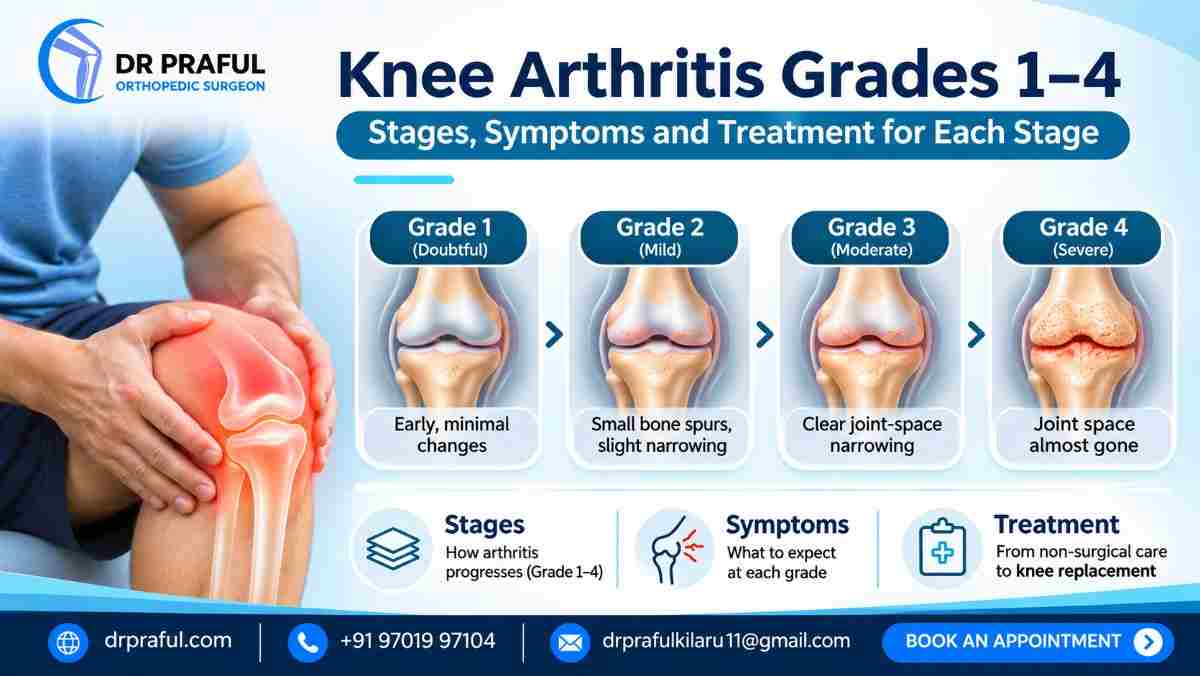
Knee arthritis grades describe how much wear an X-ray shows in your knee, on a scale from grade 0 (normal) to grade 4 (severe). Grade 1 shows only doubtful changes, grade 2 shows small bone spurs, grade 3 shows clear narrowing of the joint space, and grade 4 means the joint space is almost gone. Most people with grade 1–3 knee arthritis are treated without surgery. Knee replacement is usually considered only for grade 4, or advanced grade 3, when pain and stiffness seriously affect daily life despite other treatment.
Reviewed by Dr. Praful Kilaru, Senior Consultant Joint Replacement & Complex Trauma Surgeon, Yashoda Hospitals, Malakpet, Hyderabad.
Knee Arthritis Grades at a Glance
Doctors most often use the Kellgren–Lawrence (KL) scale, which grades knee osteoarthritis from an X-ray.
Grade
What the X-ray shows
Usual symptoms
Usual treatment
Grade 0
Normal knee
None from arthritis
No treatment needed
Grade 1 (doubtful)
Possible tiny bone spurs; joint space looks normal
Often none, or mild ache after activity
Exercise, weight control, activity changes
Grade 2 (mild)
Definite small bone spurs; joint space may be slightly narrow
Pain after long walks or stairs, mild stiffness
Physiotherapy, strengthening, weight loss, pain relief
Grade 3 (moderate)
Several bone spurs, clear joint-space narrowing, harder bone ends
Pain on most days, swelling, stiffness, difficulty squatting
Non-surgical care, sometimes injections or a brace; surgery for some
Grade 4 (severe)
Large bone spurs, joint space almost gone, possible deformity
Pain at rest or at night, bowing, limping
Knee replacement if pain and function are badly affected
The grade is only one part of the picture. Your symptoms, age, activity and general health matter just as much when deciding treatment.
What Is Knee Arthritis?
Knee arthritis, usually osteoarthritis, happens when the smooth cartilage that covers the ends of the thigh bone and shin bone slowly wears thin. As it thins, the bones move closer together, the body forms bony growths called bone spurs (osteophytes), and the joint becomes painful and stiff.
Osteoarthritis often develops over many years. It can affect the inner side of the knee, the outer side, the area behind the kneecap, or the whole joint. To learn the early warning signs, read our guide on the early symptoms of arthritis in the knee.
How Are Knee Arthritis Grades Measured?
Knee arthritis is graded mainly from a standing X-ray of the knee. Standing matters, because the joint space narrows under body weight and shows the true amount of wear.
On the X-ray, the doctor looks at:
- Joint space: the gap between the bones, which shows how much cartilage is left
- Bone spurs (osteophytes): small bony growths at the joint edges
- Sclerosis: hardening and whitening of the bone just under the cartilage
- Deformity: bowing of the leg (bow legs) or knock knees
An MRI can show early cartilage damage that an X-ray cannot, but it is not usually needed to grade typical knee osteoarthritis.
Grade 1 Knee Arthritis (Doubtful)
Grade 1 means the X-ray shows only doubtful changes, such as a possible tiny bone spur, with a normal joint space.
Many people with grade 1 have no symptoms at all. Some notice a mild ache after a long walk, sport or a busy day.
What helps at this stage:
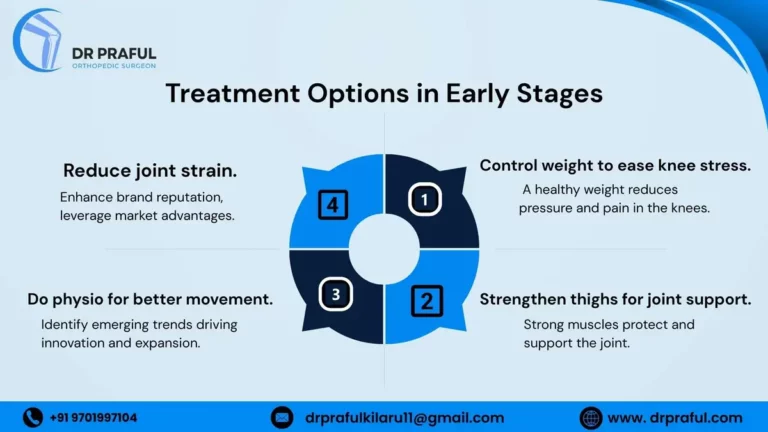
- Regular low-impact exercise such as walking, cycling or swimming
- Strengthening the thigh and hip muscles
- Keeping a healthy weight
- Avoiding repeated deep squatting if it causes pain
Grade 2 Knee Arthritis (Mild)
Grade 2 means there are definite small bone spurs, and the joint space may be slightly narrowed.
You may notice pain after walking long distances or climbing stairs, stiffness after sitting, and occasional mild swelling.
Treatment is still non-surgical:
- A guided physiotherapy programme to strengthen the muscles around the knee
- Weight loss if you are overweight; even a 5–10% loss can noticeably ease knee pain
- Simple pain relief when needed, as advised by your doctor
- Supportive footwear and pacing activities through the day
Our guide on the best exercises for knee pain shows safe exercises to start with.
Grade 3 Knee Arthritis (Moderate)
Grade 3 means several bone spurs, clear narrowing of the joint space and early hardening of the bone ends. The leg may start to bow slightly.
Symptoms are usually more frequent: pain on most days, swelling after activity, stiffness, cracking sounds, and difficulty squatting, sitting cross-legged or using Indian-style toilets.
Treatment at this stage may include:
- Continued exercise and physiotherapy, which remain the foundation of care
- Weight management
- A knee brace or walking stick for support on bad days
- Pain-relief medicines, used carefully and for short periods
- Joint injections in selected cases to settle a painful flare
- Surgery for some patients, such as a realignment operation (osteotomy) or a partial knee replacement when only one part of the knee is worn
Many people with grade 3 still manage well without surgery for years. See our guide on non-surgical treatments for knee pain.
Grade 4 Knee Arthritis (Severe)
Grade 4 means the joint space is almost gone, with large bone spurs and often a visible deformity such as bow legs. The bones may rub directly against each other.
Common problems include pain even at rest or at night, a stiff knee that will not fully bend or straighten, limping, and needing support to walk.
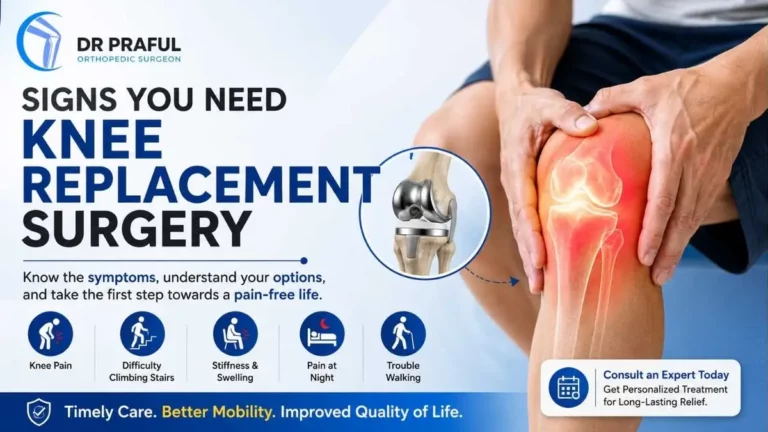
Non-surgical treatment can still ease symptoms for some people, but when pain and stiffness seriously limit daily life, knee replacement surgery is usually the most effective option. Read the signs you need knee replacement surgery to see when it may be time.
Treatment by Stage: A Simple Guide
The table below shows how treatment usually builds up as arthritis progresses.
Treatment
Grade 1–2
Grade 3
Grade 4
Exercise and physiotherapy
Yes, main treatment
Yes, main treatment
Yes, before and after surgery
Weight management
Yes
Yes
Yes
Pain relief medicines
Occasionally
Short courses
For flare-ups
Brace or walking stick
Rarely
Sometimes
Often
Joint injections
Rarely
In selected cases
Short-term relief only
Osteotomy or partial knee replacement
No
For some patients
For some patients
Total knee replacement
No
Rarely
Often, if symptoms are severe
The X-ray is not the whole story
Two people with the same grade can feel very differently. Some people with grade 4 X-rays walk comfortably, while some with grade 2 have a lot of pain. Doctors treat the person and their symptoms, not just the X-ray.
Can Knee Arthritis Get Worse?
Knee osteoarthritis can slowly progress, but not everyone moves from one grade to the next, and the speed varies a lot from person to person. Some people stay at the same grade for many years.
Things that can speed up progression include being overweight, weak thigh muscles, a previous knee injury such as a meniscus or ligament tear, bow legs or knock knees, and heavy kneeling or squatting at work.
Things that help protect your knee:
- Keeping a healthy weight
- Strengthening the thigh and hip muscles
- Staying active with low-impact exercise
- Getting old knee injuries properly treated
Can Knee Arthritis Be Reversed?
No treatment can currently regrow worn cartilage or reverse the grade seen on an X-ray. However, exercise, weight loss and the right treatment can greatly reduce pain, improve movement and help many people live actively without surgery. Our guide to the diet for knee pain explains which foods help and which to limit.
Be careful of treatments that promise to "cure" or "regrow" knee cartilage. Ask your doctor about the evidence before spending money on them.
When Should You See an Orthopaedic Doctor?
See a doctor if you have:
- Knee pain lasting more than a few weeks
- Swelling that keeps coming back
- Stiffness that makes walking, stairs or sitting difficult
- Pain at night or at rest
- A knee that is bowing, locking or giving way
Seek urgent care for a hot, red, swollen knee with fever, or if you suddenly cannot put weight on the leg.
For more on assessment and treatment options, see our page on osteoarthritis treatment in Hyderabad and knee pain treatment in Hyderabad.
Knee Arthritis Care with Dr. Praful Kilaru in Hyderabad
Dr. Praful Kilaru is a Senior Consultant Joint Replacement and Complex Trauma Surgeon at Yashoda Hospitals, Malakpet, Hyderabad, with 18 years of orthopaedic experience. He assesses knee arthritis at every stage and recommends non-surgical treatment first whenever it is likely to work. Learn more about his orthopaedic practice in Hyderabad, or book a consultation and bring your knee X-rays with you.
Frequently Asked Questions About Knee Arthritis Grades
What are the 4 grades of knee arthritis?
Grade 1 is doubtful arthritis with possible tiny bone spurs, grade 2 is mild with definite bone spurs, grade 3 is moderate with clear joint-space narrowing, and grade 4 is severe with the joint space almost gone and large bone spurs. Grade 0 means a normal knee.
Is grade 2 knee arthritis serious?
Grade 2 is mild. Most people manage it well with exercise, physiotherapy and weight control. It is a good stage to start protecting the knee.
Can grade 3 knee arthritis be treated without surgery?
Often, yes. Many people with grade 3 arthritis improve with physiotherapy, weight loss, pain relief, a brace and sometimes injections. Surgery is considered when these do not give enough relief.
Does grade 4 knee arthritis always need knee replacement?
Not always. Knee replacement is advised when pain and stiffness seriously affect daily life despite other treatment. Some people with grade 4 X-rays manage with non-surgical care for some time.
Can knee arthritis go from grade 2 to grade 4?
It can, but usually slowly over years, and not everyone progresses. Weight control, strong thigh muscles and treating old injuries can help slow it down.
Can knee arthritis be reversed with exercise?
Exercise cannot regrow cartilage or change the X-ray grade, but it can greatly reduce pain, improve movement and delay the need for surgery.
Which test is used to grade knee arthritis?
A standing X-ray of the knee is the main test. An MRI is used only when another problem is suspected or more detail is needed.
Is walking good for grade 3 knee arthritis?
Yes, walking on level ground is usually helpful. Start with comfortable distances, use supportive footwear, and avoid steep slopes or long stair climbs if they increase pain.
What is bone-on-bone knee arthritis?
It is a common way of describing grade 4 arthritis, when the cartilage has worn away so much that the bones nearly touch on the X-ray.
At what grade is knee replacement done?
Knee replacement is usually done for grade 4, and sometimes advanced grade 3, arthritis when pain and loss of function are severe and other treatments have not helped. The decision depends on symptoms, not the X-ray alone.
Medical disclaimer: This article is for general information and does not replace a medical examination. Knee pain has many causes. Please see a qualified doctor for diagnosis and treatment.
References: AAOS OrthoInfo: Arthritis of the Knee · NHS: Osteoarthritis · NIAMS: Osteoarthritis