
Knee Pain While Climbing Stairs in Young Age: Causes, Treatment & When to See a Doctor
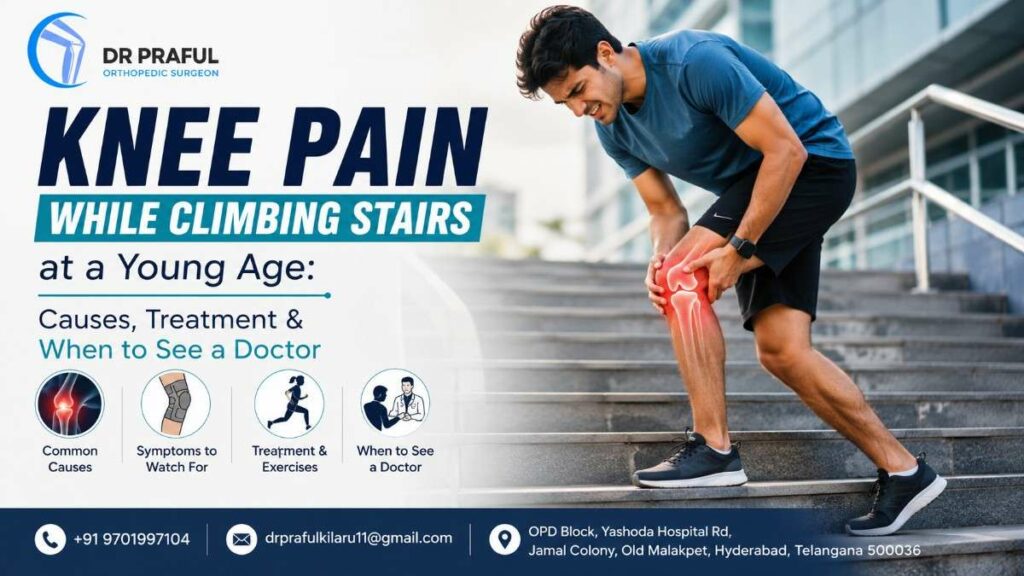
Most people think knee pain only affects older adults. But that isn’t true.
Today, many teenagers, college students, gym-goers, office workers, and young professionals experience knee pain while climbing stairs. You may notice pain when walking upstairs, getting out of a chair, squatting, or after exercising.
Sometimes the pain is mild and disappears after rest. In other cases, it keeps coming back and slowly becomes worse.
Ignoring knee pain is never a good idea. Early diagnosis and treatment can prevent small problems from turning into serious injuries.
In this article, you’ll learn:
- Why knee pain happens while climbing stairs
- Common causes in young adults
- Symptoms to watch for
- Home remedies
- Medical treatments
- Exercises that may help
- When you should see an orthopedic specialist
Why Does Knee Pain Occur While Climbing Stairs?
When you climb stairs, your knees work much harder than when walking on flat ground.
In fact, your knee joint experiences 3 to 4 times your body weight while climbing stairs. If something inside the knee isn’t functioning properly, this extra pressure can cause pain.
The pain may come from:
- Cartilage
- Kneecap (Patella)
- Tendons
- Ligaments
- Muscles
- Meniscus
- Joint lining
Even a small problem can become noticeable because stairs put extra stress on the knee.
Is Knee Pain Normal at a Young Age?
No.
Occasional soreness after a very intense workout may be normal.
However, if you regularly experience pain while climbing stairs, squatting, running, or walking, your knee is trying to tell you that something needs attention.
Persistent knee pain should never be ignored simply because you’re young.
Common Causes of Knee Pain While Climbing Stairs
1. Patellofemoral Pain Syndrome (Runner’s Knee)
One of the most frequent reasons young adults experience knee pain is Patellofemoral Pain Syndrome
The kneecap doesn’t move smoothly over the thigh bone, causing irritation and pain.
Symptoms
- Pain around the front of the knee
- Pain while climbing stairs
- Pain after sitting for a long time
- Grinding sensation
- Clicking sounds
People at higher risk include:
- Runners
- Cyclists
- Gym beginners
- Teenagers
- Office workers
2. Overuse Injury
Doing too much exercise without enough recovery can overload your knee.
Examples include:
- Running every day
- Jump training
- Heavy squats
- Stair workouts
- Long-distance trekking
Tiny injuries build up over time, leading to pain.
3. Weak Thigh and Hip Muscles
Strong muscles help support your knee.
If your quadriceps, hamstrings, or hip muscles are weak, the knee absorbs more pressure than it should.
Weak muscles are one of the leading causes of knee pain in young office workers.
4. Patellar Tendinitis (Jumper’s Knee)
The tendon connecting your kneecap to your shin bone becomes irritated.
This condition is common among:
- Basketball players
- Volleyball players
- Football players
- Gym enthusiasts
Symptoms
- Pain below the kneecap
- Pain while climbing stairs
- Pain while jumping
- Tenderness
5. Meniscus Injury
The meniscus helps protect your knee by cushioning the joint and keeping movement smooth.
Twisting the knee suddenly during sports or gym workouts can tear it.
Symptoms include:
- Locking
- Clicking
- Swelling
- Pain while climbing stairs
- Difficulty bending the knee
6. Ligament Injuries
Ligaments keep the knee stable.
A sudden twist, awkward landing, or direct impact during sports or an accident can injure the ACL, MCL, or other knee ligaments.
Signs include:
- Sudden pain
- Swelling
- Knee giving way
- Difficulty walking
- Instability
7. Chondromalacia Patella
This condition happens when the smooth cartilage beneath the kneecap is damaged, making knee movement painful.
It often causes:
- Pain while climbing stairs
- Pain after prolonged sitting
- Grinding sensation
- Front knee pain
8. Improper Exercise Technique
Many young people experience knee pain because of poor workout form.
Common mistakes include:
- Knees moving inward during squats
- Lifting excessive weights
- Skipping warm-up
- Ignoring stretching
- Wearing worn-out shoes
Correcting technique often reduces pain.
What Does the Pain Feel Like?
The type of pain can provide clues about the cause.
You may experience:
- Sharp pain
- Dull aching pain
- Burning sensation
- Clicking
- Popping
- Grinding
- Knee stiffness
- Swelling
- Feeling that your knee may suddenly give out during movement
The exact cause should be confirmed by a doctor.
Risk Factors
You’re more likely to develop knee pain if you:
- Exercise without proper form
- Sit for long hours
- Suddenly increase workout intensity
- Are overweight
- Have weak leg muscles
- Play high-impact sports
- Have flat feet
- Wear improper footwear
Can Knee Pain Go Away on Its Own?
Sometimes.
Minor muscle strain or temporary overuse may improve with rest.
However, pain lasting more than a few weeks or recurring every time you climb stairs usually requires medical evaluation.
Delaying treatment for persistent knee pain can lead to further damage and a longer recovery period.
Home Remedies for Mild Knee Pain
If the pain is mild and there was no major injury, you can try these steps.
Rest
Avoid activities that make the pain worse for a few days.
Ice Therapy
Apply an ice pack for 15–20 minutes.
Repeat 3–4 times daily during the first 48 hours.
Compression
An elastic knee support may reduce swelling and provide comfort.
Elevation
Keep your leg elevated while resting to reduce swelling.
Gentle Stretching
Simple stretches for the thigh and calf muscles may reduce tightness.
Avoid painful stretches.
Wear Supportive Shoes
Proper footwear reduces stress on your knees.
Replace shoes that have lost cushioning.
Exercises That May Help
Exercise should not increase pain. If it does, stop and consult a doctor.
Common strengthening exercises include:
- Straight leg raises
- Quad sets
- Wall sits (only if comfortable)
- Hamstring stretches
- Calf stretches
- Clamshell exercise
- Glute bridges
- Step-ups under guidance
A physiotherapist can recommend the most suitable exercises for your condition.
What Should You Avoid?
If your knee hurts while climbing stairs, avoid:
- Deep squats
- Jumping exercises
- Running on hard surfaces
- Heavy leg workouts
- Ignoring pain
- Self-medicating for weeks without evaluation
Pain is a warning sign. Continuing painful activities may worsen the condition.
When Should You See an Orthopedic Doctor?
Consult an orthopedic specialist if you have:
- Pain lasting more than two weeks
- Pain every time you climb stairs
- Swelling
- Knee locking
- Knee giving way
- Difficulty walking
- Severe pain after an injury
- Fever with knee swelling
- Inability to bear weight
Early diagnosis often leads to faster recovery and prevents long-term complications.
How Is Knee Pain Diagnosed?
Your orthopedic doctor will begin by asking about:
- When the pain started
- Your activity level
- Sports participation
- Previous injuries
- Location of pain
The doctor may then perform:
- Physical examination
- Range of motion testing
- Ligament tests
- Meniscus tests
If necessary, imaging studies may be recommended, such as:
- X-ray
- MRI scan
- Ultrasound (in selected cases)
These tests help identify the underlying cause and guide treatment.
Treatment Options
Treatment depends on the cause of your knee pain.
It may include:
Activity Modification
Reducing activities that worsen pain while staying active in safe ways.
Physiotherapy
Strengthening muscles around the knee improves stability and function.
Medications
Your doctor may prescribe pain-relieving or anti-inflammatory medicines when appropriate.
Knee Bracing
A brace may provide additional support in certain conditions.
Injections
Some patients may benefit from injections depending on the diagnosis.
Surgery
Surgery is usually considered only when conservative treatment fails or when there are significant injuries such as ligament tears or certain meniscus injuries.
Can Knee Pain Be Prevented?
Yes. Many cases are preventable.
Follow these habits:
- Warm up before exercise.
- Increase workout intensity gradually.
- Maintain a healthy body weight.
- Strengthen your thigh, hip, and core muscles.
- Stretch regularly.
- Wear proper sports shoes.
- Learn correct exercise technique.
- Avoid overtraining.
- Rest adequately between workouts.
- Listen to your body and don’t ignore persistent pain.
Small daily habits can make a big difference in protecting your knees.
Frequently Asked Questions
Is knee pain while climbing stairs serious?
Not always. It may be caused by muscle weakness or overuse, but it can also indicate cartilage, tendon, or ligament problems. Persistent pain should be evaluated.
Why do only young people get this problem?
They don’t. However, young adults often develop knee pain due to sports, gym workouts, poor posture, muscle weakness, and repetitive stress rather than age-related arthritis.
Should I stop exercising completely?
Usually, no. The goal is to modify activities rather than stop moving altogether. Low-impact exercises and guided rehabilitation are often recommended until symptoms improve.
Can walking make knee pain worse?
Gentle walking is generally well tolerated, but if walking or climbing stairs consistently increases pain, you should seek medical advice before continuing strenuous activity.
Which exercises should I avoid?
Avoid exercises that increase pain, such as deep squats, jumping, or heavy leg workouts, until you have been properly assessed.
Key Takeaway
Knee pain while climbing stairs at a young age is more common than many people realize. Although it may seem like a minor problem at first, recurring pain is often a sign that your knee needs attention.
Whether the cause is muscle weakness, overuse, a tendon injury, cartilage damage, or a sports-related condition, getting the right diagnosis early can prevent future complications and help you return to your normal activities safely.
If your knee pain persists, worsens, or is accompanied by swelling, locking, or instability, don’t ignore it. A timely consultation with an orthopedic specialist can make all the difference.
Consult Dr. Praful – Orthopedic Surgeon in Hyderabad
If you’re experiencing knee pain while climbing stairs, persistent discomfort during daily activities, or recurring sports injuries, professional evaluation can help identify the exact cause and guide the most effective treatment.
Dr. Praful provides comprehensive orthopedic care for knee pain, sports injuries, arthritis, ligament injuries, and joint disorders with personalized treatment plans designed to help patients recover safely and regain mobility.
Book your consultation today to receive an accurate diagnosis and expert orthopedic care