
Growth Plate Injuries in Kids: Symptoms, Causes, Treatment, and Recovery in 2026
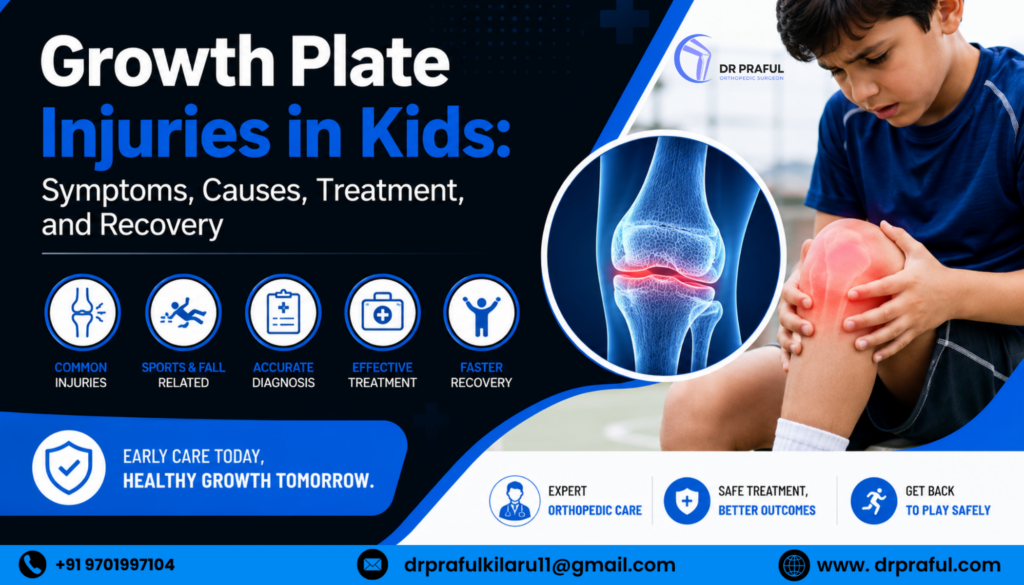
What Are Growth Plate Injuries in Kids?
Growth plate injuries in kids occur when the soft cartilage areas at the ends of growing bones become damaged due to sports injuries, falls, or accidents. These injuries account for nearly 15%–30% of childhood fractures between 2024 and 2026. Early diagnosis and treatment help prevent growth problems, bone deformities, and long-term mobility issues.
Introduction
Children are constantly running, jumping, climbing, and playing. While these activities are important for healthy development, they also increase the risk of injuries. One injury that parents often overlook is a growth plate injury.
Growth plates are responsible for bone growth during childhood and adolescence. Because these areas are softer than mature bones, they are more vulnerable to damage. A seemingly minor fall or sports injury can sometimes affect a growth plate and interfere with normal bone development.
The good news is that most growth plate injuries heal completely when diagnosed early. In this guide, you’ll learn how to identify growth plate injuries, understand their causes, explore treatment options, and discover ways to protect your child’s growing bones.
Why Are Growth Plate Injuries Important?
Growth plates are the last portions of bones to harden during development.According to pediatric orthopedic research published between 2024 and 2026
- Growth plate injuries account for approximately 15%–30% of all childhood fractures.
- More than half of these injuries occur during sports activities.
- Children aged 10–16 years are most commonly affected.
- Boys and girls participating in competitive sports face a higher risk.
Because growth plates control future bone growth, damage to these areas requires prompt medical evaluation.
About the Dr.Praful
Meet Dr. Praful Kilaru is currently working as a Senior Consultant Joint Replacement and Complex Trauma Surgeon at Yashoda Hospitals, Malakpet

- 18 Years of Excellence in Orthopedics
- MBBS, MS (Orthopaedics)
- AO Trauma Fellowship – Switzerland
- Arthroscopy & Sports Injury Specialist
- Senior Orthopedic Surgeon – Hyderabad
What Is a Growth Plate?
A growth plate is a soft area of developing cartilage found near the ends of children’s bones. It helps bones grow longer and determines their future shape and length.Understanding Growth Plates in Children
Growth plates remain open throughout childhood and adolescence, allowing bones to grow. Since they are softer than mature bones, they are more vulnerable to fractures and injuries.
Which Bones Are Most Commonly Affected?
Growth plate injuries can occur in almost any growing bone.The most common locations include
Growth Plate Injury in the Wrist
The wrist is one of the most frequently injured areas because children often fall onto an outstretched hand.
Growth Plate Injury in the Ankle
Twisting injuries during sports commonly affect ankle growth plates.
Growth Plate Injury in the Knee
High-impact activities can place significant stress on the knee growth plate
Growth Plate Injury in the Fingers
Ball sports frequently cause finger growth plate fractures.
What Causes Growth Plate injuries in Kids?
Growth plate injuries in kids are commonly caused by sports activities, falls, playground accidents, overuse during training, and high-impact trauma. Because growth plates are softer than mature bones, they can be damaged more easily during physical activities and accidents.
- Cricket
- Football
- Basketball
- Volleyball
- Gymnastics
- Athletics
- Tennis
- Monkey bars
- Slides
- Bicycles
- Scooters
- Trampolines
- Excessive running
- Frequent jumping
- Intensive gymnastics
- Throwing sports

What Are the Symptoms of Growth Plate Injuries?
Common Growth Plate Injury Symptoms
- Persistent pain
- Swelling near a joint
- Tenderness to touch
- Difficulty moving a limb
- Limping
- Reduced sports performance
- Visible deformity in severe cases
Types of Growth Plate Injuries
Type I
A Type I injury occurs when the fracture passes directly through the growth plate without affecting the surrounding bone. These injuries usually heal well with proper treatment.
Type II
A Type II fracture involves both the growth plate and the nearby bone. It is the most common type of growth plate injury seen in children and adolescents.
Type III
A Type III fracture extends through the growth plate and into the joint surface. Accurate treatment is important to maintain normal joint function and bone growth.
Type IV
A Type IV injury crosses the growth plate, nearby bone, and joint surface. These fractures may require surgery to ensure proper healing and alignment.
Type V
A Type V injury occurs when the growth plate is compressed or crushed due to a severe force. This is the rarest type but carries the highest risk of growth disturbances and long-term complications.
When Should You See an Orthopedic Specialist?
Seek immediate medical attention if your child experiences:
- Severe pain
- Significant swelling
- Difficulty walking
- Limited movement
- Visible deformity
- Persistent symptoms after an injury
Conclusion
Growth plate injuries in kids are common, especially among active children and young athletes. While many injuries heal successfully, delayed treatment can affect normal bone growth and lead to long-term complications. Recognizing symptoms early, seeking prompt orthopedic care, and following recommended treatment plans can help ensure a full recovery. If your child has persistent pain, swelling, or difficulty moving after an injury, schedule an orthopedic evaluation as soon as possible to protect their growing bones and future mobility.
FAQ'S
1. What is a growth plate injury in children?
A growth plate injury occurs when the soft cartilage near the ends of a child’s bones gets damaged. These injuries can affect normal bone growth if not treated properly.
2. Are growth plate injuries common?
Yes, growth plate injuries are relatively common in children and teenagers. They account for about 15%–30% of all childhood fractures.
3. Which age group is most affected?
Growth plate injuries are most common in children and adolescents between 10 and 16 years of age. Active participation in sports increases the risk.
4. Can growth plate injuries affect height?
In severe cases, growth plate injuries can interfere with normal bone growth. This may lead to limb length differences or growth-related deformities.
5. What is the most common growth plate fracture?
Wrist growth plate fractures are among the most frequently reported injuries in children. They often occur after falls onto an outstretched hand.
6. How long does a growth plate injury take to heal?
Most growth plate injuries heal within 4 to 12 weeks, depending on the severity and location of the injury. Recovery may take longer for complex fractures.
7. Do all growth plate injuries require surgery?
No, many growth plate injuries can be treated with rest, casting, or splinting. Surgery is usually needed only for severe or displaced fractures.
8. Can my child play sports after recovery?
Yes, most children can safely return to sports after the injury has completely healed. A doctor’s clearance is recommended before resuming activities.
9. How are growth plate injuries diagnosed?
Doctors diagnose growth plate injuries through physical examinations and imaging tests. X-rays, MRI scans, and CT scans may be used when necessary.
10. When should I see a doctor for a suspected growth plate injury?
You should seek medical attention if your child experiences persistent pain, swelling, limping, or difficulty moving a limb after an injury. Early treatment helps prevent complications.