
Diet for Bone Fracture: Foods to Eat and Avoid for Faster Recovery in 2026
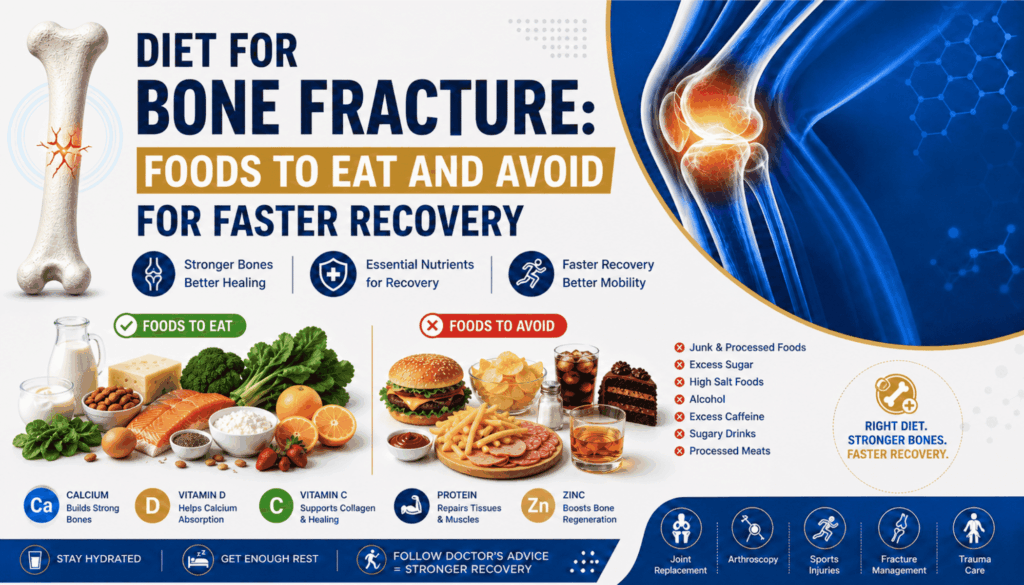
Table of Contents
- Why Diet Matters in Bone Fracture Recovery
- Best Foods to Eat for Bone Fracture Healing
- Foods to Avoid During Bone Fracture Recovery
- Conclusion
- FAQs
Introduction
A bone fracture does not heal with medicine and rest alone—your diet plays a major role in how quickly and effectively your bones recover. When a bone breaks, your body immediately starts repairing damaged tissues, rebuilding bone cells, and restoring strength. For this healing process to happen properly, your body needs the right nutrients every day.
Many people focus only on treatment but ignore nutrition, which can slow down recovery. The foods you eat after a fracture can either support bone regeneration or delay the healing process. In this guide, you will learn which foods help broken bones heal faster and which foods should be avoided during recovery.
Why Diet Matters in Bone Fracture Recovery
Bone healing is a complex biological process. After a fracture, your body creates new bone tissue, repairs damaged blood vessels, and rebuilds connective tissues around the injured area. To complete this process efficiently, your body requires essential vitamins, minerals, and proteins.
Without proper nutrition, bone repair may become slower, muscles around the injured area may weaken, and recovery can take longer than expected. A nutrient-rich diet not only supports fracture healing but also improves bone density and overall joint health.
That is why doctors often recommend paying close attention to your daily food intake during fracture recovery.
About the Dr.Praful
Meet Dr. Praful Kilaru is currently working as a Senior Consultant Joint Replacement and Complex Trauma Surgeon at Yashoda Hospitals, Malakpet

- 17+ Years of Excellence in Orthopedics
- MBBS, MS (Orthopaedics)
- AO Trauma Fellowship – Switzerland
- Arthroscopy & Sports Injury Specialist
- Senior Orthopedic Surgeon – Hyderabad
Best Foods to Eat for Bone Fracture Healing
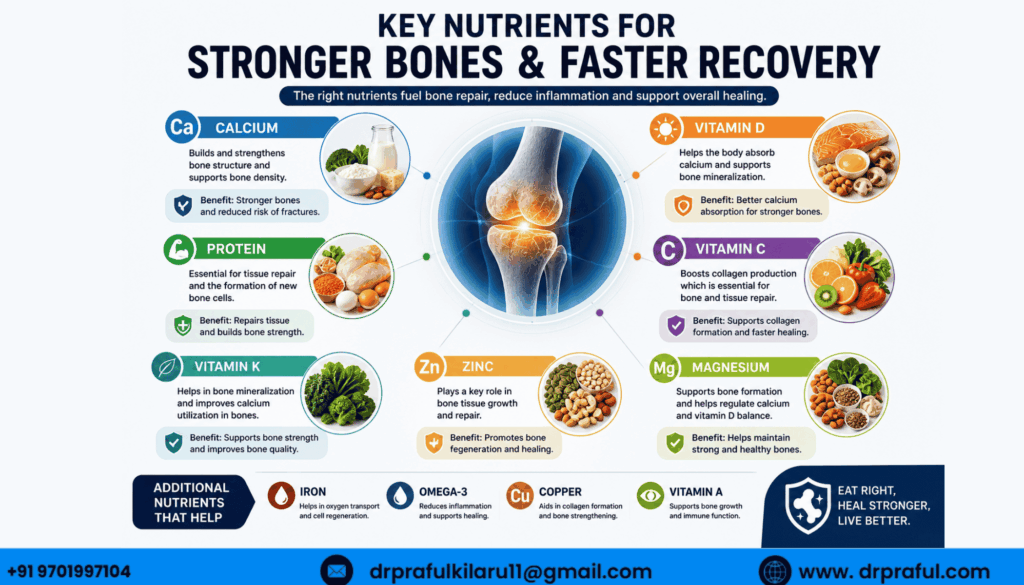
The right foods can speed up bone recovery by supplying the nutrients needed for tissue repair, collagen production, and bone mineralization. Adding these foods to your daily diet can help your body heal stronger and faster.
Protein-Rich Foods
Protein is one of the most important nutrients during fracture recovery. It helps repair damaged tissues, supports muscle strength, and assists in rebuilding bone cells.Good sources include:
- Eggs
- Fish
- Chicken
- Milk and dairy products
- Lentils and beans
- Nuts and seeds
- Tofu and soy products
Calcium-Rich Foods
Calcium is one of the most important minerals for bone health. When a bone breaks, the body uses calcium to rebuild and strengthen the damaged area. A calcium-rich diet supports bone mineralization and helps the fracture heal properly.
If your calcium intake is low during recovery, bone healing may become slower. That is why doctors often recommend calcium-rich foods after fractures or orthopedic injuries.
Some of the best calcium-rich foods include:
- Milk
- Yogurt
- Cheese
- Almonds
- Sesame seeds
- Spinach and kale
- Tofu
- Fortified plant-based milk
Vitamin D Sources
Vitamin D plays a major role in bone fracture recovery because it helps the body absorb calcium more effectively. Without enough vitamin D, even a calcium-rich diet may not support proper bone healing. This nutrient also helps improve bone density, muscle strength, and overall skeletal health during recovery.
After a fracture, maintaining healthy vitamin D levels can support faster bone regeneration and reduce the risk of delayed healing. Both natural sunlight and food sources can help meet your daily vitamin D requirements.
Good sources of vitamin D include:
- Fatty fish such as salmon, sardines, and mackerel
- Egg yolks
- Fortified milk and cereals
- Mushrooms
- Morning sunlight exposure
Including these sources regularly can help your body build stronger and healthier bones.
Vitamin C-Rich Foods
Vitamin C is essential during bone healing because it supports collagen production. Collagen is an important protein that forms the structural framework of bones, tissues, ligaments, and cartilage. Without enough vitamin C, the bone repair process may become slower.
This nutrient also acts as an antioxidant, helping reduce inflammation and support tissue recovery. Including vitamin C-rich foods in your daily diet can improve healing and overall immunity.
Excellent sources of vitamin C include:Regular intake of these foods can support faster tissue repair and stronger bone healing
- Oranges and sweet lime
- Kiwi and strawberries
- Guava
- Lemons
- Tomatoes
- Bell peppers
- Papaya
Foods to Avoid During Bone Fracture Recovery
When your body is healing from a bone fracture, nutrition becomes just as important as medical treatment and rest. While certain foods help rebuild bone tissue, some foods can actually slow down the healing process. These foods may reduce calcium absorption, increase inflammation, weaken bone repair, or interfere with the body’s ability to produce new bone cells.
Avoiding unhealthy food choices during recovery can support faster healing, better bone strength, and improved overall recovery. Here are some foods you should limit or avoid during bone fracture healing.
Sugary Foods and Drinks
Foods high in sugar can increase inflammation in the body and may interfere with the absorption of important minerals needed for bone repair. Excess sugar can also weaken the immune system, which may affect tissue healing.
Examples include chocolates, pastries, cakes, candies, soft drinks, packaged juices, ice creams, and sweet desserts. Reducing sugar intake during recovery can help your body focus on healing.
Junk and Processed Foods
Processed foods often contain unhealthy fats, excess sodium, preservatives, and very little nutritional value. These foods may trigger inflammation and provide no essential nutrients for bone regeneration.
Examples include burgers, pizzas, French fries, instant noodles, packaged snacks, chips, frozen foods, and processed fast food items. Replacing these with fresh, home-cooked meals is a healthier choice
Excess Salt and High-Sodium Foods
Too much salt can cause the body to lose calcium through urine, which may affect bone strength during recovery. High sodium intake may reduce the amount of calcium available for bone repair.
Examples include pickles, chips, packaged soups, processed sauces, ketchup, salted nuts, canned foods, and ready-to-eat meals. Reading food labels can help reduce hidden sodium intake.
Alcohol
Alcohol can slow down bone healing by interfering with the formation of new bone tissue. It may also affect balance, increasing the risk of falls or re-injury during the recovery period.
Examples include beer, wine, whiskey, vodka, cocktails, and other alcoholic beverages. Avoiding alcohol during fracture recovery can improve healing outcomes.
Excess Caffeine
Too much caffeine may reduce calcium absorption and increase calcium loss from the body. While moderate caffeine intake may be acceptable, excessive consumption can affect bone healing.Examples include strong coffee, energy drinks, excessive tea, caffeinated soft drinks, and pre-workout drinks. Limiting caffeine can support better calcium retention.
Highly Processed Meat
Although protein is essential for healing, processed meat often contains excess sodium, preservatives, and unhealthy fats that may increase inflammation.Examples include sausages, bacon, salami, processed chicken, canned meat, and packaged meat products. Lean protein sources are a better option during recove
Carbonated Soft Drinks
Some carbonated drinks contain phosphoric acid and high sugar content, which may affect calcium balance in the body over time. Frequent consumption may not support healthy bone recovery.Examples include cola drinks, flavored sodas, fizzy energy drinks, and packaged carbonated beverages.During bone fracture recovery, choosing nutrient-rich foods and avoiding these unhealthy options can make a major difference in how quickly and effectively your bones heal
Conclusion:
Recovering from a bone fracture requires more than just casts, medication, and rest. Nutrition plays a powerful role in how quickly and effectively your bones heal. By eating foods rich in protein, calcium, vitamin D, and other essential nutrients, you can actively support your body’s natural repair process.At the same time, avoiding alcohol, excessive caffeine, junk food, and high-salt foods can prevent delays in healing. With the right diet, proper rest, and medical guidance, your bones can recover stronger and healthier over time.

FAQ'S
1. What is the best diet for bone fracture recovery?
Foods like milk, eggs, fish, chicken, leafy green vegetables, nuts, seeds, fruits, and legumes are excellent for bone healing. They provide essential nutrients that support bone repair and help strengthen the injured area.
2. Which foods help broken bones heal faster?
Yes, most knee pain cases can be treated without surgery. Orthopedic specialists recommend physiotherapy, medications, lifestyle changes, and advanced non-surgical treatments based on the condition.
3. How important is protein in bone fracture healing?
Protein is extremely important because it helps repair damaged tissues and supports muscle recovery around the injured bone. A lack of protein may slow down healing and reduce overall strength during recovery.
4. Does calcium really help heal broken bones?
Yes, calcium plays a major role in bone regeneration because it helps rebuild the bone structure. Without enough calcium, the healing process may become slower, and bone strength may not fully recover.
5. Why is vitamin D important after a bone fracture?
Vitamin D helps your body absorb calcium effectively, which is essential for bone repair. Even if your diet contains enough calcium, low vitamin D levels can affect how well your bones heal.
6. Which fruits are good for bone fracture recovery?
Fruits like oranges, kiwi, berries, guava, lemons, and papaya are rich in vitamin C. Vitamin C supports collagen formation, which helps repair connective tissues and strengthen healing bones.
7. What foods should be avoided during bone fracture recovery?
Foods high in sugar, excess salt, alcohol, processed foods, and junk food should be avoided. These foods may increase inflammation, reduce nutrient absorption, and slow down the bone healing process.
8. Can coffee or tea affect bone healing?
Too much coffee or tea may increase calcium loss from the body because caffeine can affect calcium retention. Moderate consumption is usually fine, but excessive intake may delay fracture recovery.
9. How long does it take for a bone fracture to heal with proper nutrition?
Healing time depends on the type of fracture, age, overall health, and treatment. With proper nutrition, rest, and medical care, most fractures may heal within 6 to 12 weeks.
10. Can poor diet delay bone fracture recovery?
Yes, poor nutrition can significantly slow down bone healing because the body may not get enough nutrients to repair damaged tissues. A balanced diet supports stronger, faster, and healthier bone recovery