
Is Robotic Surgery Worth the Cost? Benefits, Risks & Orthopedic Guide
Introduction
In recent years, robotic-assisted surgery has become one of the most talked-about innovations in orthopedic care. From knee replacements to hip surgeries, hospitals and surgeons are increasingly adopting robotic systems to improve precision and patient outcomes.
But along with this advanced technology comes a common concern among patients
Is robotic surgery really worth the extra cost?
This question is especially important in orthopedic procedures, where treatment decisions directly impact mobility, pain relief, and quality of life. While robotic surgery promises accuracy and faster recovery, it often comes at a higher price compared to traditional surgical methods.
In this comprehensive guide, we will break down everything you need to know — from how robotic surgery works to its benefits, risks, costs, and whether it truly justifies the investment.
What is Robotic Surgery in Orthopedics?
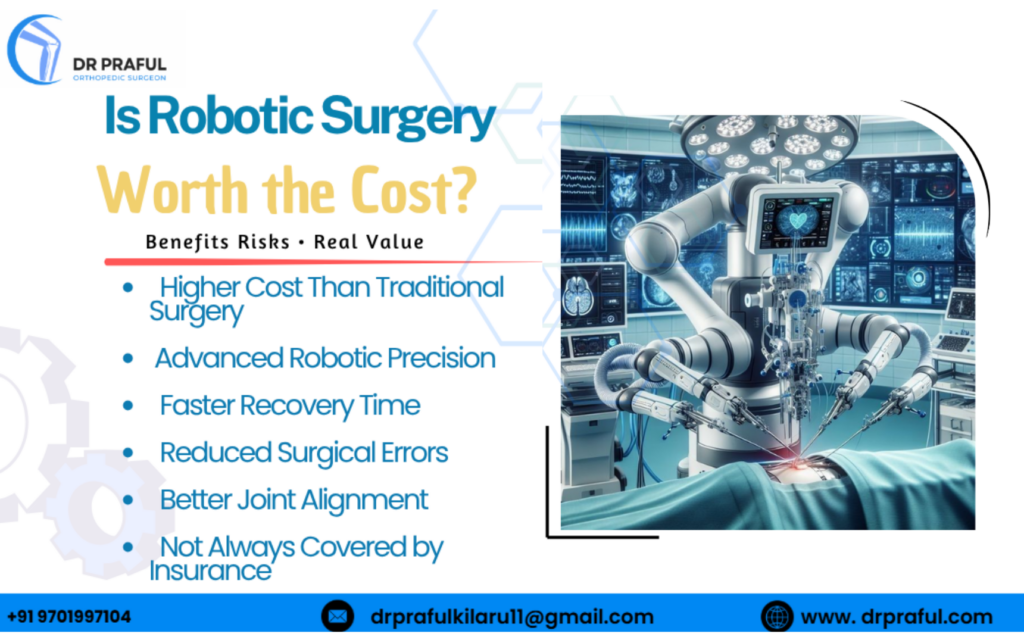
Robotic surgery in orthopedics refers to the use of advanced robotic systems that assist surgeons in performing procedures with enhanced precision, control, and visualization.
It is important to understand that: The robot does not perform surgery on its own the surgeon remains in full control at all times.The robotic system acts as a highly sophisticated tool that helps guide the surgeon based on pre-planned data and real-time feedback.
How It Works
- Pre-Surgical Planning
- A 3D model of the patient’s joint is created using CT scans or imaging.
- The surgeon plans the procedure in detail before entering the operating room.
- During Surgery
- The robotic arm assists the surgeon in executing the plan.
- It ensures precise bone cutting and implant placement.
- Real-Time Adjustments
- The system provides feedback, allowing adjustments during surgery.
About the Dr.Praful
Dr. Praful Kilaru is currently working as a Senior Consultant Joint Replacement and Complex Trauma Surgeon at Yashoda Hospitals, Malakpet

- 17+ Years of Excellence in Orthopedics
- MBBS, MS (Orthopaedics)
- AO Trauma Fellowship – Switzerland
- Arthroscopy & Sports Injury Specialist
- Senior Orthopedic Surgeon – Hyderabad
Types of Robotic Surgeries in Orthopedics
Robotic technology is commonly used in:
1. Knee Replacement Surgery
- Partial knee replacement
- Total knee replacement
Most widely used robotic orthopedic procedure
2. Hip Replacement Surgery
- Helps in accurate implant positioning
- Improves joint alignment
3. Spine Surgery
- Used for placing screws and implants precisely
- Reduces risk of nerve damage
4. Shoulder Surgery
- Emerging application in joint replacement
Why is Robotic Surgery More Expensive?
One of the biggest concerns is cost. Robotic surgery can be significantly more expensive than traditional surgery.
1. Advanced Equipment
Robotic systems cost millions of dollars to purchase and maintain.
2. Training and Expertise
Surgeons require specialized training, which adds to overall expenses.
3. Longer Setup Time
Initial setup and planning take more time compared to conventional surgery.
4. Technology Maintenance
Regular servicing and software updates increase operational costs.
Benefits of Robotic Surgery
Now let’s look at why many patients still choose robotic surgery despite the higher cost.
1. Higher Precision
Robotic systems allow:
- Accurate bone cuts
- Perfect implant positioning
- Better joint alignment
2. Less Tissue Damage
Robotic-assisted procedures are usually minimally invasive:
- Smaller incisions
- Less muscle damage
- Reduced blood loss
3. Faster Recovery
Patients often experience:
- Shorter hospital stays
- Quicker mobility
- Faster return to daily activities
4. Reduced Pain
Because of minimal tissue damage:
- Post-operative pain is often lower
- Less need for strong pain medications
5. Better Implant Longevity
Correct implant positioning can:
- Reduce wear and tear
- Increase lifespan of joint replacement
know more about Dr. Praful Kilaru visite his website dr.Pradul .com

Limitations and Risks of Robotic Surgery
While robotic surgery is an advanced and innovative technique, it is important to understand that it is not without limitations. Patients should be aware of the following factors before making a decision:
1. High Cost
Robotic surgery is generally more expensive compared to traditional or laparoscopic procedures.
The cost includes advanced equipment, maintenance, and specialized training.
For many patients, especially those without insurance coverage, affordability can be a major concern.
2. Limited Availability
Many people focus only on calcium intake, but bone health depends on multiple nutrients working together. Without proper support, calcium cannot be fully utilized.
Robotic surgical systems are not widely accessible in all regions.
They are primarily available in:
Metro cities
Multi-specialty and advanced hospitals
This can make it difficult for patients in smaller towns or rural areas to access this technology.
3. Surgeon Expertise Matters More Than Technology
Robotic technology is only a tool—it does not replace surgical skill.
The success of any procedure depends largely on the surgeon’s experience and expertise.
An experienced surgeon performing traditional or laparoscopic surgery may achieve equal or even better outcomes than an inexperienced surgeon using robotic assistance.
4. Longer Surgery Time (Sometimes)
In early stages, robotic surgeries may take longer due to setup and planning.
Robotic Surgery vs Traditional Surgery: Key Comparison
Factor | Robotic Surgery | Traditional Surgery |
Precision | Very High | Moderate |
Recovery Time | Faster | Slightly longer |
Cost | Higher | Lower |
Surgeon Dependency | High | Very High |
Availability | Limited | Widely available |
Is Robotic Surgery Always Better?
Short answer: Not always.
Robotic surgery is an advanced technique that offers several benefits, but it is not required or suitable for every patient. The choice of surgery depends on the patient’s condition, budget, and the surgeon’s expertise.
- Complex Joint Deformities
When the joint structure is severely damaged or misaligned, robotic precision helps in accurate correction. - Younger Patients Requiring Long-Lasting Implants
Better alignment and positioning can improve implant lifespan and long-term outcomes. - Patients Seeking Faster Recovery
Minimally invasive techniques often lead to less pain, smaller incisions, and quicker return to daily activities. - Cases Requiring High Precision
Procedures that demand exact bone cuts and implant placement benefit significantly from robotic assistance.
Does Insurance Cover Robotic Surgery?
Insurance coverage for robotic surgery varies and is not always straightforward. It depends on multiple factors, including:
- Country and healthcare regulations
- Insurance provider and plan details
- Type of policy (basic vs premium coverage)
What Orthopedic Surgeons Say
Most orthopedic specialists agree on one key point:
Technology supports surgery but it does not replace surgical expertise.
Robotic surgery is a powerful tool that enhances precision, but the outcome still depends largely on the surgeon’s experience, decision-making, and skill.
Future of Robotic Surgery in Orthopedics
Robotic-assisted procedures are advancing rapidly. In the near future, patients can expect:
- More affordable robotic treatments
- Availability beyond metro cities
- AI-based surgical planning for better personalization
- Even greater accuracy and safety
Conclusion
Robotic surgery represents a significant advancement in orthopedic care, offering improved precision, faster recovery, and better long-term outcomes in many cases. However, the higher cost makes it a decision that should not be taken lightly.
Instead of focusing only on technology, patients should consider the overall picture including surgeon expertise, hospital quality, and personal health condition.
FAQ'S
1. Is robotic surgery better than traditional surgery for joint replacement?
Robotic surgery can offer higher precision and better implant alignment, which may improve long-term outcomes. However, traditional surgery performed by an experienced orthopedic surgeon can also deliver excellent results. The choice depends on the complexity of the case and surgeon expertise.
2. Why is robotic surgery more expensive?
Robotic surgery involves advanced technology, specialized equipment, and additional training for surgeons. These factors increase the overall cost of the procedure. In many cases, the extra cost comes from the robotic assistance rather than the surgery itself.
3. Does robotic surgery guarantee faster recovery?
Robotic surgery often leads to smaller incisions, less tissue damage, and quicker recovery. However, recovery also depends on factors like the patient’s health, age, and post-surgery rehabilitation. It is not guaranteed but can be faster in many cases.
4. Is robotic surgery covered by insurance?
Most insurance plans cover the standard surgical procedure, such as knee or hip replacement. However, the additional cost for robotic technology may not always be included. It is important to confirm coverage details with your insurance provider beforehand.
5. Who should consider robotic surgery?
Robotic surgery is ideal for patients with complex joint conditions, those seeking high precision, or younger patients aiming for long-lasting results. However, it may not be necessary for simple cases where traditional surgery is sufficient and cost-effective.