
Right-Hand Pain Reasons

Hand pain can disturb your daily life more than you might expect. From holding a pen and typing on a keyboard to cooking, driving, or playing sports, your hands are constantly active. When pain develops in the right hand, it becomes even more concerning for most people, especially because the majority of individuals use their right hand more often.
Understanding Why the Right Hand Hurts
- Before jumping to serious conclusions, it is important to understand that hand pain usually happens because of strain, nerve pressure, inflammation, or injury. The right hand often hurts more simply because it is used more frequently for writing, lifting, mobile phone usage, sports, and daily activities.
- The hand is made up of small bones, joints, tendons, ligaments, muscles, and nerves. If any of these parts are irritated, compressed, overused, or injured, pain can develop. The pain may be mild and temporary, or it may become persistent if the root cause is not treated.
- Right-hand pain can feel different depending on the cause. Some people feel sharp pain when moving their fingers. Others feel burning, tingling, stiffness, weakness, or swelling. Understanding the type of pain helps doctors identify the real reason behind it.
Muscle Strain and Overuse
- One of the most common reasons for right-hand pain is simple overuse. If you write for long hours, use a computer mouse continuously, scroll on your phone repeatedly, or play sports like badminton or cricket, your hand muscles and tendons can become tired.
- When muscles are overworked without enough rest, they develop small microscopic injuries. This leads to soreness, tightness, and mild swelling. The pain usually worsens when you continue the same activity and improves with rest.
- Teenagers who spend long hours gaming or adults who work on computers are especially at risk. The good news is that overuse pain usually improves within a few days to a couple of weeks with rest, gentle stretching, and proper posture correction.
Tendon Inflammation (Tendinitis)
Tendons are strong tissues that connect muscles to bones. When these tendons become irritated or inflamed due to repeated movement, the condition is called tendinitis. In the right hand, tendinitis commonly affects people who do repetitive activities such as typing, lifting tools, cooking for long periods, or playing musical instruments. The pain is often felt while moving the fingers or wrist. Sometimes the area may feel warm or slightly swollen. If ignored, tendinitis can become chronic and take longer to heal. Early treatment, including rest and controlled exercises, prevents long-term problems.
About the Dr.Praful

- 17+ Years of Excellence in Orthopedics
- MBBS, MS (Orthopaedics)
- AO Trauma Fellowship – Switzerland
- Arthroscopy & Sports Injury Specialist
- Senior Orthopedic Surgeon – Hyderabad
Carpal Tunnel Syndrome
Carpal Tunnel Syndrome is one of the most common reasons for pain in the right hand, especially in people who type a lot or do repeated hand movements. In your wrist, there is a small passage called the carpal tunnel. A major nerve known as the median nerve travels through this narrow space. When this nerve gets squeezed because of swelling or repeated wrist activity, symptoms start to develop. People may feel tingling, numbness, a burning feeling, weakness in the hand, or pain that spreads into the fingers. The thumb, index finger, and middle finger are usually the most affected. Many people notice symptoms at night or while holding a phone. If diagnosed early, treatment can include wrist splints, exercises, and activity modification. In more serious cases, minor surgery may be required to release pressure on the nerve.
Arthritis in the Hand
- Arthritis means inflammation of the joints. It can develop in the small joints of the hand and cause pain, stiffness, and swelling. There are different types of arthritis, including osteoarthritis and rheumatoid arthritis.
- Osteoarthritis develops slowly over time due to natural aging and the gradual wearing down of the joint cartilage. It often leads to stiffness in the joints, especially after waking up in the morning, and pain when moving the fingers or wrist.
- Rheumatoid arthritis is different. It is a condition where the immune system mistakenly attacks the joints, causing swelling, warmth, and sometimes changes in joint shape if not treated properly.
- While arthritis is more common in older adults, younger people can also develop certain types. Detecting the condition early and starting treatment on time helps control symptoms and protect the joints.
Nerve Compression in the Neck
Sometimes the problem is not in the hand itself. Nerves that supply the hand originate from the neck. If a nerve in the neck becomes compressed due to poor posture, disc problems, or muscle tightness, pain can travel down into the right arm and hand. This type of pain may be accompanied by tingling, numbness, or weakness. Many people experience neck stiffness along with hand discomfort. Treating the neck issue often improves hand symptoms.
Injury or Trauma
Right-hand pain can also be caused by sudden injury. This includes fractures, ligament sprains, dislocations, or direct impact during sports or accidents. Injury-related pain is usually immediate and severe. Swelling, bruising, and difficulty moving the fingers are common signs. If the hand looks deformed or if movement is very painful, medical attention should be sought immediately. Early treatment ensures proper healing and prevents long-term stiffness.
Trigger Finger
Trigger finger is a condition where a finger gets stuck in a bent position and then suddenly straightens with a snap. This happens when the tendon becomes inflamed and cannot move smoothly. People may feel pain at the base of the finger and notice stiffness, especially in the morning. Though it may sound minor, untreated trigger finger can interfere with daily tasks like holding objects or writing.
Ganglion Cyst
A ganglion cyst is a small, fluid-filled lump that can develop near joints or tendons in the wrist or hand. It is usually harmless but may cause discomfort if it presses on nearby nerves. The swelling can come and go, sometimes becoming noticeable and then shrinking on its own. If it becomes painful or interferes with movement, medical treatment may be required.
Poor Posture and Lifestyle Habits
Modern lifestyle plays a major role in hand pain. Long hours on smartphones, laptops, and gaming consoles strain the muscles and joints. Poor wrist positioning while typing increases pressure on tendons and nerves. When muscles are not used regularly, they become weak and are more likely to be injured. Keeping your wrist in a proper position, taking short breaks during work, and practicing strengthening exercises can greatly help in reducing hand pain.
When Should You See a Doctor?
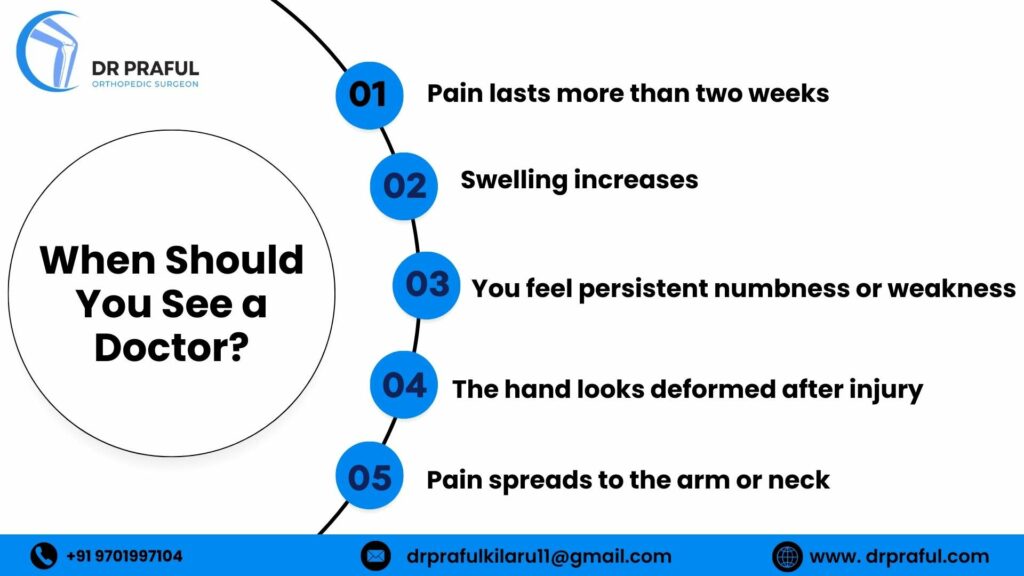
Not all hand pain requires emergency care, but certain warning signs should not be ignored. You should consult a doctor if:
- Pain lasts more than two weeks
- Swelling increases
- You feel persistent numbness or weakness
- The hand looks deformed after injury
- Pain spreads to the arm or neck
Early medical advice prevents complications and ensures faster recovery.
How Doctors Diagnose the Cause
Diagnosis begins with a detailed history and physical examination. Doctors may ask about your daily activities, work habits, sports involvement, and previous injuries. If needed, imaging tests like X-rays or MRI scans may be recommended. Nerve conduction studies help diagnose nerve-related problems. Identifying the exact cause is important because treatment depends entirely on the diagnosis.
Treatment Options for Right Hand Pain
Treatment depends on the cause but generally includes rest, physiotherapy, medications to reduce inflammation, posture correction, and strengthening exercises. In some cases, splints or braces may be advised to limit movement temporarily. Surgery is usually the last option. Doctors recommend it only if other treatments do not improve the condition or if there is serious damage to the bones, joints, or tissues.
Preventing Right Hand Pain
Prevention focuses on reducing strain and improving muscle balance. Taking regular breaks while typing, stretching fingers and wrists, using ergonomic keyboards, and maintaining good posture can make a big difference. Athletes should warm up before playing and avoid sudden overloading of the hand. Strengthening exercises improve long-term joint protection.
The Emotional Side of Chronic Hand Pain
Chronic pain can affect concentration, mood, and daily performance. Students may struggle with writing exams, and adults may find work difficult. Understanding that most causes are treatable brings reassurance. Seeking timely help and following medical advice reduces stress and speeds recovery.

Conclusion
Right-hand pain has many possible causes, ranging from simple muscle strain to nerve compression or arthritis. The majority of cases are manageable with early diagnosis and proper treatment. The most important thing patients need to understand is this: do not ignore persistent pain. Your hand is essential for daily life. Paying attention to early symptoms, correcting posture, and seeking professional advice when needed ensures healthy and pain-free hands in the long term.
Right-Hand Pain Reasons – FAQs
1. Why does my right hand hurt more than my left?
Most people rely more on their right hand for daily tasks like writing, carrying objects, using a mobile phone, or playing games. Since it is used more often, it is more likely to feel tired, overworked, or injured.
2. Can using my phone too much cause right-hand pain?
Yes, using your phone for long hours can strain your fingers, thumb, and wrist. Repeated scrolling and typing can irritate muscles and tendons, leading to pain or stiffness.
3. Is right-hand pain a sign of something serious?
Not always. Many times, it is caused by simple muscle strain or overuse. However, if the pain lasts more than two weeks, gets worse, or comes with numbness or weakness, you should see a doctor.
4. What does it mean if I feel tingling or numbness in my right hand?
A tingling or numb feeling in the hand can occur when a nerve is under pressure or irritated. A common reason for this is Carpal Tunnel Syndrome. Getting medical advice early can help prevent more serious or long-lasting issues.
5. Can hand pain come from a problem in my neck?
Yes, sometimes the nerves that travel from your neck to your hand can get compressed. This can cause pain, tingling, or weakness in the hand, even though the real issue starts in the neck.
6. How long does right-hand pain usually last?
If the pain is due to mild strain, it may improve within a few days to two weeks with rest. More serious conditions like nerve compression or arthritis may take longer and need proper treatment.
7. Should I stop using my hand completely if it hurts?
It is important to stop activities that make the pain worse, but you do not need to keep your hand completely still. Light movements and gentle stretching can support recovery. Always follow your doctor’s advice about what activities are safe.
8. Can teenagers get right-hand pain, too?
Yes, teenagers can develop hand pain from sports, gaming, writing for long hours, or injuries. Even young people should not ignore continuous pain.
9. When is it important to seek medical help right away?
You should see a doctor quickly if:
- The hand looks deformed after an injury
- There is severe swelling or bruising
- You cannot move your fingers
- Pain is very intense
These could be signs of a fracture or serious injury.
10. How can I prevent right-hand pain in the future?
You can prevent pain by taking breaks while using your phone or computer, keeping good posture, stretching your fingers and wrists, and strengthening hand muscles regularly. Simple habits make a big difference.