
After surgery, the body reacts naturally as it starts to heal. In knee replacement, damaged bone and cartilage are removed and replaced with metal or plastic parts to make the joint smooth again. Even though the surgery is done carefully, the tissues around the knee need time to recover. Swelling is normal because the body sends extra blood to help healing. The muscles around the knee may feel weak or tight, which can cause discomfort, especially when you try to move the knee at first. This pain is temporary and part of the healing process. Unlike arthritis pain, which keeps getting worse, this pain slowly gets better week by week.
Is Knee Replacement Painful?
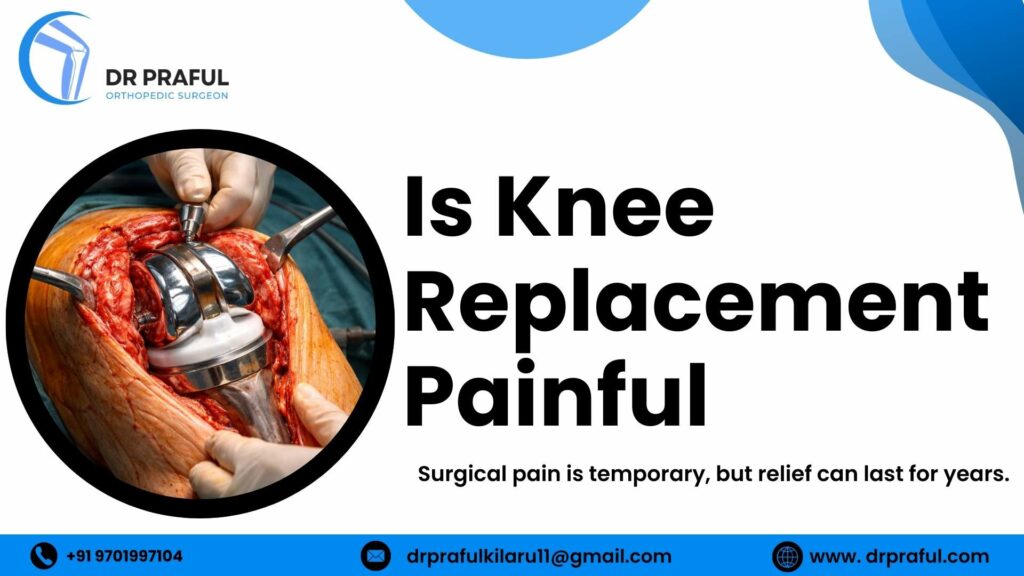
One important thing to know is that you do not feel pain during the surgery. Knee replacement is done using anesthesia. This means you will either be fully asleep (general anesthesia) or your lower body will be completely numb (spinal anesthesia). In both cases, you will not feel any cutting or movement during the operation. A trained anesthesiologist keeps checking your heart rate, blood pressure, breathing, and oxygen levels to make sure you are safe. Modern anesthesia is very safe and well-controlled. Many patients are surprised that they do not feel anything during the surgery. Most concerns are actually about the pain after surgery, which is discussed next.
Why Do People Need Knee Replacement?
To understand the pain involved, you first need to understand why knee replacement is done. Most patients who undergo this surgery have severe osteoarthritis. Over time, the protective cartilage inside the knee joint slowly wears away. This cartilage normally works like a smooth cushion between bones. When it disappears, bones begin to rub against each other. This bone-on-bone friction causes constant pain, swelling, stiffness, and difficulty in movement. For many people, daily life becomes exhausting. Walking short distances feels like a challenge. Climbing stairs becomes painful. Even sitting for long periods can cause discomfort. Sleep is disturbed because of knee pain at night.
Before surgery is recommended, doctors usually try non-surgical treatments such as:
- Pain medications
- Physiotherapy
- Weight management
- Knee injections
- Lifestyle changes
When these methods stop giving relief and the quality of life drops significantly, knee replacement becomes an option. The main goal is to reduce chronic pain and restore mobility.
About the Dr.Praful

- 17+ Years of Excellence in Orthopedics
- MBBS, MS (Orthopaedics)
- AO Trauma Fellowship – Switzerland
- Arthroscopy & Sports Injury Specialist
- Senior Orthopedic Surgeon – Hyderabad
Is the Surgery Itself Painful?
One important thing to understand is that you do not feel pain during the surgery itself. Knee replacement is performed under anesthesia. This means you are either fully asleep (general anaesthesia) or your lower body is completely numbed (spinal anaesthesia). In both cases, you will not feel cutting, pressure, or any surgical movement. An experienced anesthesiologist monitors your heart rate, blood pressure, breathing, and oxygen levels throughout the procedure. Modern anaesthesia techniques are very safe and carefully managed. Many patients are surprised to learn that the surgery itself passes without any awareness of pain. The real concern for most people is the pain after surgery, and that is what we will discuss next.
How Painful Is Knee Replacement After Surgery?
Yes, knee replacement is a major surgery, so some pain after the procedure is expected. However, the pain is controlled and manageable with modern medical techniques. It is not the uncontrolled suffering that people imagine. In the first few days after surgery, patients usually experience soreness, swelling, and tightness around the knee. It may feel like intense muscle strain or deep aching. The operated area may also feel warm and slightly stiff. This discomfort is part of the healing process because the body is adjusting to the new artificial joint.
Doctors now use advanced pain control methods that make recovery much smoother than in the past. These include:
- Strong but carefully controlled pain medications
- Nerve blocks that numb pain signals
- Ice therapy to reduce swelling
- Early gentle movement to prevent stiffness
Pain is usually strongest during the first 2–3 days and then gradually decreases. By the end of the first week, many patients notice improvement. Within a few weeks, surgical pain becomes much less than the arthritis pain they had before surgery.
Why Does It Hurt After Surgery?
How Long Does the Pain Last?
Pain after knee replacement can be different for each person, but most people follow a similar recovery pattern. In the first week, pain is there but it is controlled with medicines. From the second to fourth week, the pain reduces a lot, though the knee may still feel stiff. Full recovery usually takes about 6 weeks to 3 months, depending on your age, health, and how well you follow physiotherapy. You may still feel mild soreness for a few months, especially after activity, but it becomes easier to manage over time. Many patients say that after 2 to 3 months, they feel much better than before surgery, as the constant arthritis pain is gone and the knee feels more stable and smooth.
Does Physiotherapy Increase Pain?
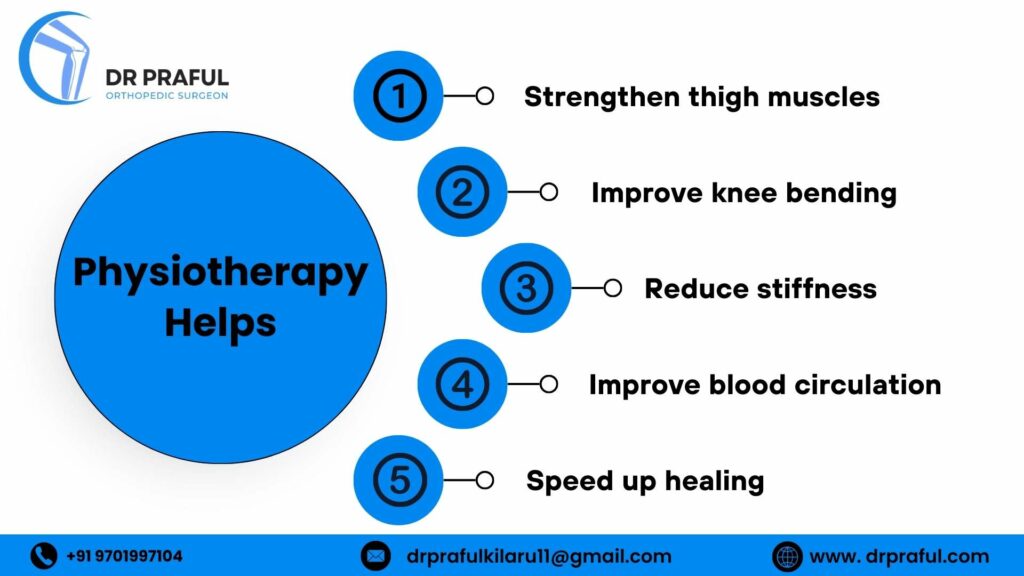
Physiotherapy is one of the most important parts of recovery. Yes, exercises may cause temporary discomfort, especially in the beginning. But this discomfort is different from harmful pain. It is more like muscle soreness after starting a new workout.
Physiotherapy helps:
- Strengthen thigh muscles
- Improve knee bending
- Reduce stiffness
- Improve blood circulation
- Speed up healing
Avoiding exercises due to fear of pain can actually delay recovery. Controlled movement helps the knee heal properly and prevents long-term stiffness.
Comparing Arthritis Pain and Surgery Pain
One helpful way to understand this is by comparing the two types of pain. Arthritis pain is chronic. It continues daily. It limits your freedom. It worsens over time and does not go away with rest. Surgical pain is temporary. It improves every week. It is controlled with medication. It leads to long-term relief. Most patients say that while the first few weeks after surgery require patience, the long-term benefit is worth it. Being able to walk without constant pain changes daily life completely.
Emotional Fear and Mental Preparation
Fear of pain is often stronger than the actual pain. Many people imagine the worst because of stories they hear from others. It is important to talk openly with your doctor about your worries. When you understand what will happen, you feel less scared and more prepared. Family support is also very helpful. Having someone to help you in the first few weeks makes recovery easier. A positive mindset can improve healing. Patients who stay motivated and follow the doctor’s advice usually recover better and faster.
What Should Be the Patient’s Intention?
If you are asking, “Is knee replacement painful?” the deeper question is usually, “Is it worth it?” The right intention should not be fear-based. It should be focused on improving the quality of life. Ask yourself:
- Is knee pain stopping me from enjoying daily activities?
- Am I depending on painkillers regularly?
- Is my mobility decreasing each year?
If arthritis pain is affecting independence, then surgery becomes a step toward regaining control of your life. The temporary discomfort of recovery is often a small price compared to years of chronic suffering.

Modern Advances Have Reduced Pain Significantly
Over the last decade, knee replacement techniques have improved dramatically. Surgeons use minimally invasive methods when possible. Pain control strategies are far more advanced than in the past. Hospital stays are shorter, and patients begin walking sooner. Because of these improvements, recovery is smoother and more predictable than ever before. The idea that knee replacement means unbearable pain is outdated.
What Type of Pain Should You Expect?
It is important to understand that not all pain feels the same. After knee replacement, the discomfort is usually described as surgical soreness rather than sharp or unbearable pain. The knee may feel tight, swollen, and heavy during the first few days. Some patients describe it as a deep aching sensation, especially when bending the knee for the first time. You may also feel muscle pain in the thigh and calf area because these muscles are being used again after surgery. This is completely normal. The body is adjusting to a new joint and healing from the procedure. What makes a big difference is that this pain gradually reduces each day instead of increasing. That steady improvement gives patients confidence and reassurance.
Night Pain and Sleep After Surgery
Many patients worry about sleep after knee replacement. During the first few weeks, sleeping comfortably can be slightly difficult because of swelling and stiffness. Some people experience more discomfort at night because the body is resting and there are fewer distractions. However, doctors provide pain relief medication to help manage this. Keeping a pillow under the leg for support and using ice packs before bedtime can also help reduce swelling. Over time, sleep improves naturally as healing progresses. Most patients report much better sleep after recovery because the constant arthritis pain is no longer disturbing them.
Does Age Affect Pain Levels?
Age can influence how the body heals, but it does not always determine how much pain someone feels. Younger patients may recover faster because their muscles are stronger. Older patients may take a little more time, but many elderly individuals handle the surgery very well. The most important factors affecting recovery are overall health, weight, and commitment to physiotherapy. Patients who stay active before surgery often find recovery easier. Mental strength and a positive attitude also play a major role in how pain is experienced.
How Movement Reduces Pain
It may sound surprising, but gentle movement actually helps reduce pain after knee replacement. When you move the knee slowly under guidance, blood circulation improves. This reduces stiffness and prevents the joint from becoming tight. Doctors usually encourage patients to stand or walk with support within 24 hours after surgery. Early movement:
- Prevents stiffness
- Reduces risk of blood clots
- Improves muscle strength
- Speeds up overall recovery
Although the first few steps may feel uncomfortable, most patients feel more confident after realising they can move safely.
What Happens If You Avoid Surgery Due to Fear?
Some people delay knee replacement for years because they are afraid of pain. While caution is understandable, waiting too long can sometimes create new problems. Severe arthritis can cause joint deformity, muscle weakness, and reduced mobility. When the knee becomes extremely stiff, recovery after surgery may take longer. The body also becomes weaker over time if movement decreases. In some cases, prolonged use of strong painkillers may affect other organs, such as the stomach or kidneys. Choosing surgery at the right time, instead of waiting until the condition becomes unbearable, often leads to a smoother recovery and better results.
Final Thoughts
So, is knee replacement painful? Yes, there is temporary discomfort after surgery. But it is controlled, manageable, and improves steadily with time. You do not feel pain during the surgery itself, and modern medical techniques ensure that recovery is as comfortable as possible. Most importantly, the pain after surgery is temporary, while the relief from arthritis can last for many years. When patients approach the procedure with realistic expectations, proper preparation, and a positive mindset, the results are often life changing. Instead of focusing only on fear, focus on the possibility of walking comfortably again, climbing stairs without struggle, and sleeping peacefully at night. For many people, that freedom is worth the short recovery journey.
Is Knee Replacement Painful? – FAQs
1. Is knee replacement surgery very painful?
No, the surgery itself is not painful because you are given anaesthesia. After surgery, there will be some discomfort, but doctors give medicines to control it. Most patients say it is manageable and improves each day.
2. How long does the pain last after knee replacement?
Pain is usually strongest during the first few days after surgery. It gradually reduces over a few weeks. Most people feel much better within 6 to 12 weeks as healing continues.
3. Will I be able to walk after surgery?
Yes, in most cases, patients start standing or walking with support within a day after surgery. Doctors and physiotherapists help you take safe steps early so your recovery becomes faster.
4. Is the pain worse than arthritis pain?
Many patients say the pain after surgery is temporary and less frustrating than long-term arthritis pain. Arthritis pain keeps getting worse over time, but surgical pain slowly improves.
5. Does physiotherapy make the pain worse?
Physiotherapy may cause mild soreness at first, but it actually helps reduce stiffness and speeds up healing. The exercises are carefully guided and safe.
6. What kind of pain does it feel like?
After surgery, the knee may feel sore, tight, or swollen. It can feel like deep muscle soreness rather than sharp pain. This is part of the healing process.
7. Can older people handle the pain?
Yes, many older adults recover well from knee replacement. Age alone does not decide how much pain someone feels. Overall health and following the doctor’s advice matter more.
8. What helps reduce pain after surgery?
Doctors use pain medicines, ice packs, gentle exercises, and proper rest to control pain. Following instructions carefully makes recovery smoother and more comfortable.
9. Is it normal to feel pain at night?
Yes, some people feel more discomfort at night during the first few weeks. Keeping the leg supported and taking prescribed medicines usually helps improve sleep.
10. Is knee replacement worth the temporary pain?
For many people, yes. The short-term discomfort leads to long-term relief from arthritis pain. Most patients feel happier because they can move more easily and live without constant knee pain.